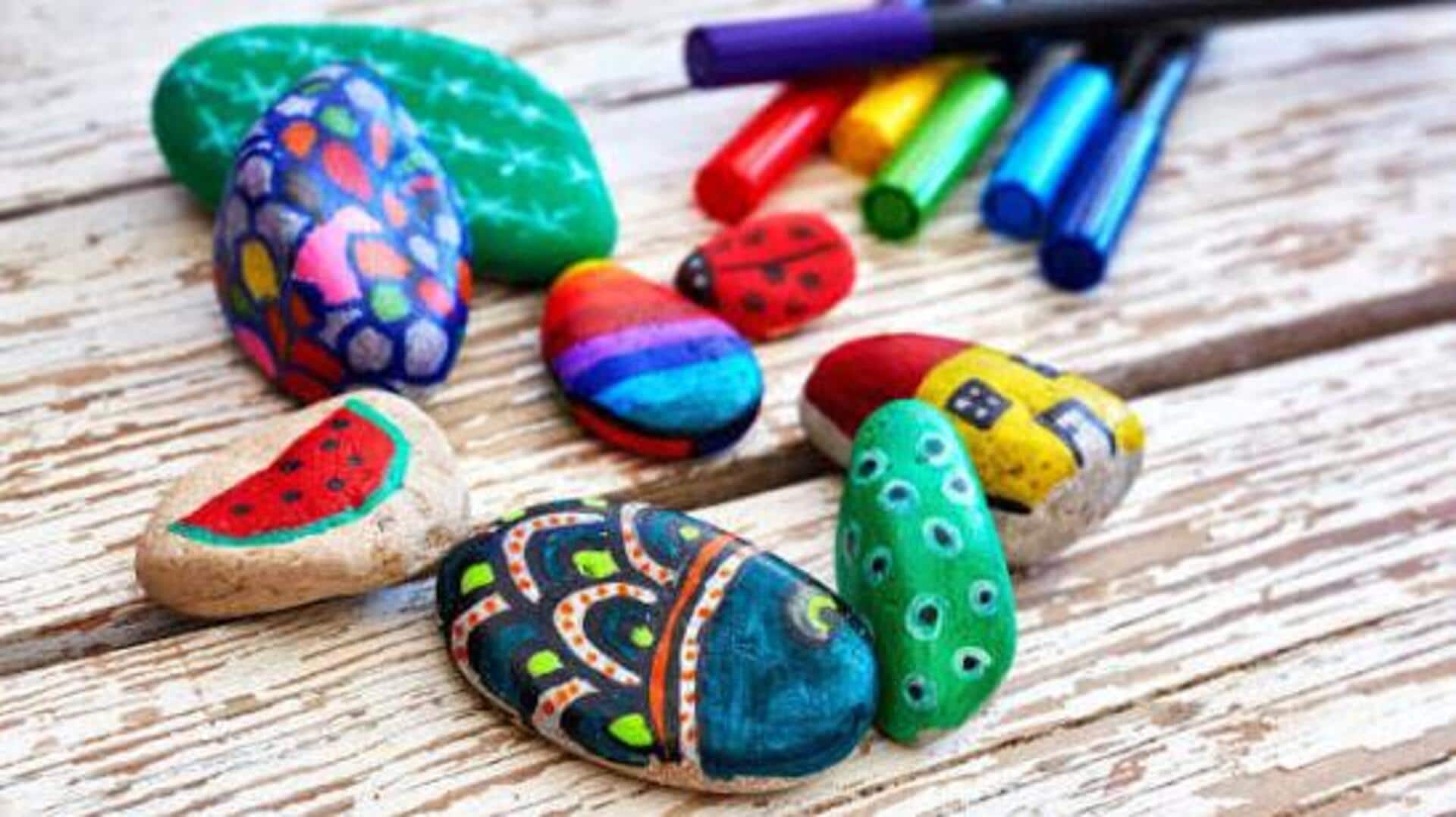
How to turn pebbles into beautiful garden art
What's the story
African wildlife painting on pebbles or stones is a unique way to bring nature's beauty into your garden. This art form involves painting stones with images of animals and landscapes found in Africa. It adds a touch of creativity and cultural appreciation to outdoor spaces. The process is simple, yet rewarding, allowing anyone to create personalized garden art that reflects their love for wildlife and nature.
Stone selection
Choosing the right stones
Choosing the right stones is essential for successful wildlife painting.
Pick smooth, flat stones, as they provide a perfect canvas for detailed artwork.
River rocks or pebbles are ideal, as they are naturally smooth and come in different sizes.
Ensure the stones are clean and dry before starting your painting project to get the best results.
Setup tips
Preparing your workspace
Setting up your workspace is key to a smooth painting process.
Pick an outdoor area with good lighting so you can see your details clearly while painting.
Lay down newspapers or plastic sheets to protect surfaces from paint spills.
Keep all necessary materials within reach, including brushes, paints, water containers, and paper towels.
Paint choices
Selecting paints and brushes
Choosing the right paints and brushes is key to achieving vibrant colors on stone surfaces.
Use acrylic paints, as they are weather-resistant and adhere well to stone textures.
Select fine-tipped brushes for intricate details of animal features, and broader brushes for filling larger areas with color.
Techniques used
Painting techniques for wildlife art
Start with sketching outlines of animals lightly with a pencil or thin brush before applying paint.
Use layers of color to add depth; let each layer dry completely before adding more details.
Experiment with different techniques, like stippling or dry brushing, to create texture that mimics fur or feathers.
Placement ideas
Displaying your artwork in gardens
Once your paintings are complete, strategically place them around your garden for maximum visual impact.
Group similar themes together, like savanna scenes or jungle habitats, or scatter them throughout the space as hidden surprises for visitors to discover.
Regularly maintain these pieces by cleaning them gently with water, ensuring they remain vibrant over time.