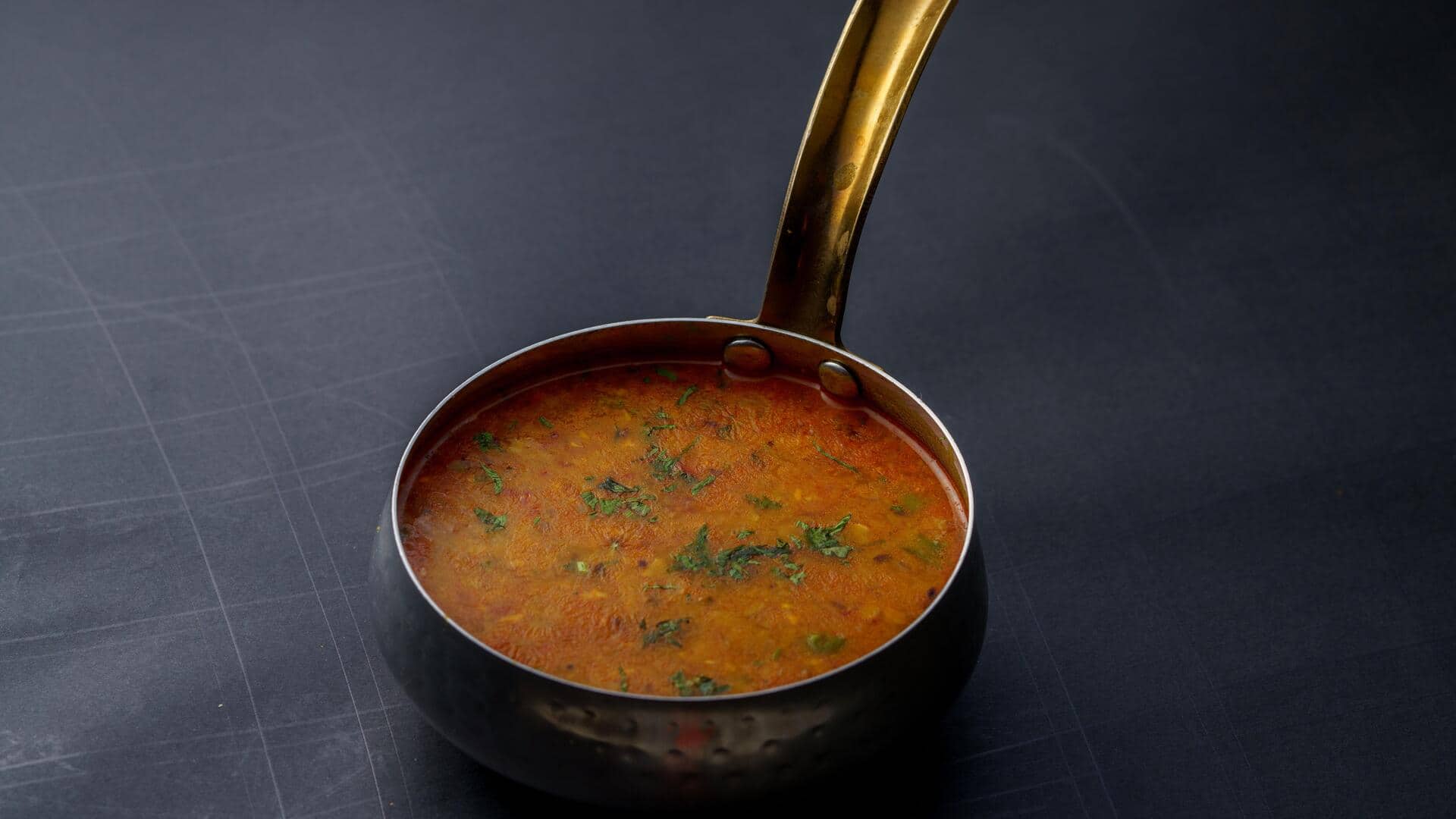
How dal baati churma became a Rajasthani classic
What's the story
Dal baati churma, a famous dish from Rajasthan, has a rich history that goes back centuries. The dish, which consists of lentils (dal), wheat balls (baati), and a sweet crumbled mixture (churma), is a staple in Rajasthani cuisine. Its origins can be traced back to the arid conditions of the region where it was developed as a nutritious and filling meal. Over time, it has evolved into a beloved dish across India.
#1
Origins in arid landscapes
The origins of dal baati churma lie in Rajasthan's harsh environment. The scarcity of water and agricultural challenges led to the creation of this dish as an ideal solution.
Baati was prepared using wheat flour and baked or roasted over open flames or in sand ovens. This method preserved the food for longer periods, making it ideal for long journeys and storage.
#2
Nutritional value and ingredients
Dal baati churma is not just about taste; it's also about nutrition.
The lentils used in dal are a rich source of protein, essential for vegetarians.
Wheat flour provides carbohydrates for energy, while ghee or oil used in baati makes it richer and tastier.
Jaggery or sugar in churma gives the dish a sweet contrast to the savory elements.
#3
Cultural significance and festivals
Dal baati churma also has cultural significance, apart from being a staple food.
It is commonly served at weddings, festivals, and other celebrations across Rajasthan.
The dish epitomizes Rajasthani hospitality and tradition, showcasing the region's culinary heritage.
Its presence at such events highlights its importance in bringing people together over shared meals.
#4
Modern adaptations and popularity
In recent years, dal baati churma has gained popularity beyond Rajasthan's borders, thanks to its unique flavors and hearty nature.
Modern adaptations have introduced variations with different types of lentils or additional spices, catering to diverse palates while maintaining the essence of this traditional dish.
Restaurants across India now offer their versions, further popularizing this iconic Rajasthani cuisine worldwide.