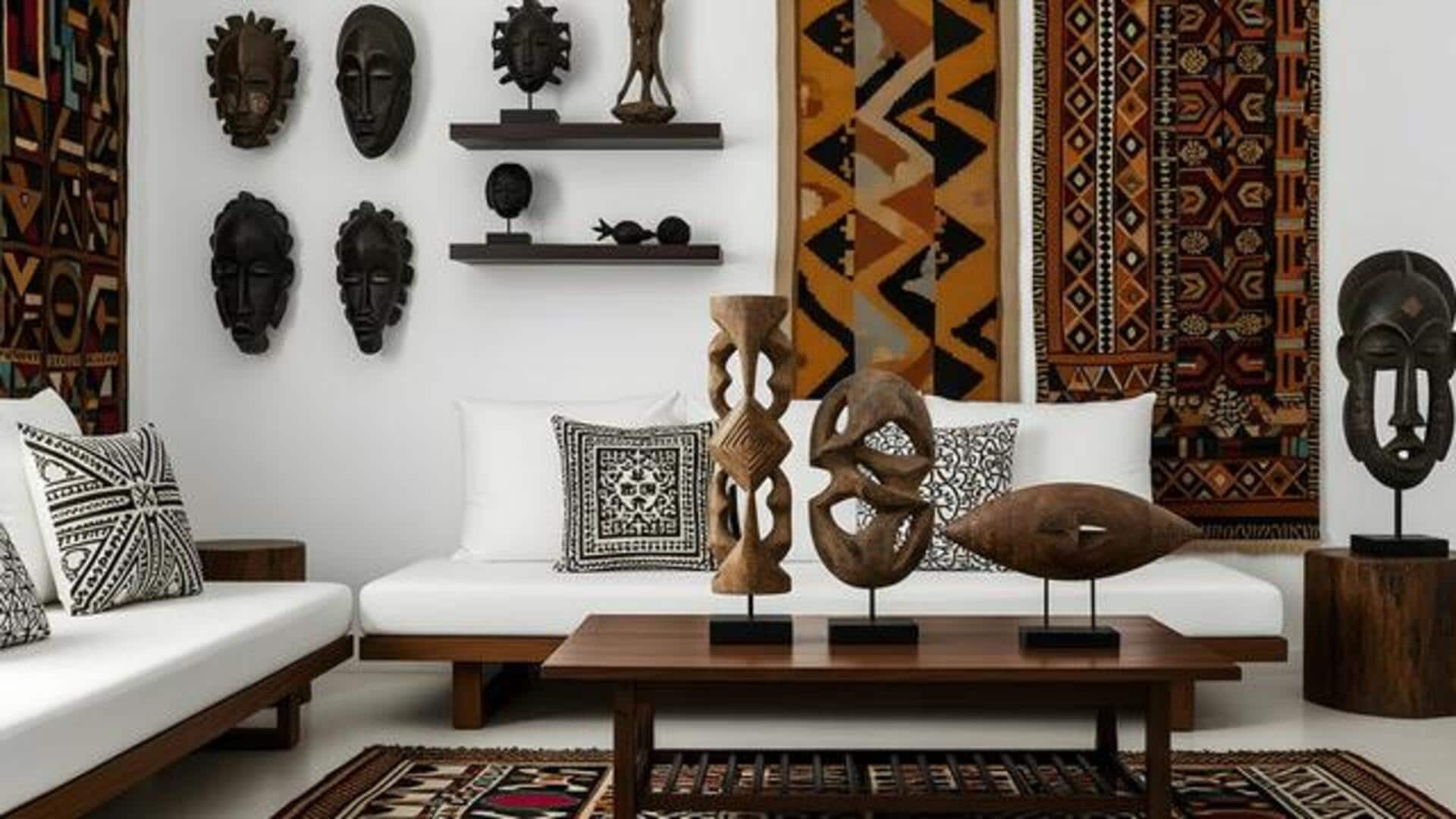
Want a unique wall upgrade? Try barkcloth panels
What's the story
African barkcloth wall panels are a beautiful way to add culture and history to your home. These handmade panels, made from the inner bark of trees, are a staple in many African communities. They are not just eco-friendly, but also add texture and warmth to any room. By adding these panels to your home, you can have a unique decor element that tells a story of tradition and craftsmanship.
Material selection
Choosing the right material
Selecting the right material is key to making authentic African barkcloth wall panels.
The inner bark of trees such as fig or mulberry is commonly used because of its durability and flexibility.
The material should be processed naturally, without chemicals, to retain its texture and color.
This ensures that the panel remains intact over time while showcasing its natural beauty.
Crafting process
Crafting techniques explained
The process of making African barkcloth involves stripping the inner bark from trees, soaking it in water, and then beating it with mallets until it becomes flat and pliable.
The artisans often use natural dyes to add patterns or designs that reflect cultural significance.
This traditional method not only preserves the environment but also supports local craftsmanship.
Home integration
Incorporating panels into home decor
Incorporating these panels into home decor can be done in several ways.
They can be used as wall coverings for an accent wall or framed as artwork for a more subtle touch.
Their neutral tones make them versatile enough to blend with different interior styles, while adding an element of interest.
Care instructions
Maintenance tips for longevity
To ensure longevity, proper maintenance of African barkcloth wall panels is essential.
Regular dusting with a soft cloth helps keep them clean, without damaging their surface texture.
Avoid exposing them directly to sunlight or moisture, as this may cause fading or warping over time.