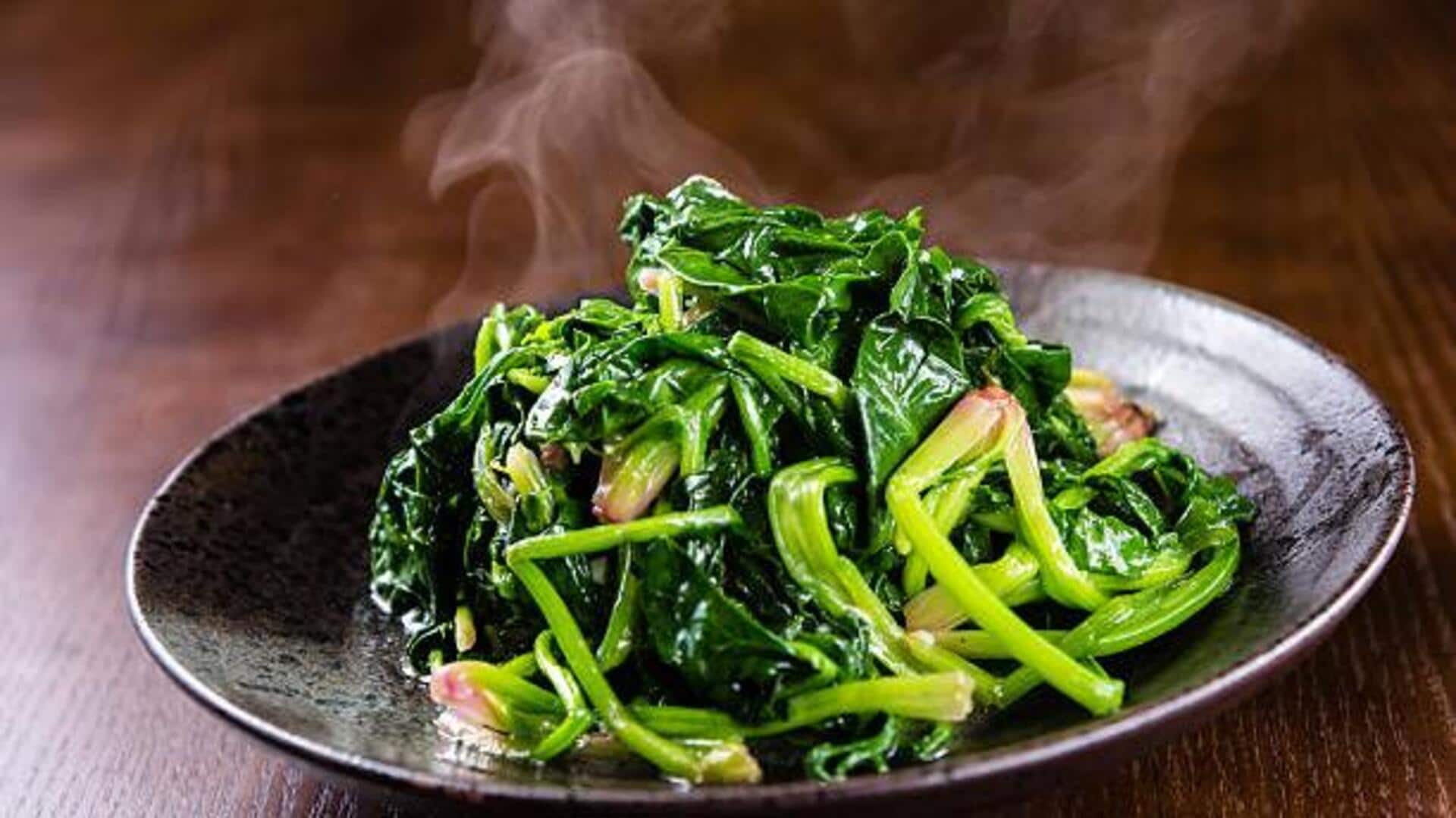
Morogo: The leafy green with a unique flavor
What's the story
Morogo a traditional African leafy green, is taking the culinary world by storm with its unique flavor and nutritional benefits. Commonly found in various parts of Africa, morogo is not just a staple in local diets but also a growing interest among health enthusiasts globally. Its rich nutritional profile and versatility in cooking make it an exciting ingredient for those looking to explore new flavors and healthy options.
#1
Nutritional benefits of morogo
Morogo is loaded with essential nutrients, including vitamins A, C, and K. It also provides a good amount of calcium and iron, making it an excellent choice for anyone looking to up their nutrient intake. The antioxidants present in morogo help fight oxidative stress in the body. Adding this leafy green to your diet can contribute to better bone health and improved immune function.
#2
Versatility in cooking
One of the best things about morogo is its versatility. It can be added to soups, stews, or stir-fries for an extra nutritional punch. Its slightly bitter taste goes well with a number of ingredients, making it a great addition to both traditional African dishes and modern recipes. Whether you saute it with garlic or add it raw to salads, morogo offers endless possibilities for culinary experimentation.
#3
Growing morogo at home
Growing morogo at home is not just rewarding but also easy. The plant grows well in warm climates with plenty of sunlight. It requires minimal maintenance, making it ideal for beginner gardeners or those with limited space. By growing your own morogo, you can enjoy fresh greens straight from your garden while saving money on groceries.
#4
Economic impact on local communities
The cultivation and sale of morogo have a positive economic impact on local communities across Africa. It provides farmers with a source of income and promotes sustainable agricultural practices. As demand increases internationally, more communities are benefiting from the trade of this nutritious crop. Supporting local producers not only helps preserve traditional farming methods but also contributes to economic development in these regions.