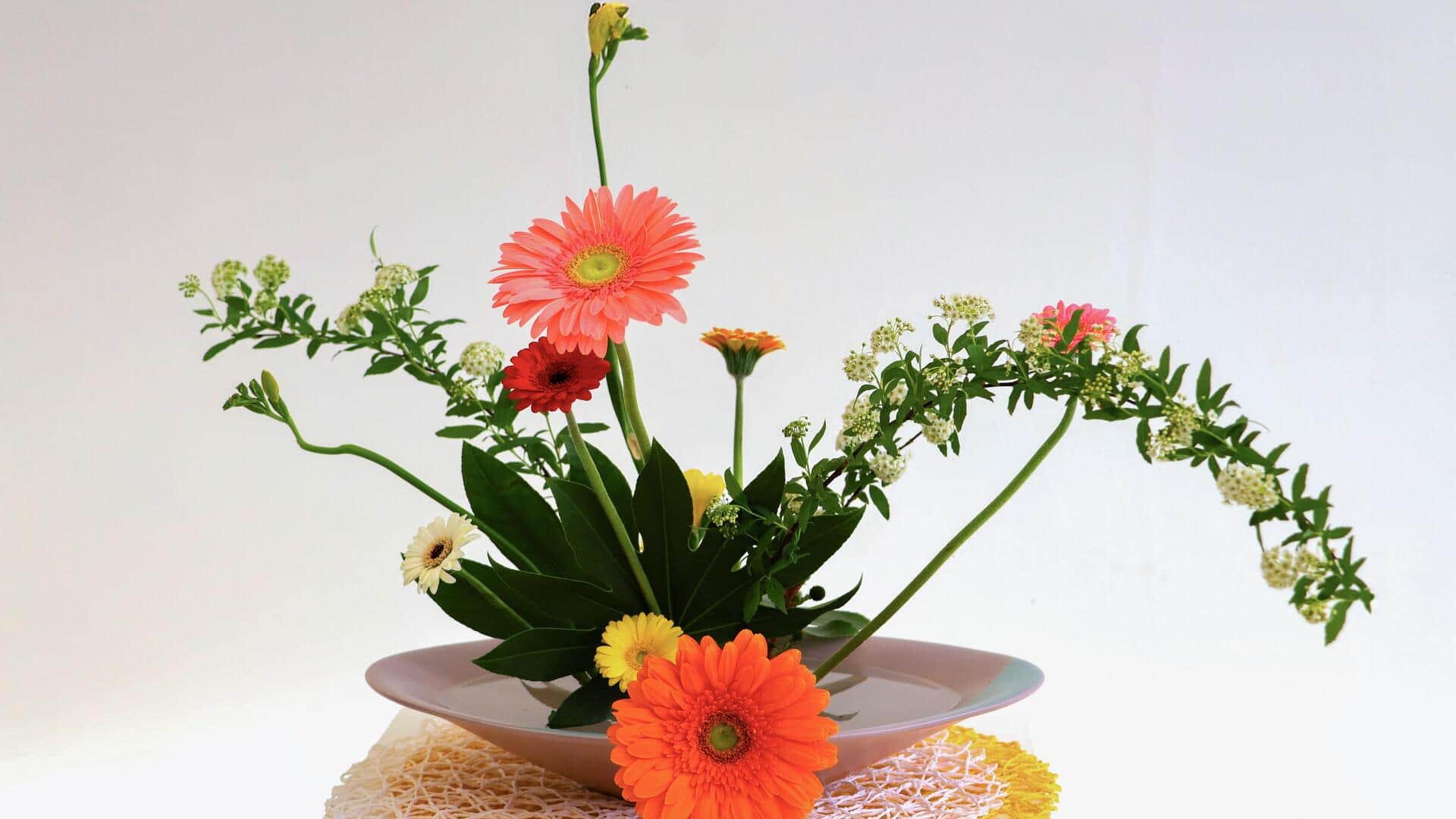
How to create simple ikebana flower arrangements
What's the story
Ikebana, the traditional Japanese art of flower arranging, is all about harmony, balance, and simplicity. Unlike Western floral arrangements, which focus on volume and color, ikebana emphasizes line, balance, and harmony. Each arrangement is a reflection of nature and the season, with an emphasis on minimalism and thoughtful composition. Practicing ikebana can help you appreciate beauty in simplicity and cultivate mindfulness through the process of creation.
#1
Understanding the principles of Ikebana
Ikebana is based on a few principles that guide its practice.
Asymmetry is key; arrangements are rarely symmetrical as they reflect natural growth patterns.
The use of space is also important; empty spaces are as important as the elements used.
Line is also an important element; stems should be arranged to create dynamic lines that draw the eye.
Finally, seasonal awareness ensures that materials reflect the time of year.
#2
Choosing materials wisely
Selecting materials is key to making a good ikebana arrangement.
Fresh flowers, branches, leaves, and even grasses can be used. They should be in their prime to show off their natural beauty.
The choice of materials should also reflect the season or theme you want to convey in your arrangement.
Using different textures adds depth to your work, while maintaining harmony among all components.
#3
Techniques for arranging flowers
Various techniques are used in ikebana to achieve balance and harmony in arrangements.
The "three-line" technique involves placing three main elements at different heights to create visual interest.
Another technique is using "negative space" effectively by leaving gaps between elements instead of crowding them together. This allows each part of the arrangement to breathe while maintaining overall cohesion.
Tip 1
Practicing mindfulness through Ikebana
Engaging in ikebana encourages mindfulness as it requires focus on every detail during creation.
From selecting materials according to seasonal changes to arranging them thoughtfully, every step demands attention.
This mindful practice not only enhances creativity but also promotes relaxation by allowing individuals to connect with nature through artful expression without distractions from modern life.