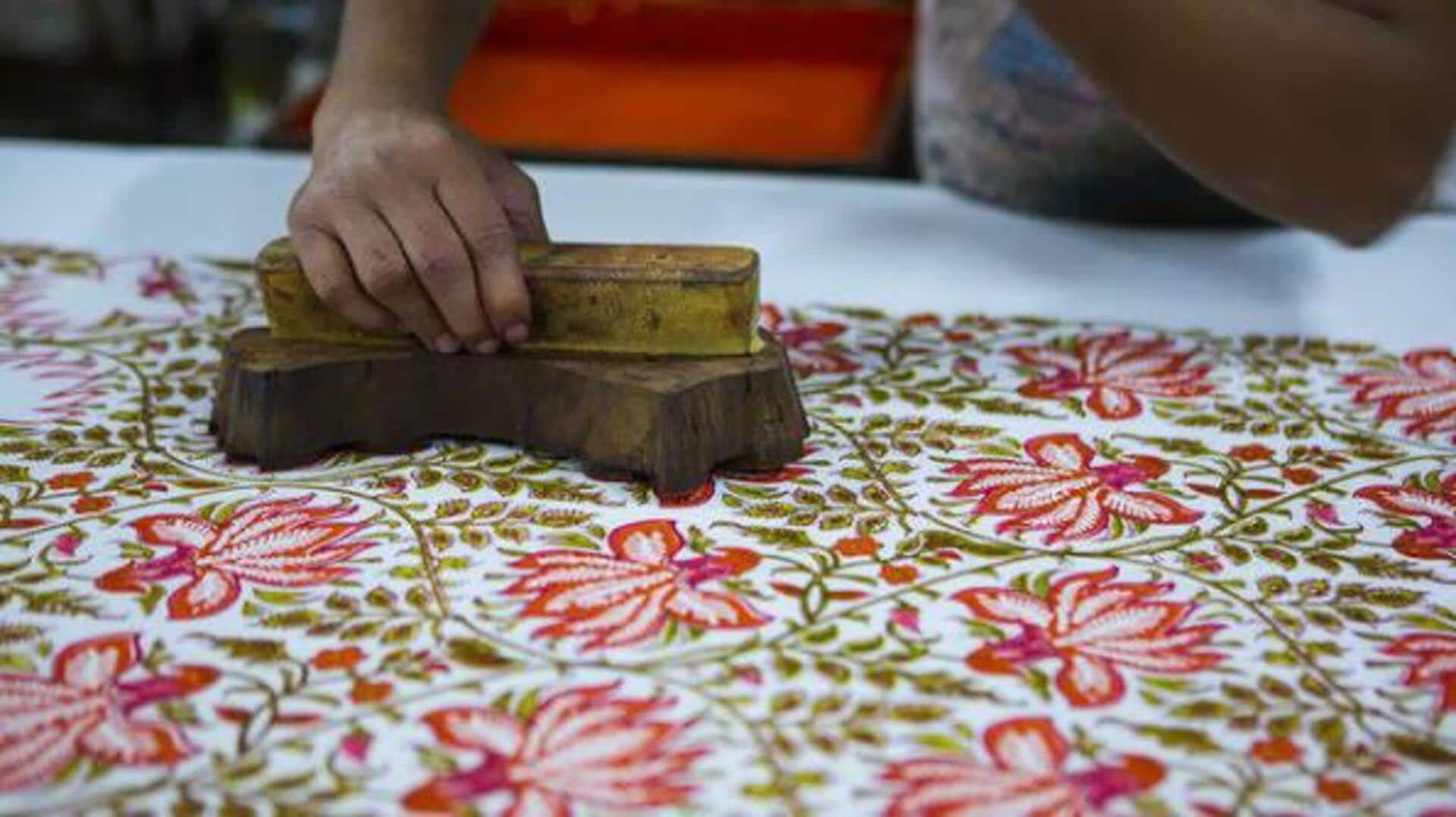
A beginner's guide to block stamping
What's the story
Block stamping is an age-old technique that has been used for centuries to create beautiful patterns on fabric. Inspired by African art, this method allows you to create intricate designs with just a few tools. By using simple materials, you can create stunning prints that reflect the rich cultural heritage of Africa. Here are some practical insights into getting started with African-inspired block stamping.
Tip 1
Choosing the right materials
Selecting the right materials is key to successful block stamping.
Choose natural fabrics like cotton or linen, as they absorb ink better than synthetic ones.
For blocks, wood or rubber is commonly used because of their durability and ease of carving.
Also, pick non-toxic fabric paints or inks that are safe and give vibrant colors.
Tip 2
Designing your block patterns
Designing your block patterns is where creativity comes into play.
Look at traditional African motifs like geometric shapes, animals, and tribal symbols for inspiration.
Keep the designs simple, yet bold, as intricate details may not translate well onto fabric.
Sketch your design on paper before carving it onto the block to ensure accuracy.
Tip 3
Carving your blocks
Carving your blocks requires precision and patience.
Use sharp tools to carve out the negative space of your design, while leaving the raised areas intact for inking.
Practice on scrap material before working on your final block to perfect your technique.
Remember safety first, and always handle carving tools carefully to avoid injuries.
Tip 4
Applying ink and stamping technique
Applying ink evenly is key to achieving crisp prints with every stamp.
Use a brayer or roller to apply an even layer of ink over your carved block's surface before pressing it onto the fabric firmly, but gently, without shifting its position during the stamping process.
Experiment with different pressures while stamping; lighter touches may give softer impressions, while firmer presses yield bolder outlines in contrastive colors across backgrounds surfaces underneath them too!