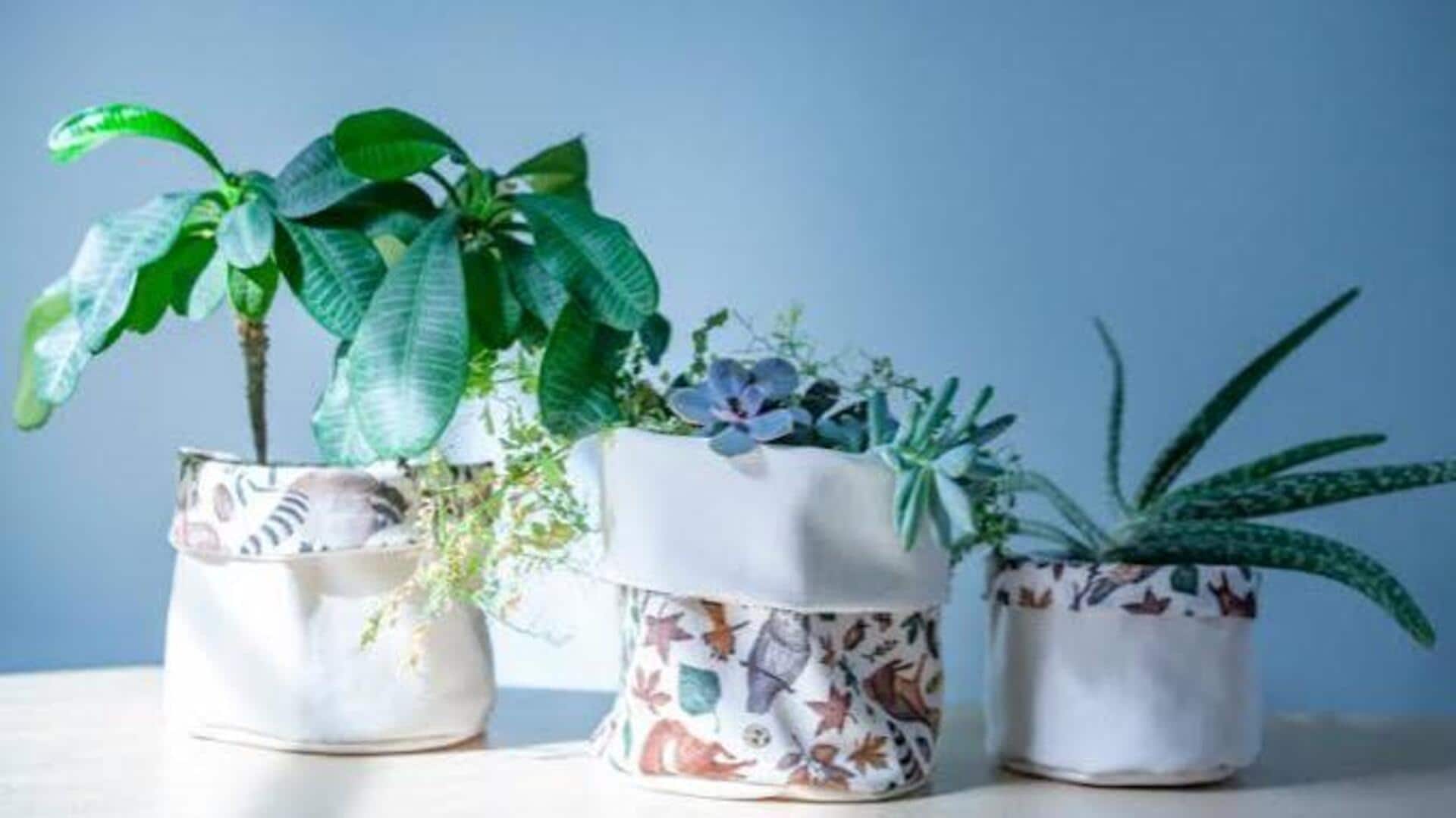
How to make beautiful planters from fabric
What's the story
African textiles are famous for their vibrant colors and intricate patterns. These fabrics can be creatively repurposed into eco-friendly planters, adding a touch of cultural artistry to your home or garden. By using these textiles, you not only embrace sustainability but also celebrate the rich heritage of African craftsmanship. Here are some practical tips on how to transform African textiles into unique planters that enhance your living space while being environmentally conscious.
Fabric choice
Selecting the right fabric
Choosing the right fabric is essential for making durable planters. Go for sturdy, tightly woven fabrics that can hold soil and moisture without disintegrating. Cotton and jute are great options, as they are both durable and biodegradable. Make sure the fabric is clean and free from any chemicals or treatments that could harm plants.
Base preparation
Preparing the planter base
Before you start, cut the fabric into the desired shape and size for your planter. A circular or square base works well. Use a double layer of fabric for added strength, and secure the edges with either stitching or glue to prevent fraying and ensure the base holds its shape when filled with soil.
Drainage setup
Adding drainage holes
Proper drainage is key to keeping your plants healthy. Use a hot nail or screwdriver to make small holes at the bottom of your planter. This will allow excess water to escape, preventing root rot. You can also place a layer of small pebbles at the bottom of the planter before adding soil to improve drainage further.
Planting process
Filling with soil and plants
Once your planter is ready, fill it with potting soil suitable for the type of plants you want to grow. Make sure not to overfill, so that soil doesn't spill out when watering. Gently place your plants into the soil, ensuring they are securely positioned, but not too tightly packed.
Care tips
Maintaining your textile planter
Regular maintenance keeps your textile planter in good condition. Water plants as needed, but avoid overwatering, which can weaken the fabric over time. Periodically check for any signs of wear or damage, and make repairs as necessary using additional stitching or adhesive methods, if needed.