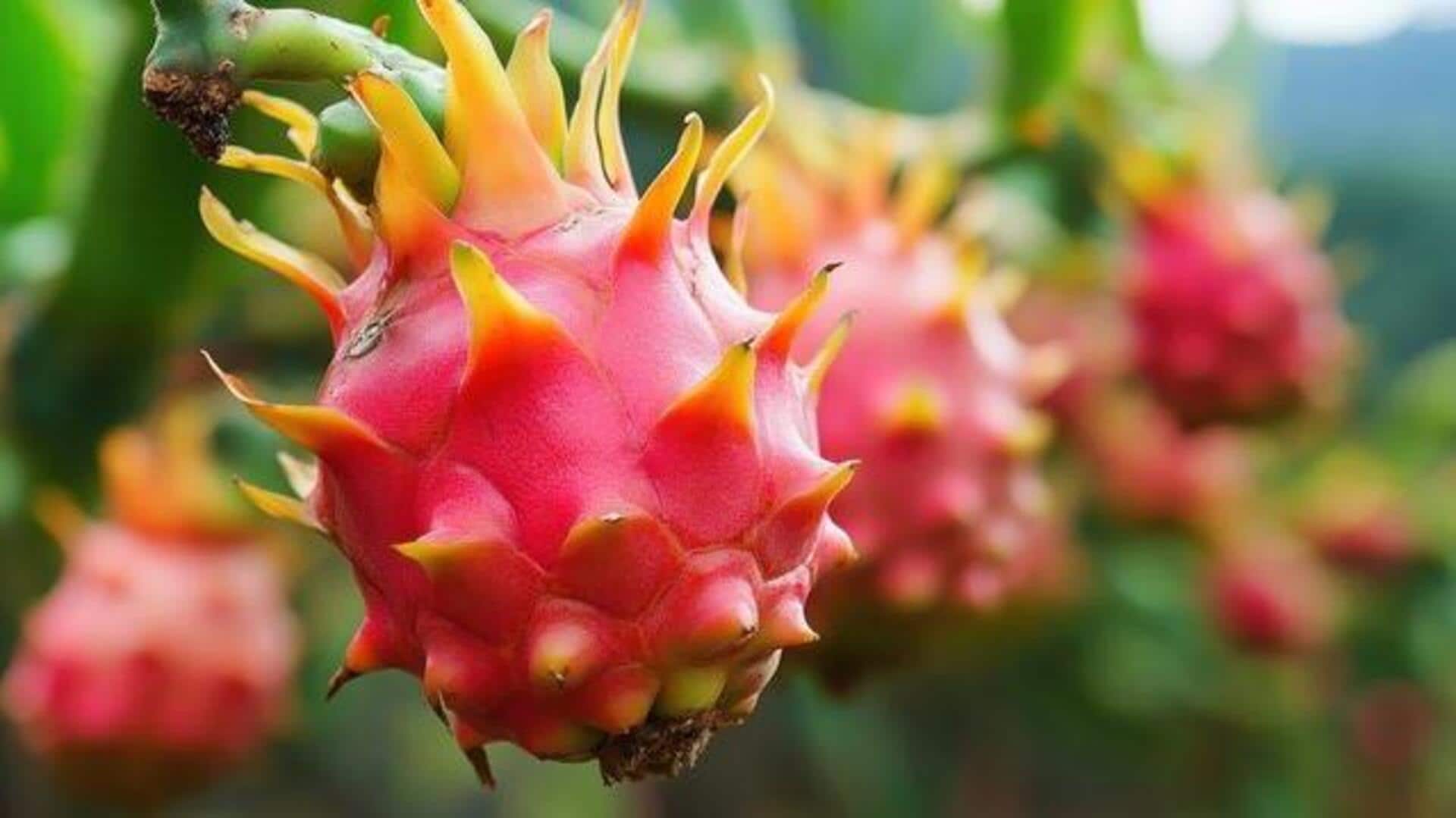
How to grow dragonfruit at home
What's the story
Dragon fruit, with its vibrant color and unique taste, is a tropical fruit that can be grown at home. Not only does it add a splash of color to your garden, but it also offers a rewarding gardening experience. With the right conditions and care, you can grow this exotic fruit in your backyard or balcony. Here's how to grow dragon fruit at home, successfully.
#1
Choosing the right variety
Selecting the right variety is key to growing dragon fruit at home.
There are three main types: Hylocereus undatus (white flesh), Hylocereus costaricensis (red flesh), and Hylocereus megalanthus (yellow skin with white flesh).
Each variety has its own taste and texture. Consider your climate and personal preference when choosing a variety.
Some may thrive better in warmer climates, while others might be more adaptable.
#2
Preparing the soil
Dragon fruit needs well-draining soil to flourish.
A sandy or loamy mix with good drainage is ideal.
You can prepare this by mixing regular potting soil with sand or perlite to improve drainage.
The pH level should ideally be between six and seven.
Make sure the soil is nutrient-rich by adding organic compost or well-rotted manure before planting.
#3
Planting techniques
Plant dragon fruit seeds or cuttings in pots or directly in the ground, depending on your space.
If planting seeds, sow them about half an inch deep in moist soil. Keep them watered but not waterlogged until they germinate.
For cuttings, plant them upright in the prepared soil after allowing them to dry out for a few days to prevent rot.
#4
Watering and fertilizing tips
Dragon fruit plants require regular watering but do not tolerate overwatering well; water them deeply once every two weeks during dry spells.
Fertilize every month during the growing season with a balanced fertilizer high in phosphorus to promote flowering and fruiting.
Avoid excessive nitrogen as it encourages foliage growth over fruit production.
Tip 5
Managing pests and diseases
Keep an eye out for common pests like aphids or mealybugs, which can be treated naturally using insecticidal soap or neem oil sprays if needed.
Ensure proper air circulation around plants to prevent fungal diseases like rot from developing due to excess moisture buildup within crowded spaces.
Regularly prune dead leaves, too, to keep plants healthy.