
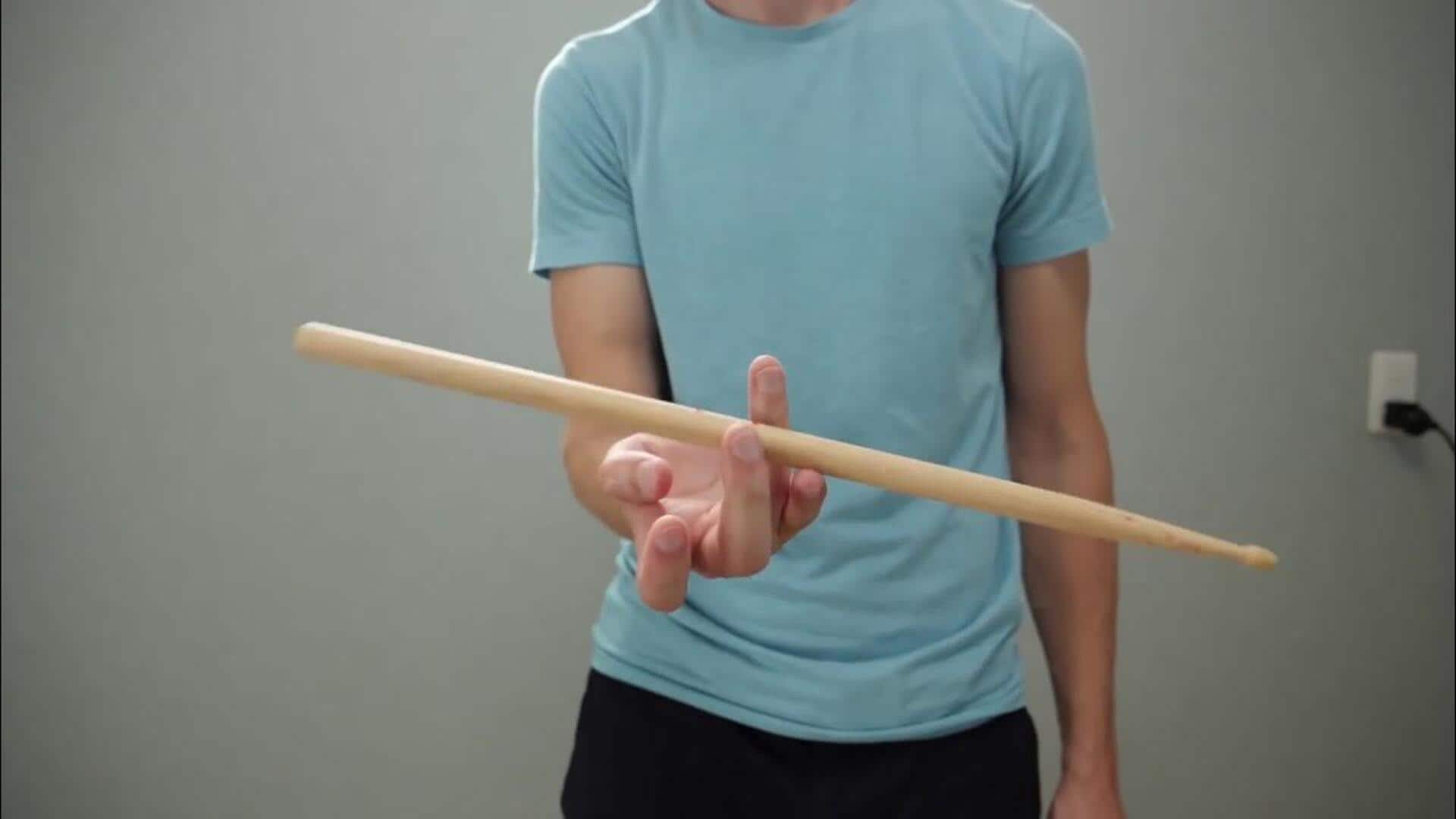
How drumstick twirling drills help improve dexterity
What's the story
Drumstick twirling drills are an essential part of improving coordination and dexterity for musicians. These exercises not only help in mastering rhythm but also improve hand-eye coordination, making it easier to play other instruments. By practicing these drills regularly, musicians can see a remarkable improvement in their ability to control and manipulate drumsticks with precision. Here are five surprising benefits of drumstick twirling drills.
#1
Enhances hand-eye coordination
Drumstick twirling drills require synchronized movement between the hands and eyes. This constant practice improves the brain's ability to process visual information and translate it into motor actions. Over time, musicians find themselves better at tracking fast-moving objects and executing complex patterns with ease.
#2
Boosts finger strength and flexibility
Regularly practicing drumstick twirling exercises strengthens the fingers and enhances their flexibility. The repetitive motion builds muscle endurance, allowing for longer practice sessions without fatigue. Stronger fingers also contribute to better control over other instruments, making it easier to play intricate pieces.
#3
Improves rhythmical accuracy
Drumstick twirling drills are all about maintaining a steady beat while executing precise movements. This focus on rhythmical accuracy translates directly into improved timing when playing music. Musicians who engage in these exercises often find themselves more in tune with the tempo of a piece, leading to more cohesive performances.
#4
Increases mental focus
Engaging in drumstick twirling drills requires a lot of concentration and mental engagement. This constant need to focus helps sharpen cognitive skills over time. Musicians often find that this increased mental acuity benefits them in other areas of life, not just music.
#5
Enhances creative expression
As musicians become more proficient at drumstick twirling drills, they also gain greater freedom of movement and control over their instruments. This newfound dexterity opens up avenues for creative expression, allowing them to experiment with different styles and techniques. The ability to execute complex patterns effortlessly encourages exploration and innovation in their musical journey.