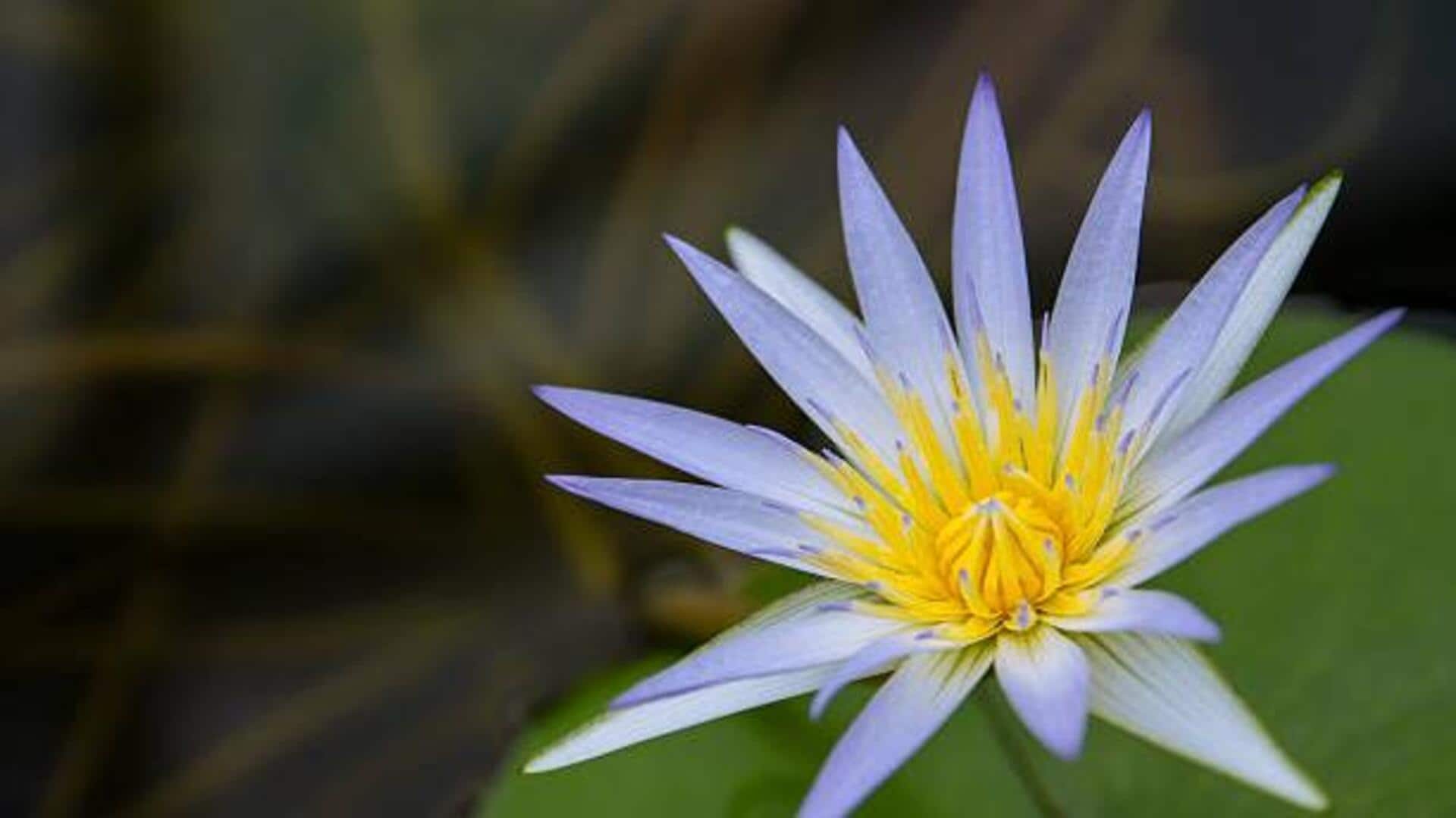
Egyptian blue lotus: What makes this flower so captivating
What's the story
The Egyptian blue lotus, a plant revered for its beauty and historical significance, is a true symbol of elegance. Native to the Nile River, this flower has been a part of ancient Egyptian culture for centuries. Its stunning blue petals, and calming fragrance make it a favorite among plant lovers and historians alike. Here's a look at the elegance and allure of the Egyptian blue lotus.
#1
Historical significance in Ancient Egypt
The Egyptian blue lotus was revered in ancient Egypt as a symbol of rebirth and creation. It was frequently depicted in art and hieroglyphics, symbolizing the sun's journey across the sky. The flower's ability to bloom during the day and close at night made it a perfect representation of life cycles. Its importance can be seen in numerous artifacts, including sculptures, and paintings.
#2
Botanical features and adaptations
Botanically, the Egyptian blue lotus is known for its unique features that allow it to thrive in aquatic environments. Its broad leaves float on water surfaces, providing shade for fish and other aquatic life. The flower itself blooms with striking blue petals that can change color depending on water conditions. This adaptability makes it an interesting subject for botanical studies.
#3
Cultivation practices for enthusiasts
Cultivating an Egyptian blue lotus requires specific conditions to mimic its natural habitat. It thrives in warm climates with plenty of sunlight, and it needs shallow water to grow properly. Enthusiasts should ensure that they provide nutrient-rich soil at the bottom of ponds or containers where these plants are kept. Regular maintenance includes monitoring water levels and removing debris from around the roots.
#4
Cultural impact beyond Egypt
Beyond its historical roots in Egypt, the Egyptian blue lotus has influenced cultures across the globe through trade routes established thousands of years ago. Today, it continues to inspire art, literature, and even modern-day gardening enthusiasts, who admire its beauty as well as cultural significance.