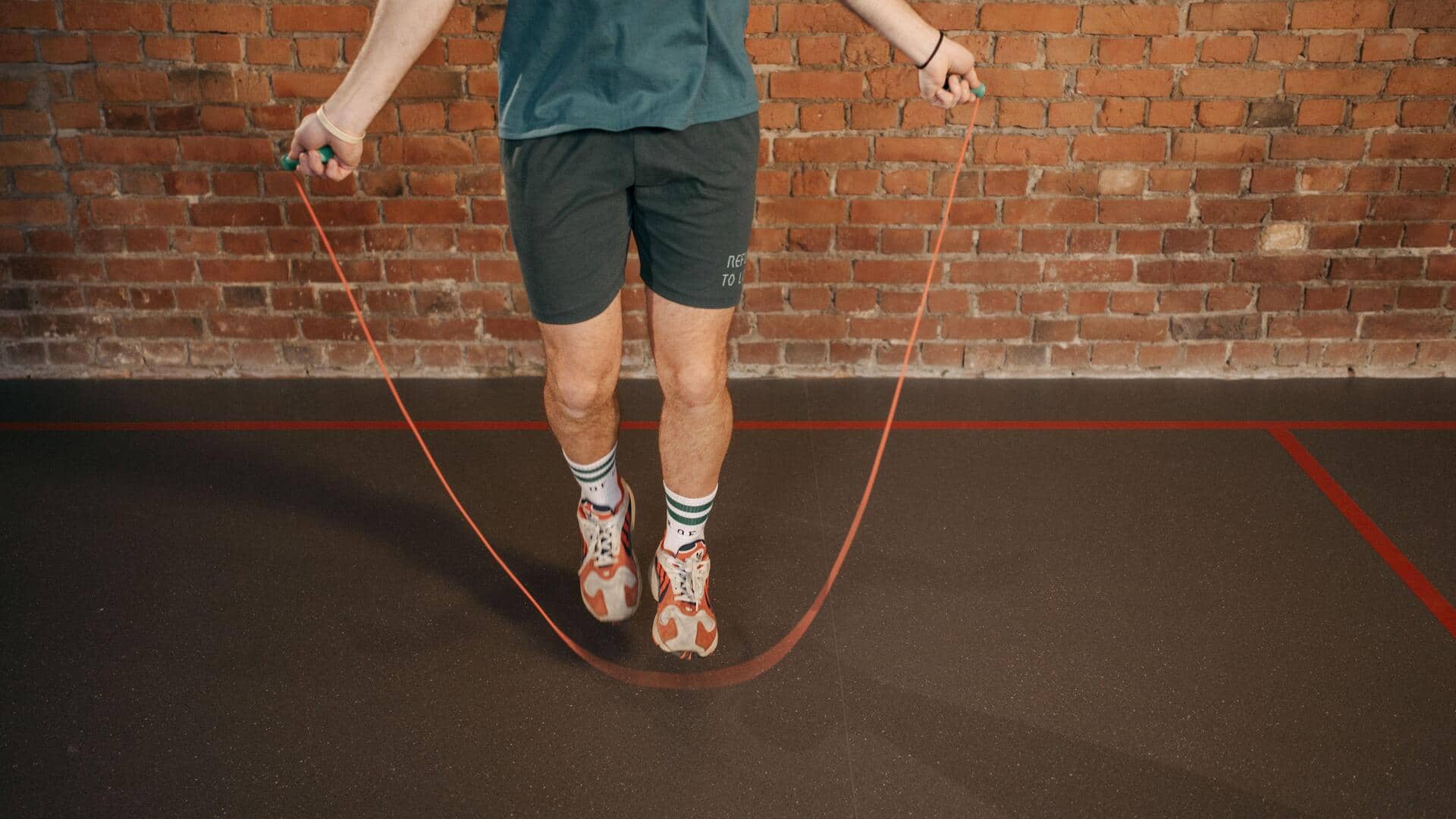
Skipping v/s climbing: The better workout for endurance
What's the story
Skipping and climbing are two popular activities that promise to improve endurance. Both exercises work different muscle groups and provide unique benefits. While skipping is a high-intensity cardio workout, climbing is more about strength and technique. Knowing the differences between these two can help you choose the right exercise for your endurance goals. Here's a look at how skipping and climbing boost endurance.
#1
Cardiovascular benefits of skipping
Skipping is an amazing cardiovascular workout that gets your heart pumping. It raises your heart rate quickly, which improves cardiovascular health over time.
Regular skipping sessions can improve your stamina by enhancing blood circulation and oxygen flow to the muscles.
It also helps burn calories fast, making it a great option for those looking to lose weight while improving their endurance.
#2
Strength building through climbing
Climbing is all about using your body weight to build strength, especially in the upper body and core.
It requires a lot of balance, coordination, and mental focus, which also helps improve your overall physical resilience.
As you climb different routes with varying difficulty levels, your muscles adapt and grow stronger over time.
This strength contributes to better endurance during prolonged physical activities.
#3
Flexibility and agility from skipping
One of the biggest advantages of skipping is that it improves flexibility and agility.
The repetitive motion of skipping rope increases joint range of motion while improving coordination.
This agility translates into better performance in other sports or activities requiring quick movements or changes in direction.
#4
Mental focus required in climbing
Climbing also requires a lot of mental focus, as you have to plan your moves carefully while tackling different terrains or routes.
This mental engagement keeps you focused on your goals during the climb, which is important for improving your overall endurance over time.