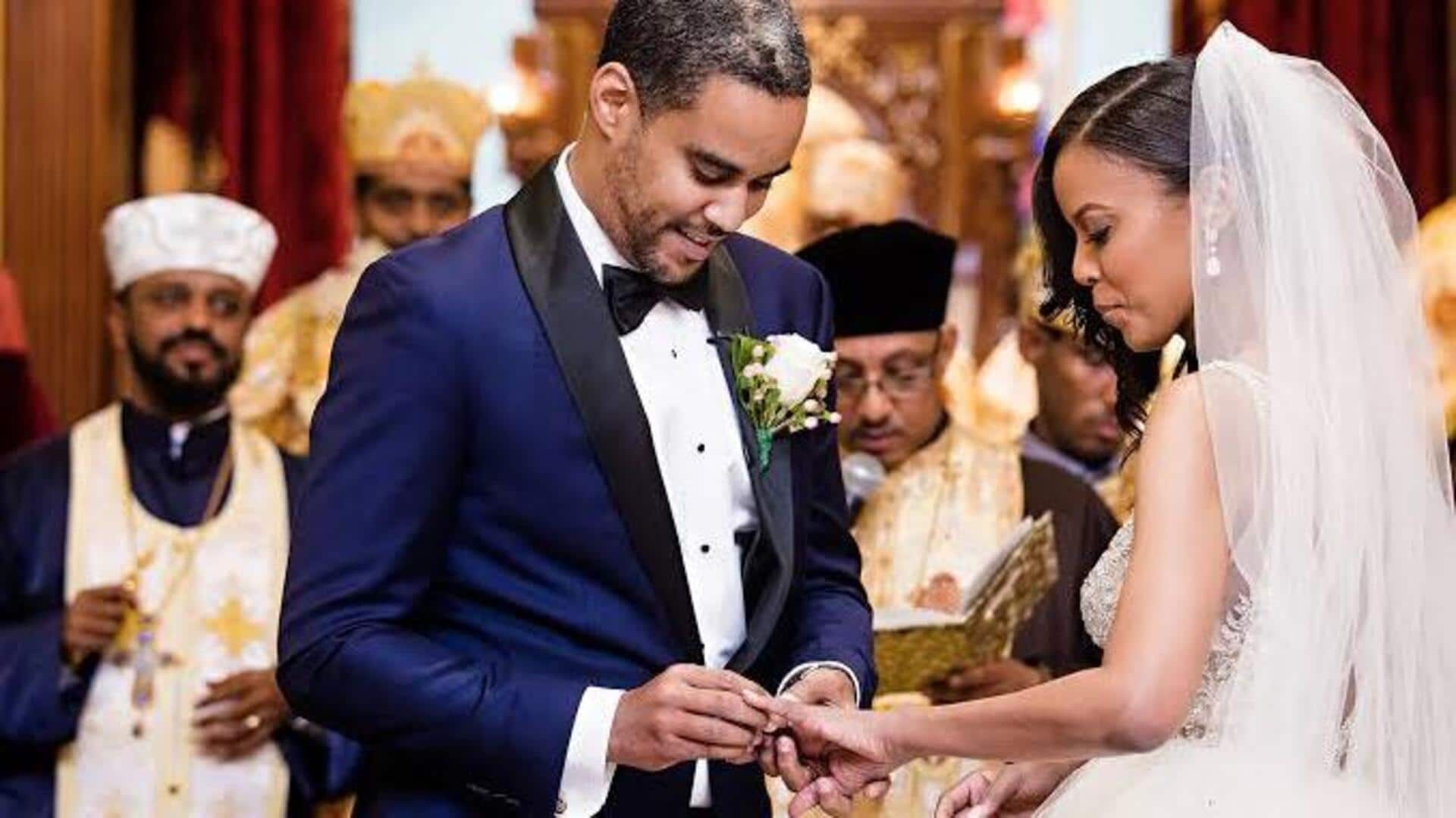
All about the wedding customs of Ethiopia
What's the story
Ethiopian weddings are a beautiful mix of traditions and cultural practices that highlight the country's rich heritage. Each region has its own unique customs, making every wedding a one-of-a-kind experience. From colorful attire to traditional ceremonies, these weddings are a feast for the eyes, and a celebration of love and unity. Here are five unique Ethiopian wedding traditions that make these celebrations so special.
#1
The role of 'kidan' in ceremonies
In Ethiopian weddings, the term kidan refers to a guardian or witness who plays an important role in the ceremony.
The kidan is usually a respected elder or family member who ensures that the marriage contract is honored and upheld.
This tradition emphasizes trust and accountability within the marriage.
The presence of a kidan is considered essential for the legitimacy of the union.
#2
Traditional attire: A symbol of culture
Traditional Ethiopian wedding attire varies from region to region, but it is always rich in symbolism and cultural significance.
Women often wear beautiful dresses called habesha kemis, which are adorned with intricate patterns and bright colors.
Men may wear shamma, a white cotton cloth draped over their shoulders.
These garments not only highlight the couple's cultural heritage but also add to the beauty of the ceremony.
#3
The 'gursha' tradition: Sharing food as a bond
Gursha is an endearing tradition where couples feed each other during their wedding ceremony.
This act symbolizes love, care, and mutual support between partners.
It also serves as a way for families to bond by sharing food together, a vital part of Ethiopian culture.
The act of feeding each other reinforces emotional connections between spouses.
#4
'Melse' dance: Celebrating unity through movement
Melse is a traditional dance performed at Ethiopian weddings that celebrates unity among guests and families involved in the marriage.
Participants form circles or lines while dancing rhythmically to traditional music played on instruments like the masenqo or kebero drums.
This lively dance brings everyone together in joyous celebration.
#5
'Abesha' coffee ceremony: A welcoming gesture
The abesha coffee ceremony is an integral part of Ethiopian hospitality traditions, especially during weddings.
It involves roasting green coffee beans over an open flame until they release aromatic scents, before brewing them into rich coffee served in small cups called cini.
Guests are welcomed warmly with this gesture, symbolizing friendship and goodwill between families joining together through marriage bonds.