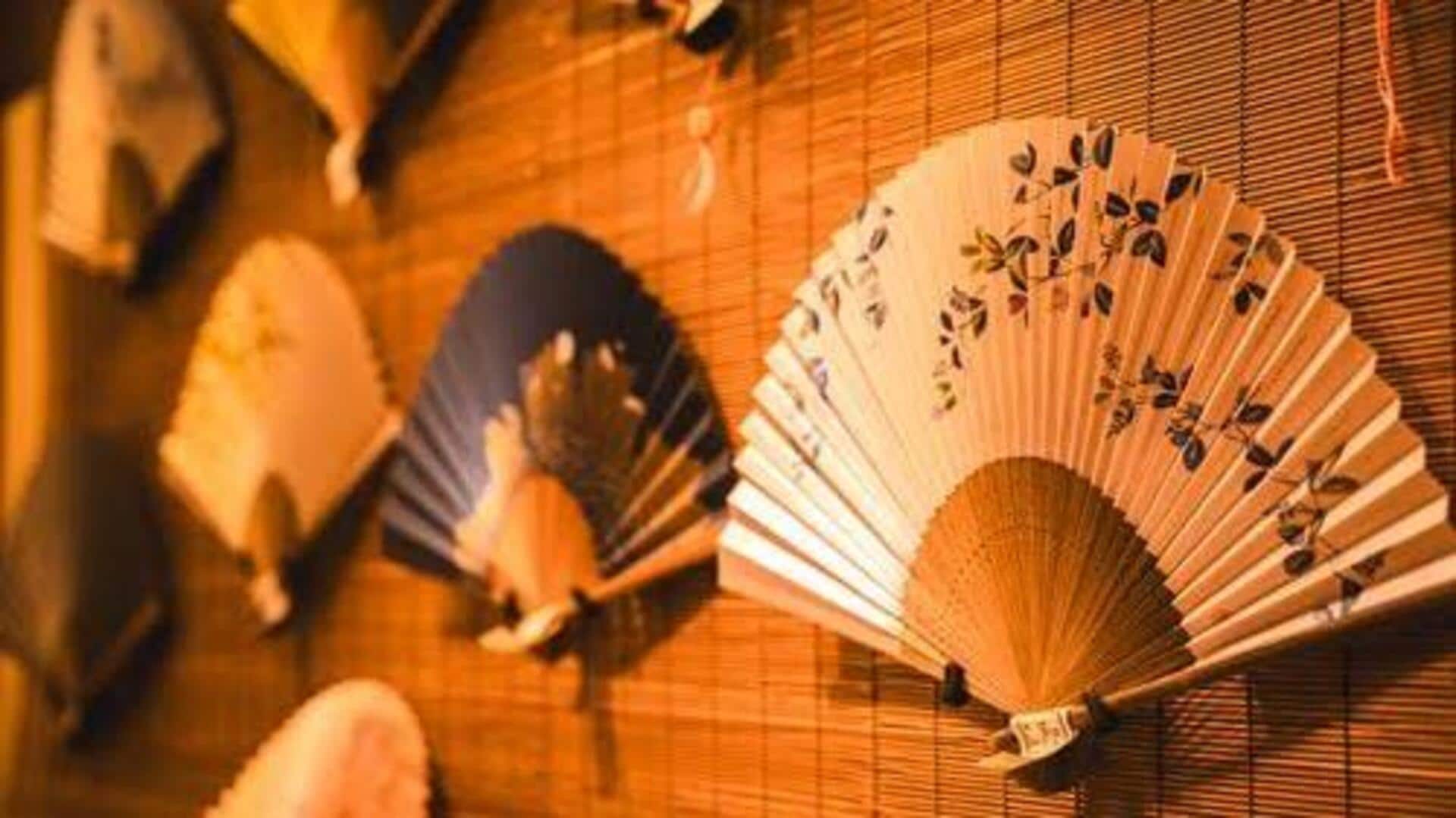
This traditional Japanese fan is a collector's dream
What's the story
Kyoto, the cultural capital of Japan, is famous for its rich heritage and traditional crafts. Among these, the art of making hand-painted fans stands out. This intricate craft has been passed down through generations and continues to be a symbol of Kyoto's artistic legacy. The fans are not only functional but also serve as beautiful pieces of art, showcasing the skill and creativity of artisans.
#1
The history behind hand-painted fans
The tradition of hand-painted fans in Kyoto dates back centuries.
Originally used by nobility and samurai as status symbols, these fans became popular among common people as well.
The fans were made with bamboo frames and paper or silk surfaces, which were painted with intricate designs.
This craft has been preserved over the years, with artisans still practicing traditional techniques.
#2
Techniques used by artisans
Artisans use a variety of techniques to create these beautiful hand-painted fans.
They start by carefully selecting high-quality bamboo for frames, and paper or silk for surfaces.
Then, they use natural pigments to paint detailed images or patterns on the surface.
Each fan is unique due to the personal touch of the artisan, who may even incorporate elements like gold leaf for added elegance.
#3
Modern adaptations in fan design
While traditional designs remain popular, modern adaptations have also made their way into fan-making in Kyoto.
Some artisans experiment with contemporary themes or abstract patterns, while still paying homage to classic motifs like cherry blossoms or cranes.
These modern designs appeal to a wider audience, while preserving the essence of this age-old craft.
Tip 1
Visiting fan-making workshops in Kyoto
For those interested in experiencing this art firsthand, visiting fan-making workshops in Kyoto can be rewarding.
Many workshops offer hands-on sessions where participants can try painting their own fans under expert guidance.
Not only does this provide insight into the meticulous process involved, but it also allows one to appreciate its cultural significance more deeply.