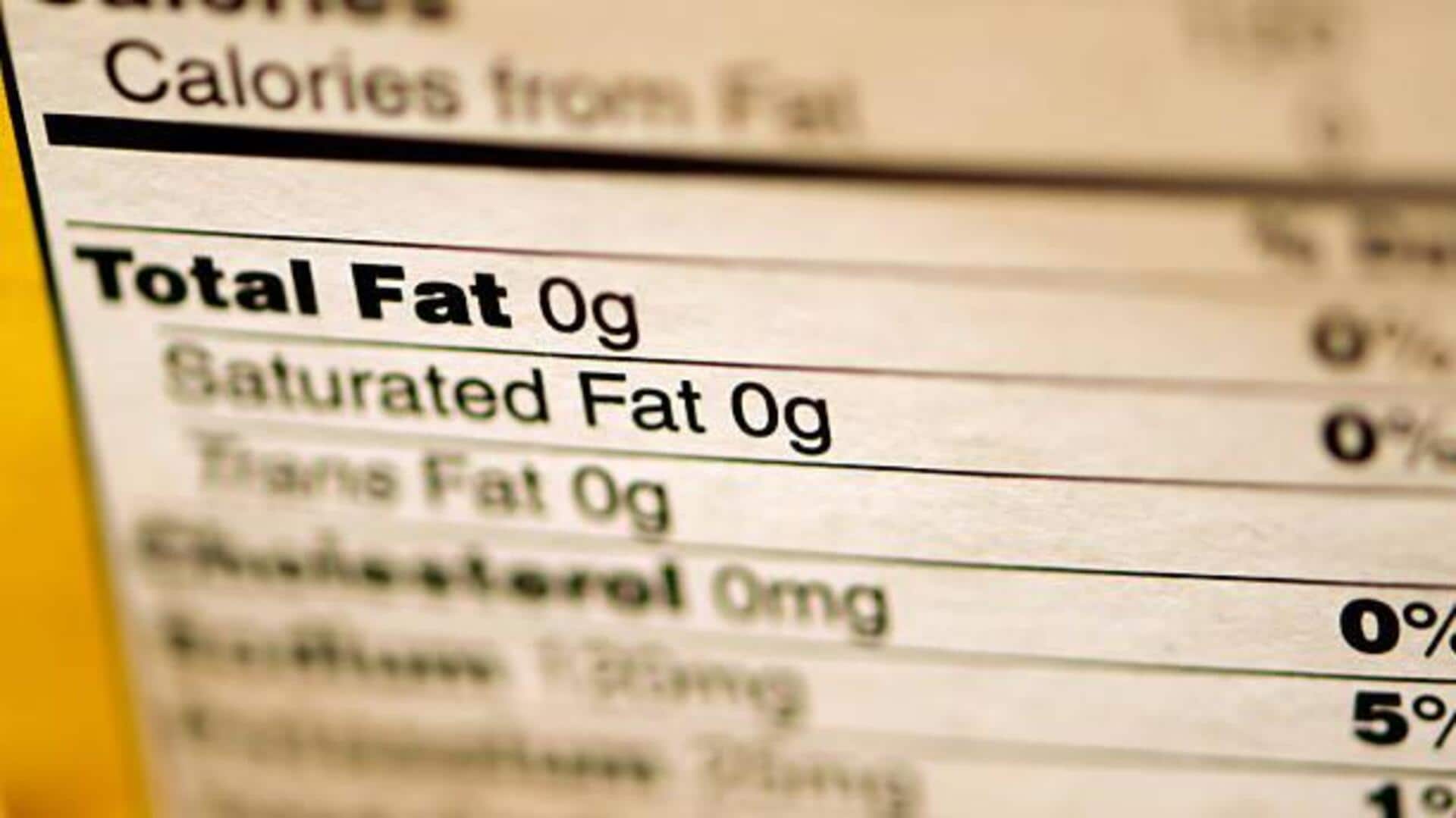
What everyone gets wrong about fat-free foods
What's the story
We all believe that fat-free foods are the best bet for weight loss, but that is not always the case. Many of us think that skipping fat means skipping calories, but that is not true. Fat-free foods can be loaded with sugar and other ingredients, which can actually make you gain weight. Here is how you can make better choices when it comes to fat-free foods.
#1
The calorie misconception
Most people think that fat-free means calorie-free, which is a misconception.
Many fat-free products are loaded with sugar to make up for the lack of flavor from missing fat. This can lead to higher calorie intake than expected.
For instance, a fat-free yogurt may have as much sugar as a regular one, nullifying any calorie-saving benefits.
#2
Hidden sugars in fat-free products
Fat-free foods often have hidden sugars to make them taste better.
These added sugars can add up quickly, adding to the calorie count, and possibly leading to weight gain if consumed in excess.
For example, a single serving of fat-free salad dressing may have more than five grams of sugar, which is equivalent to about one teaspoon.
#3
Nutrient imbalance in fat-free options
Going for fat-free options may also mean missing out on essential nutrients that healthy fats provide.
Fats are essential for absorbing vitamins A, D, E, and K, which are important for overall health.
Skipping healthy fats completely may lead to nutritional deficiencies over time.
Tip 1
Reading labels for informed choices
To make informed choices with fat-free foods, it is important to read labels carefully.
Look out for added sugars and other ingredients that may increase calorie content.
Compare different brands and products before making a decision.
Understanding what goes into your food can help you avoid unwanted calories and make healthier choices.