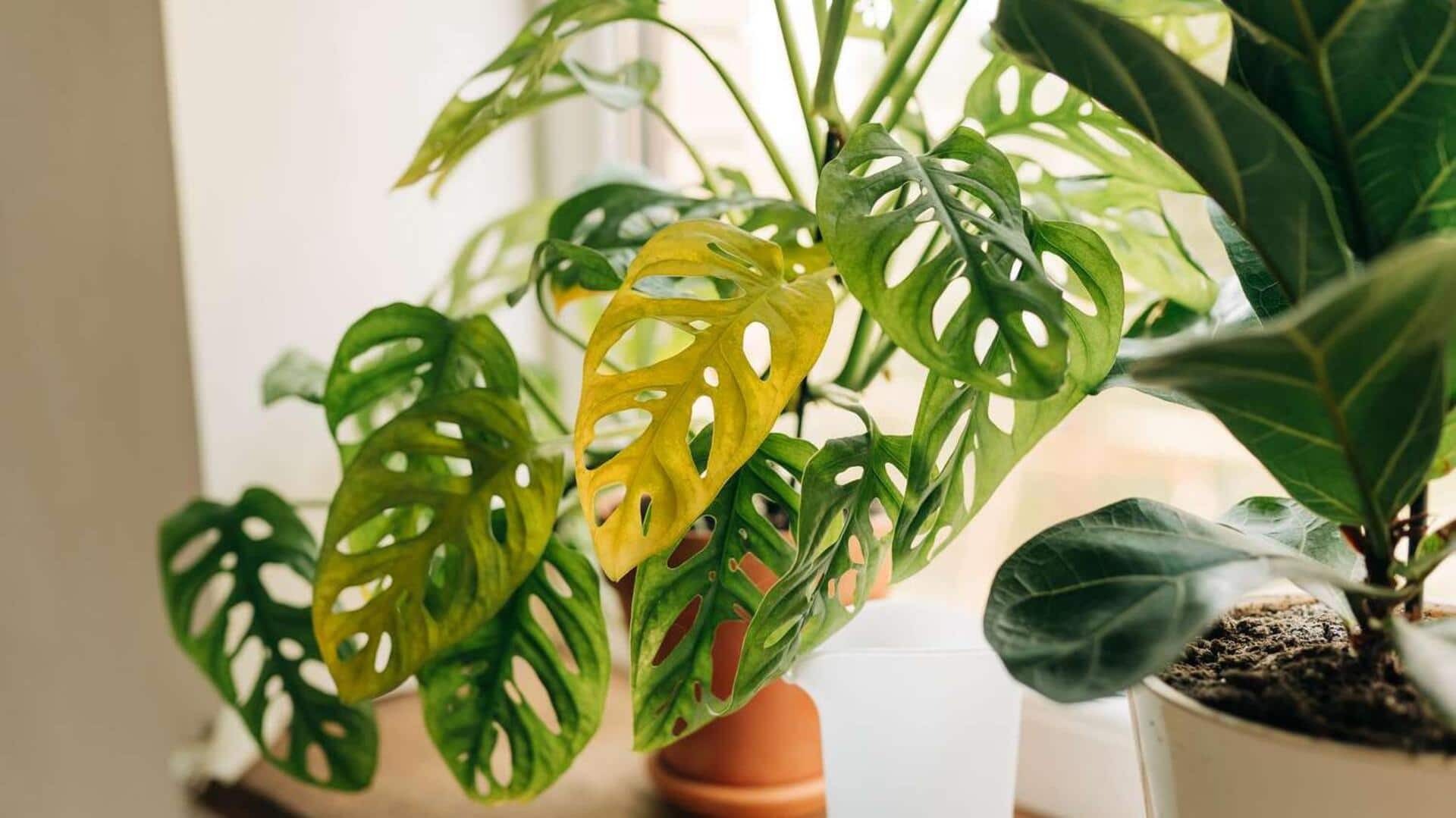
How to fix faded leaf color in houseplants
What's the story
Indoor plants are a great way to add a splash of color and life to your home. But, sometimes, the leaves of these plants lose their vibrancy. This can happen due to a number of reasons, including improper lighting, watering issues, or nutrient deficiencies. Knowing how to fix faded leaf color can keep your plants healthy and looking their best. Here are five practical tips to restore the vibrancy of your indoor plant leaves.
Tip 1
Adjust light exposure
Proper light exposure is important for plant health.
If leaves fade, it could mean too little or too much light. Move plants closer to natural light sources or use grow lights if needed.
Alternatively, if direct sunlight is causing leaf burn, try relocating them further away from windows or using sheer curtains to diffuse harsh rays.
Tip 2
Optimize watering routine
Overwatering or underwatering can lead to faded leaves.
Make sure you water your plants according to their specific needs and the season.
Always check the topsoil before watering; it should be dry but not completely parched.
Using pots with drainage holes can help avoid waterlogging.
Tip 3
Fertilize appropriately
Nutrient deficiencies can cause leaves to lose their color.
Using a balanced fertilizer every few weeks during the growing season can help restore vibrancy.
However, avoid over-fertilizing as it may damage roots and worsen discoloration.
Tip 4
Maintain humidity levels
Low humidity levels indoors can stress some plant species, leading to faded leaves.
To increase humidity around your plants, consider using a humidifier or placing a tray of water near them.
Regular misting can also help maintain adequate moisture levels in the air.
Tip 5
Prune damaged leaves
Sometimes, pruning is the best way to help your plant bounce back.
Trim away any damaged or discolored leaves with clean scissors or pruning shears.
This not only improves the appearance but also allows the plant to focus its energy on new growth and healthy foliage development.