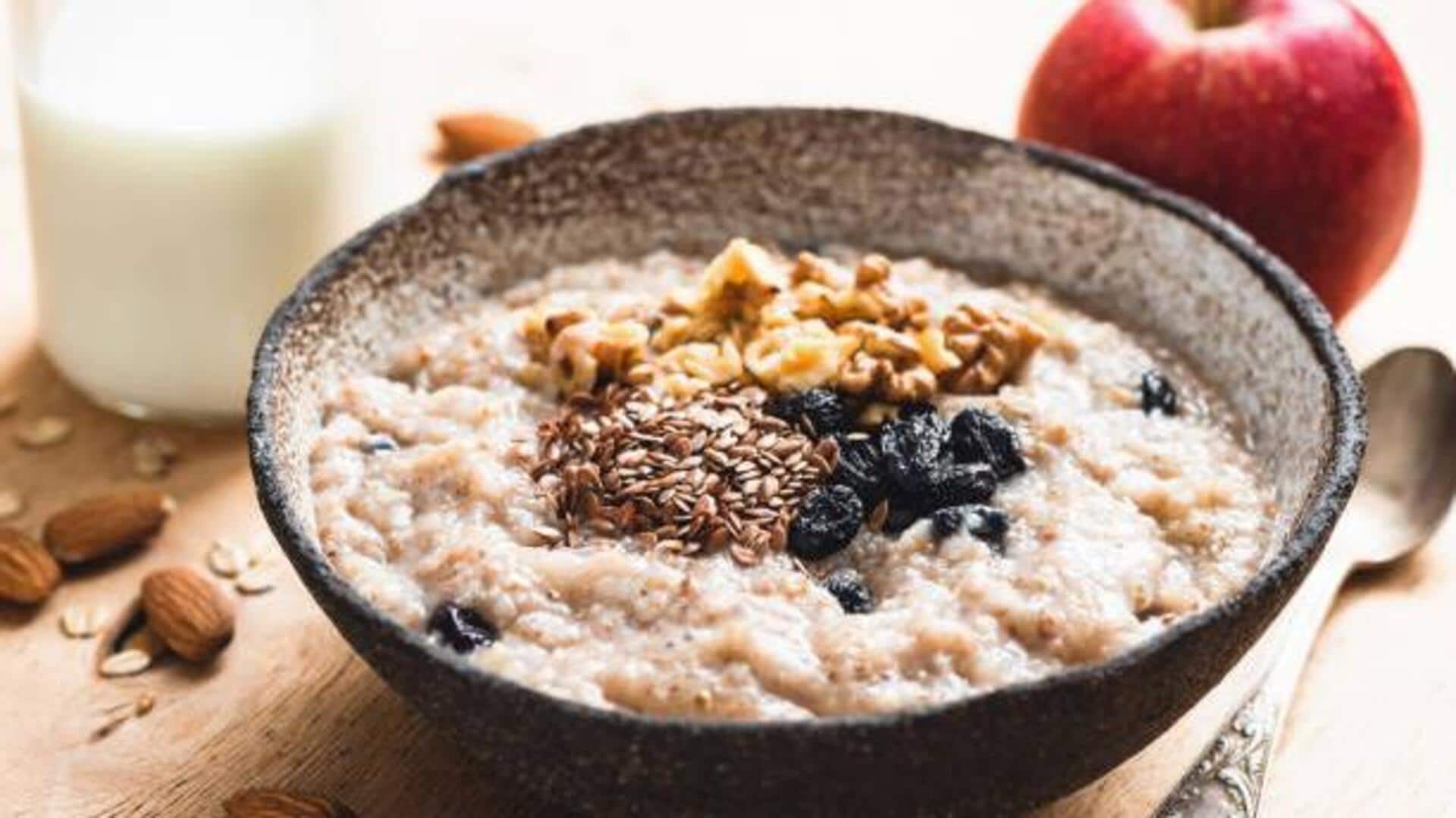
Flaxseed oatmeal: A heart-healthy breakfast choice
What's the story
Flaxseed oatmeal is a simple yet effective breakfast option that can help lower cholesterol levels. This combination is rich in fiber and omega-3 fatty acids, which are known to promote heart health. By adding flaxseeds to your morning routine, you can take a natural step toward improving your cardiovascular wellness. Here's how you can incorporate flaxseed oatmeal into your diet, and the benefits it offers.
#1
Nutritional benefits of flaxseeds
Flaxseeds are loaded with essential nutrients, such as lignans, which have antioxidant properties.
They are also an excellent source of soluble fiber that helps reduce cholesterol by binding bile acids in the digestive system.
This process prompts the body to use cholesterol to make more bile acids, lowering overall cholesterol levels.
Flaxseeds also provide plant-based omega-3 fatty acids, which help reduce inflammation and improve heart health.
#2
Preparing flaxseed oatmeal
To prepare flaxseed oatmeal, start with a serving of rolled oats cooked in water or milk as per your choice.
Once cooked, stir in one tablespoon of ground flaxseeds for maximum nutrient absorption.
You can sweeten it naturally with honey or fresh fruits, like bananas or berries, for added flavor and nutrition.
This easy preparation method makes it convenient to add this heart-healthy meal into your daily routine.
#3
Incorporating flaxseed oatmeal into your diet
Incorporating flaxseed oatmeal into your diet does not have to be complicated.
Start by having it three times a week, and gradually increase the frequency as per your comfort.
You can also try different variations by adding nuts or seeds for added texture and nutrients.
The versatility of this meal makes it easy to customize according to taste preferences while reaping its health benefits.
Tip 4
Monitoring cholesterol levels
Regularly monitoring cholesterol levels is key when adding new foods like flaxseed oatmeal into your diet plan.
Get periodic check-ups done with healthcare professionals, who can guide you on how effectively these dietary changes are working toward achieving desired results on lipid profiles over time, without compromising overall health status.