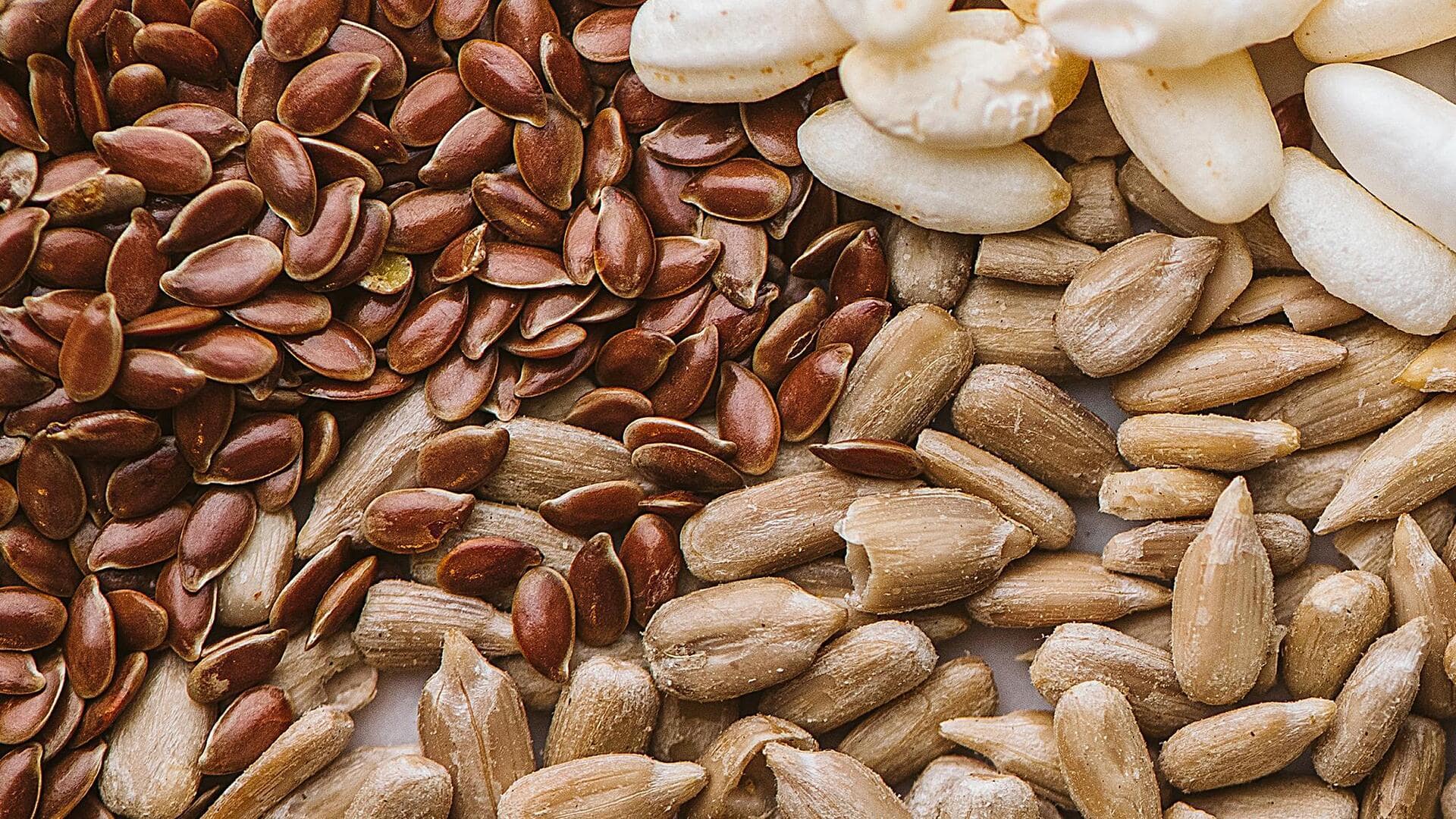
Flaxseeds v/s sunflower seeds: Comparing their nutrition
What's the story
Flaxseeds and sunflower seeds are two popular options for those looking to boost their nutrition. Both seeds are packed with essential nutrients and offer unique health benefits. Knowing the nutritional profiles of these seeds can help you make informed dietary choices. Here's a look at the key differences in nutrition between flaxseeds and sunflower seeds, their health benefits, and how to include them in your diet.
#1
Omega-3 fatty acids in flaxseeds
Flaxseeds are famous for their omega-3 fatty acids, especially alpha-linolenic acid (ALA).
These essential fats are important for heart health as they help reduce inflammation and lower cholesterol levels.
One tablespoon of flaxseeds provides about 2.4 grams of ALA, which is more than what most people need in a day.
Including flaxseeds in your diet can help you meet your omega-3 requirements.
#2
Vitamin E content in sunflower seeds
Sunflower seeds are loaded with vitamin E, a powerful antioxidant that protects cells from damage by free radicals.
A one-ounce serving of sunflower seeds gives you about 10% of the daily recommended intake of vitamin E.
This nutrient is important for maintaining healthy skin and eyes, and supporting immune function.
Adding sunflower seeds to your diet can boost your vitamin E intake.
#3
Fiber benefits from flaxseeds
Flaxseeds are also a great source of dietary fiber, which promotes digestive health by ensuring regular bowel movements and preventing constipation.
One tablespoon of ground flaxseeds has about three grams of fiber, which is about 10% of the daily recommended intake for adults.
Eating enough fiber can also help you maintain a healthy weight by keeping you full.
#4
Protein power in sunflower seeds
Sunflower seeds are also a great source of plant-based protein, which is essential for muscle repair and growth.
One ounce of sunflower seeds has around six grams of protein, which is about 12% of the daily recommended intake for adults.
Including sunflower seeds in your meals can help you meet your protein needs without having to rely on animal products.
Tip 1
How to incorporate these seeds into your diet
Adding flaxseeds or sunflower seeds to your diet is easy.
You can sprinkle them on salads or yogurt or blend them into smoothies or baked goods like muffins or bread.
Ground flaxseed mixes well with other ingredients without changing the taste much, while whole sunflower seed adds a pleasant crunch when added to dishes like granola or trail mix.