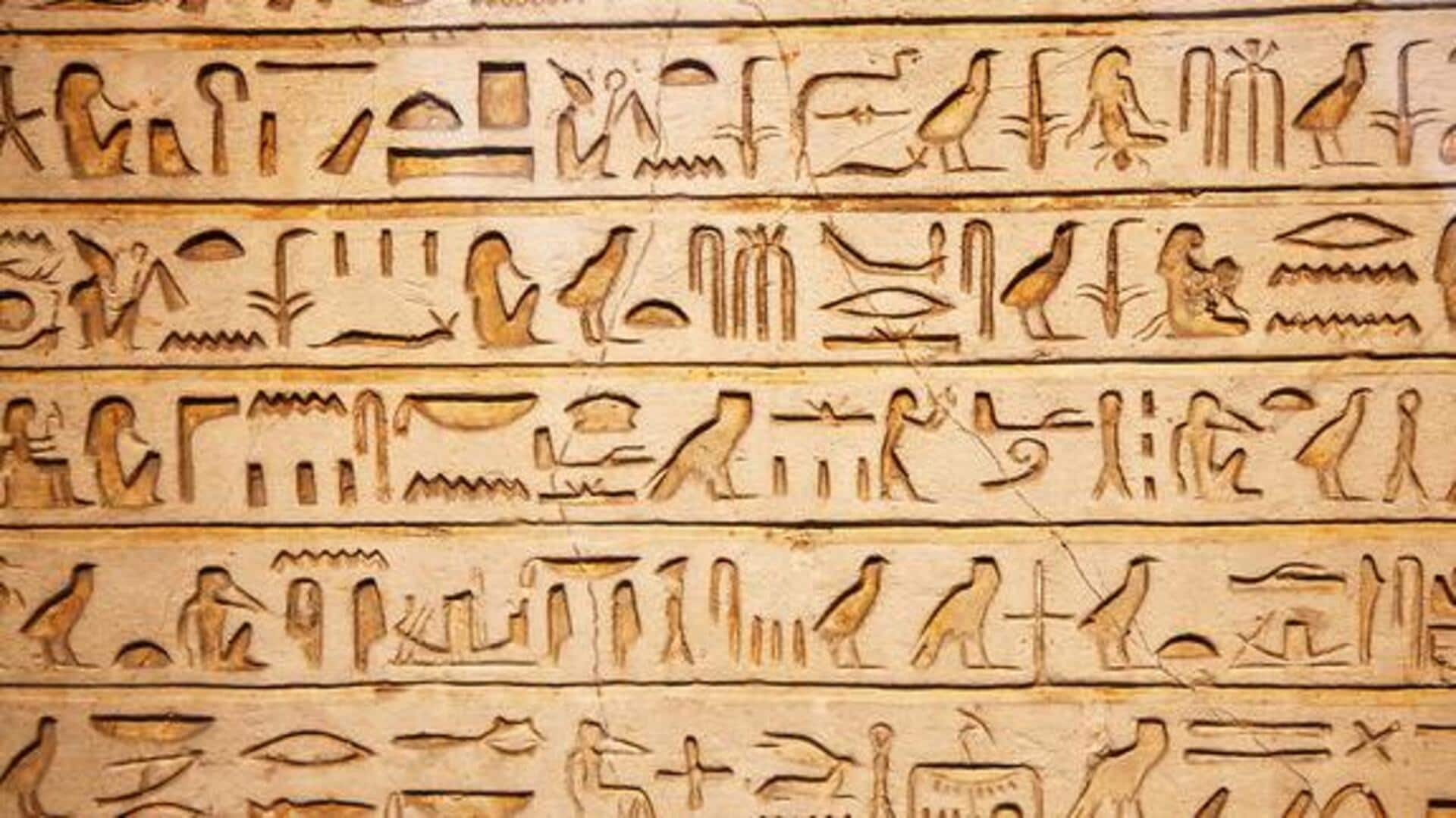
What are hieroglyphs?
What's the story
Ancient Egyptian hieroglyphs are making a comeback in modern graphic design, thanks to their unique visual language and historical significance. These symbols are being used by designers to add a touch of history and cultural depth to their work. The resurgence is not just about aesthetics but also about exploring the meanings and stories these symbols carry. As designers look for inspiration beyond the contemporary, hieroglyphs offer a rich source of creativity.
Symbolism
Understanding hieroglyphic symbolism
Hieroglyphs were more than just letters; they were symbols that represented sounds, ideas, and objects.
Each symbol had its own meaning, which could change depending on its context.
In modern design, these symbols are used to give depth and narrative to visual projects. By using hieroglyphs, designers can connect with audiences on a cultural level, adding layers of meaning that go beyond the obvious.
Design integration
Incorporating hieroglyphs in modern design
Designers are creatively incorporating hieroglyphs into various mediums, be it print, digital, or fashion.
These symbols can be used as patterns, logos, or even standalone art pieces.
The challenge lies in integrating them seamlessly without losing their historical significance or overwhelming the viewer.
When done right, this integration can result in striking visuals that pay homage to ancient cultures while remaining relevant today.
Audience engagement
The impact on audience perception
Using hieroglyphs in graphic design can also affect how audiences perceive a piece.
These symbols evoke curiosity and intrigue, prompting viewers to explore their meanings further.
This engagement can lead to a deeper appreciation for both the artwork itself and the culture it represents.
By tapping into this curiosity, designers can create more impactful connections with their audience.
Modern challenges
Challenges of using hieroglyphs today
One of the biggest challenges of using hieroglyphs in modern design is ensuring that they are used correctly and respectfully.
Since these symbols have deep cultural roots, misinterpretation or misuse can lead to criticism or backlash from those who are aware of their historical context.
Designers need to do thorough research and understand each symbol's significance before incorporating them into their work.