
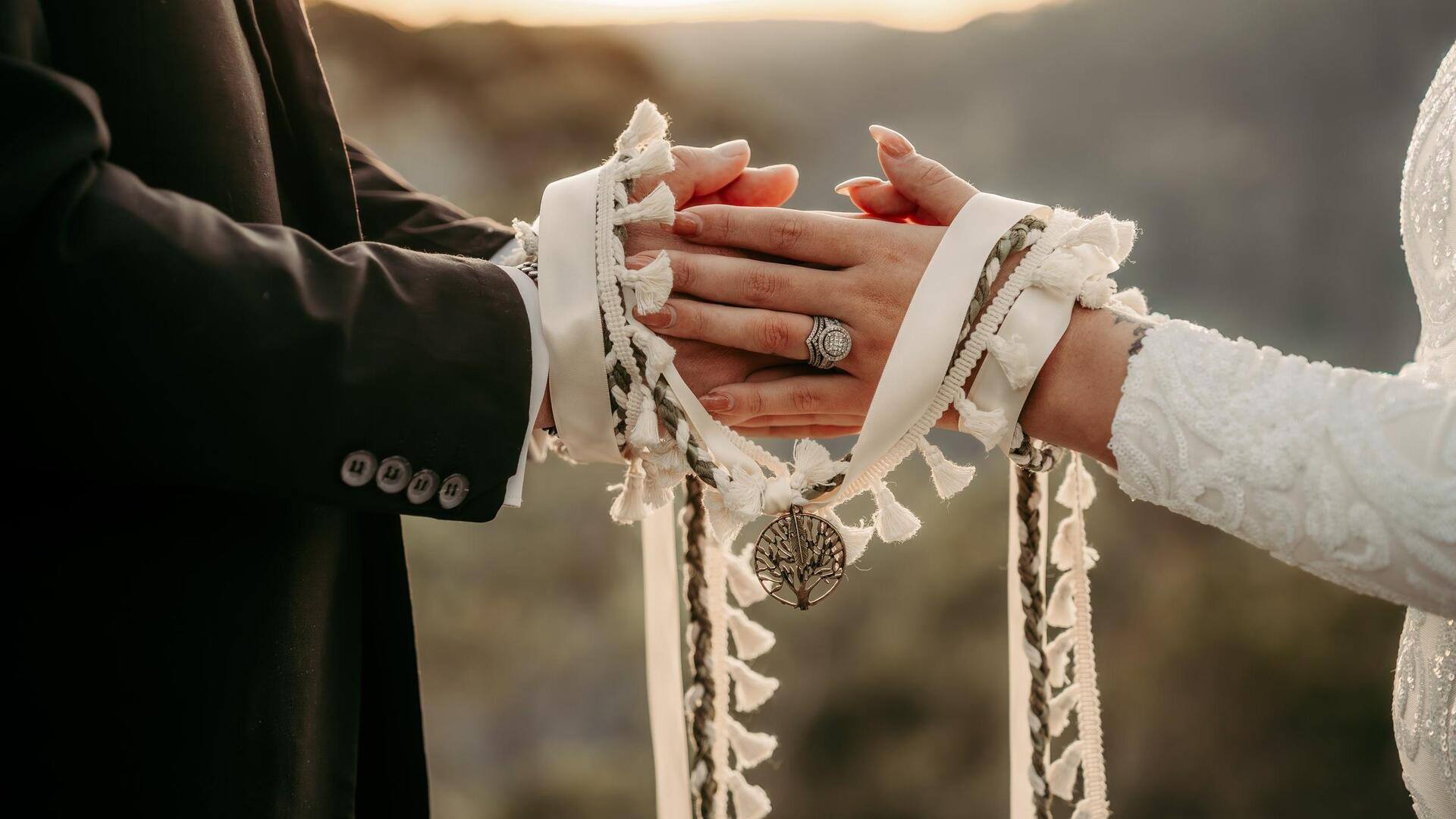
Hand-tying in weddings: All about this unique tradition
What's the story
Hand-tying is an ancient wedding tradition where the couple's hands are tied together, symbolizing their union. This ritual, rooted in various cultures, signifies the binding of two lives into one. It is often part of ceremonies to represent commitment and partnership. While modern weddings may not always include it, hand-tying remains a powerful symbol of love and unity for many couples.
#1
Celtic handfasting tradition
Celtic handfasting is an ancient ritual that dates back to pre-Christian times in Ireland and Scotland. In this tradition, the couple's hands are tied with a ribbon or cord during the ceremony. It symbolizes the binding of their lives together for a year and a day, after which they could choose to renew the bond or part ways. Today, many couples incorporate this practice as a way to honor their heritage.
#2
Hindu wedding rituals
In Hindu weddings, the concept of tying hands is seen in the saptapadi ceremony, where the couple takes seven steps together while their garments are tied. Each step represents a vow they make to each other, focusing on aspects like love, respect, and fidelity. This ritual is central to Hindu weddings as it symbolizes the couple's commitment to walk together through life.
#3
African cultural practices
Across various African cultures, hand-tying ceremonies are common during weddings as a sign of unity and strength in marriage. The practice often involves colorful fabrics or beads that signify different blessings from family members or elders present at the ceremony. It emphasizes community support for the couple's journey ahead.
#4
Native American traditions
Native American tribes have their own versions of hand-tying rituals that vary from one community to another but generally focus on nature's elements like earth or water as symbols of purity and strength in marriage bonds. These ceremonies may include tying hands with natural materials like twine or plant fibers while reciting prayers or blessings from tribal leaders.
#5
Modern interpretations
In contemporary weddings, hand-tying has evolved into creative expressions tailored to each couple's preferences while retaining its core symbolism of unity. Couples use personalized cords reflecting their values or interests, making the ritual unique. This modern twist allows for personal expression while honoring tradition.