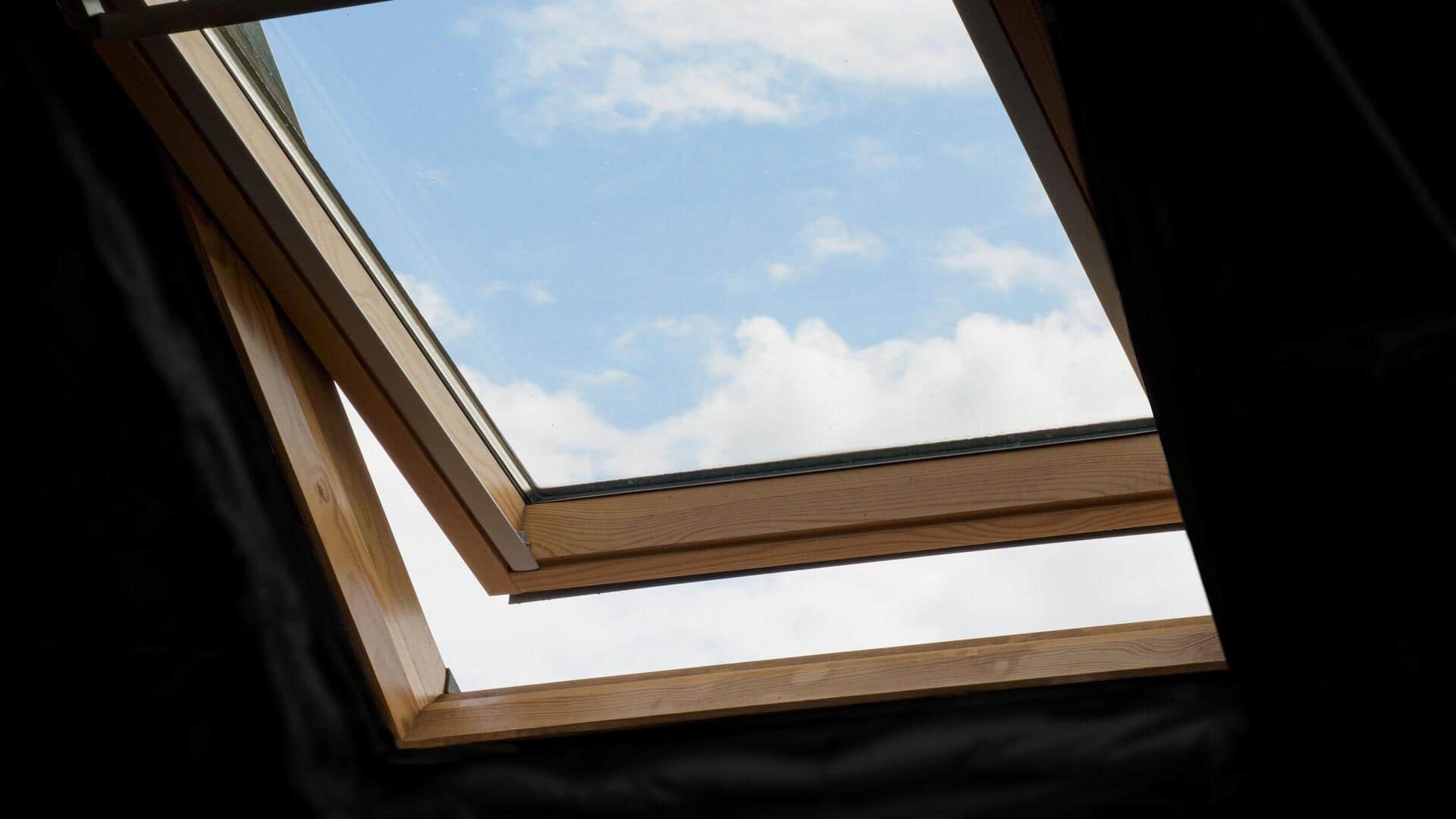
5 home ventilation tips every beginner should know
What's the story
Proper home ventilation is essential for maintaining a healthy living environment. It helps in reducing indoor air pollution, controlling humidity levels, and ensuring a constant supply of fresh air. For beginners, understanding the basics of home ventilation can be daunting. However, with a few simple tips, you can significantly improve the air quality in your home. Here are some practical insights to help you get started with effective home ventilation.
Tip 1
Utilize natural cross-ventilation
Natural cross-ventilation is one of the simplest and most effective ways to improve indoor air quality.
It involves opening windows and doors on opposite sides of your home to create a flow of fresh air.
This technique helps in reducing indoor pollutants and regulating temperature without relying on mechanical systems.
Make sure there are no obstructions in the path of airflow to maximize efficiency.
Tip 2
Install exhaust fans in key areas
Exhaust fans are essential in places like kitchens and bathrooms where moisture and odors can build up quickly.
They suck out stale air, moisture, and pollutants from these areas, keeping them fresh.
When installing exhaust fans, make sure they are properly sized for the room to ensure optimal performance. Regular maintenance also keeps them working efficiently.
Tip 3
Use air purifiers strategically
Air purifiers can be a great addition to your home ventilation system by removing airborne particles such as dust, pollen, and allergens.
When choosing an air purifier, consider its capacity to cover the size of the room where it will be used.
Place purifiers in high-traffic areas or rooms with poor airflow for maximum benefit.
Tip 4
Maintain your HVAC system regularly
A well-maintained HVAC system is key to effective home ventilation.
Regularly changing filters keeps the system efficient by trapping dust and allergens before they enter your living spaces.
Schedule professional inspections at least once a year to ensure all components are functioning properly and to avoid costly repairs down the line.
Tip 5
Incorporate indoor plants
Indoor plants not only beautify your home but also purify the air by absorbing carbon dioxide and releasing oxygen through photosynthesis.
Some plants are particularly good at filtering out common indoor toxins like formaldehyde and benzene.
Choose low-maintenance varieties such as spider plants or peace lilies if you're just starting with indoor gardening.