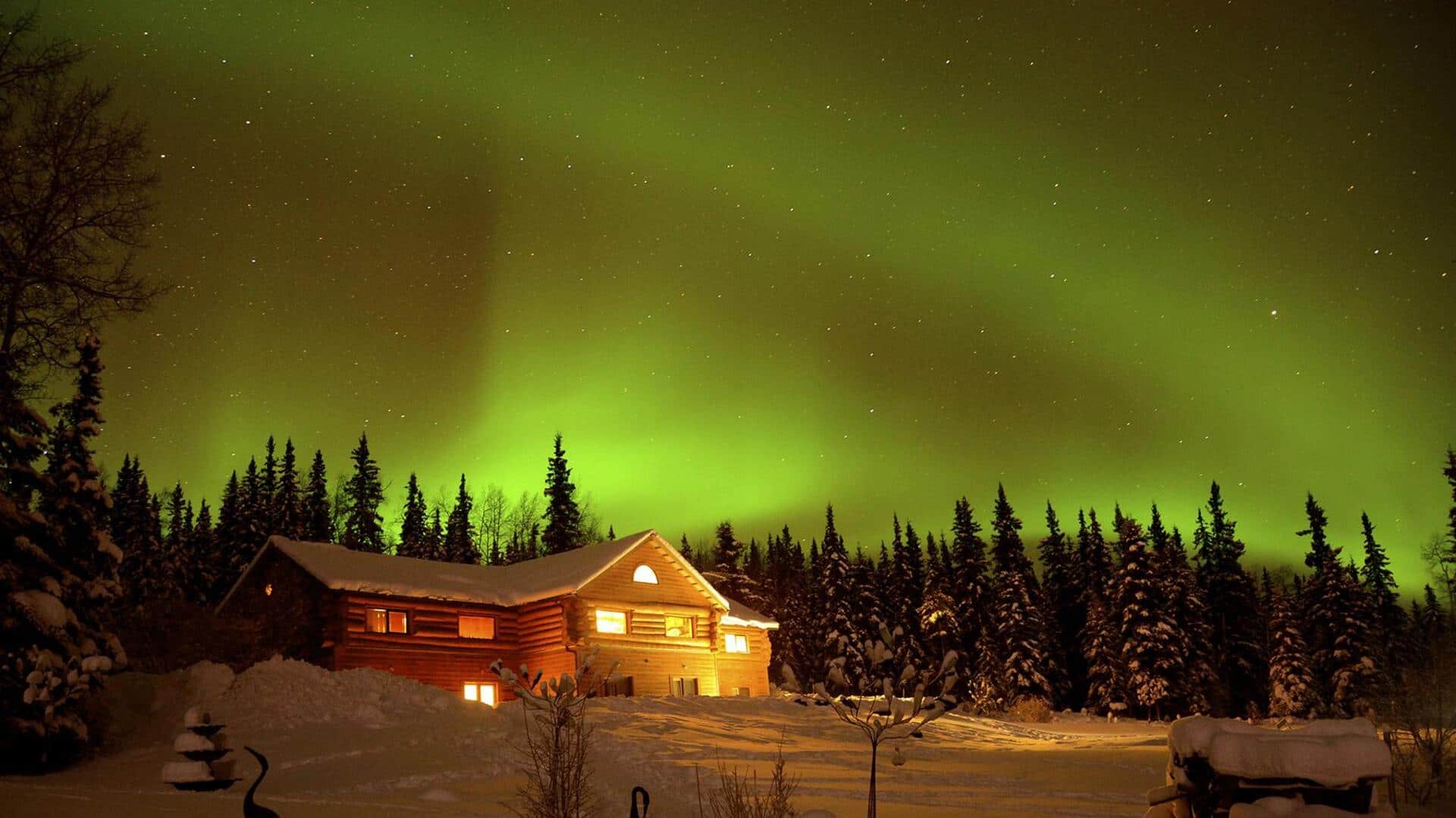
Alaska's northern lights: All about this stunning phenomenon
What's the story
Alaska's northern lights, also known as aurora borealis, are a natural phenomenon that draws thousands of travelers every year. The colorful lights in the sky make for a surreal sight, something you can experience while hiking in the wilderness. The trails give you a chance to explore Alaska's beauty while watching the sky light up. Here's how you can plan your adventure.
Timing
Best time to visit for aurora viewing
The best time to witness the northern lights in Alaska is between September and April.
During these months, the nights are longer, giving you a better chance of spotting the auroras.
The peak activity usually occurs around midnight but can be seen as early as 6 p.m. and as late as 3 a.m.
Planning your hike during these months increases your chances of witnessing this spectacular display.
Trails
Top hiking trails for aurora viewing
Several trails across Alaska offer ideal spots for aurora viewing.
One popular option is Kincaid Park in Anchorage, which has wide-open spaces, away from city lights.
Another great option is Denali National Park, which offers stunning landscapes, along with aurora sightings.
For those looking for a more remote experience, Fairbanks' Chena River State Recreation Area provides solitude and excellent visibility.
Preparation
Preparing for your hike
Proper preparation is key to a successful aurora hike in Alaska.
Dress in layers to stay warm in cold temperatures, and wear sturdy boots suitable for uneven terrain.
Carry essentials like water, snacks, and a flashlight or headlamp with extra batteries.
A camera with manual settings can help capture the northern lights' beauty.
Photography
Tips for capturing the aurora on camera
To photograph the northern lights effectively, use a tripod to keep your camera steady during long exposure times.
Set your camera on manual mode with an ISO between 800 and 1,600, an aperture of f/2.8 or lower if possible, and an exposure time of 10 seconds or more, depending on light conditions.
Experiment with different settings until you find what works best for you.