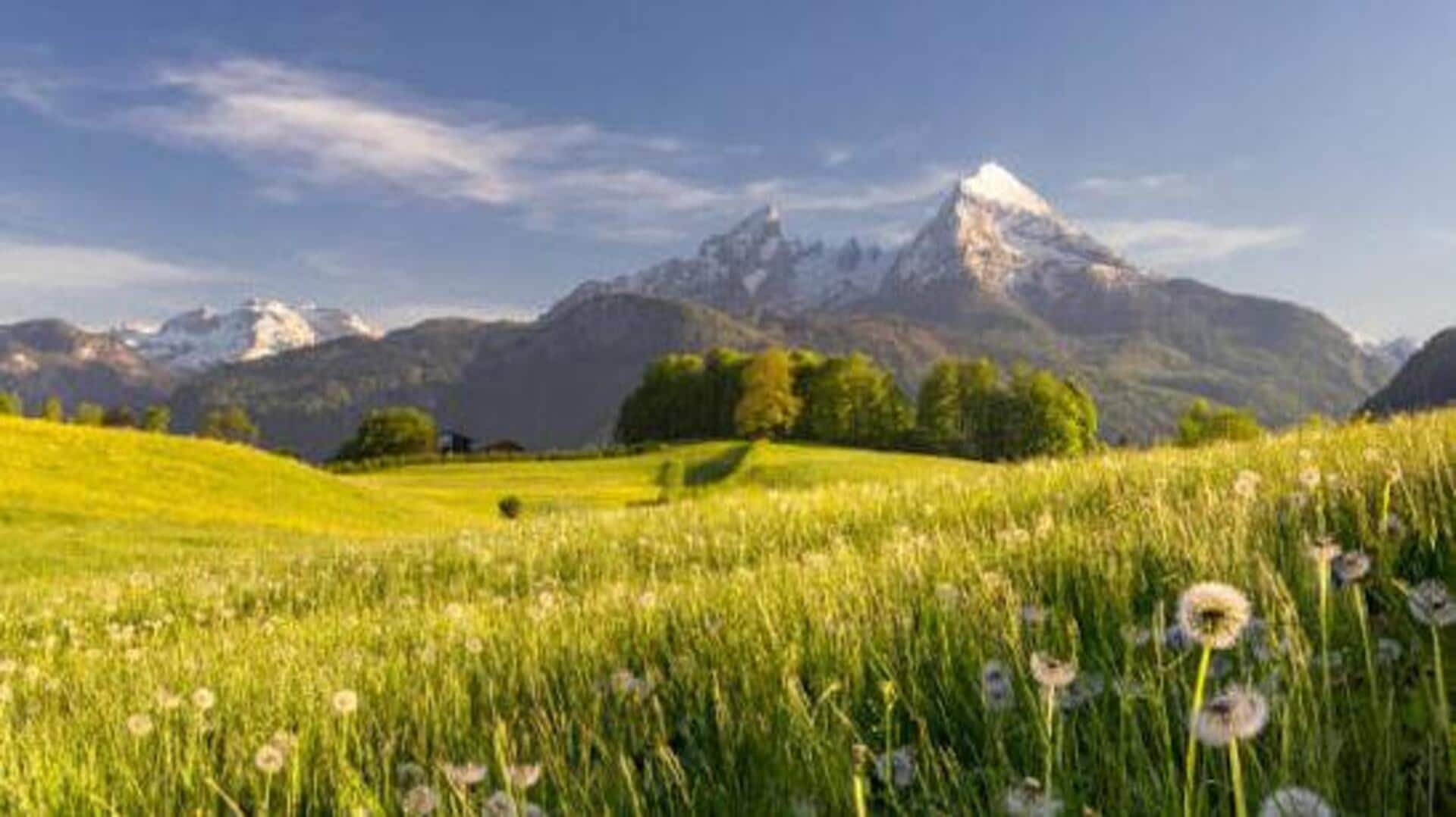
Discover Austria through its beautiful alpine meadows
What's the story
Austria's alpine flower meadows present a unique opportunity for nature lovers to explore the beauty of diverse flora. These meadows, dotted across the Austrian Alps, are home to a variety of wildflowers that bloom during the warmer months. Hikers can enjoy scenic trails, learn about the ecological significance of these habitats, and appreciate the natural surroundings. Here are some insights into exploring these beautiful meadows.
#1
Discovering diverse flora
The alpine flower meadows are home to a variety of plant species, from delicate alpine roses to vibrant gentians.
These plants have adapted to the harsh conditions of high altitudes, making them a fascinating subject for botany enthusiasts.
Each species plays an important role in maintaining the ecosystem's balance, from attracting pollinators to preventing soil erosion.
#2
Best hiking trails
Austria offers several hiking trails through its alpine flower meadows.
The Stubai Valley Trail is famous for its panoramic views and rich plant life. The trail is ideal for both novices and seasoned hikers, with its well-marked paths, and stunning vistas.
Another popular route is the Zillertal High Road, which offers breathtaking views and opportunities to see rare plant species.
#3
Seasonal highlights
The best time to visit these meadows is during summer when flowers are in full bloom.
June to August is the peak season, when visitors can see a riot of colors across the landscape.
Each month brings different flowers into bloom, so planning your visit according to specific flowering times can enhance your experience.
#4
Ecological importance
Alpine flower meadows are critical for biodiversity, as they provide habitat and food for several species.
They also contribute to climate regulation by sequestering carbon dioxide from the atmosphere.
Understanding their ecological value is important for conservation efforts aimed at preserving these fragile environments for future generations.