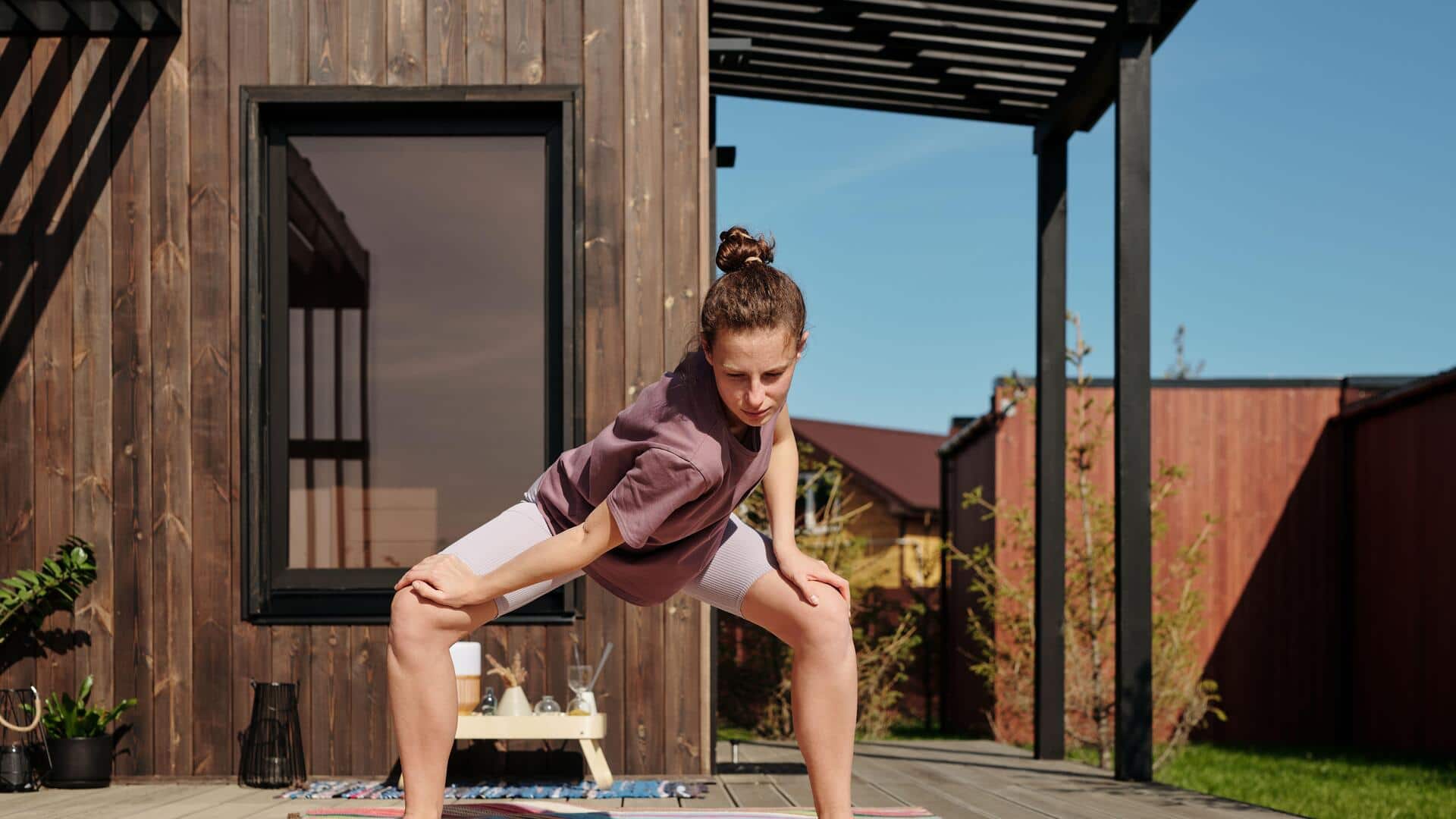
Horse stance: The simple squat that can strengthen your legs
What's the story
The horse stance is a fundamental exercise in martial arts and other disciplines. It focuses on building lower body strength and stability. By holding a wide squat position, you can improve your leg endurance, core stability, and balance. This exercise is often practiced by beginners and advanced practitioners alike for its simplicity and effectiveness. Here's how to master the horse stance for enhanced lower body strength.
Positioning
Proper stance positioning
To start the horse stance, stand with your feet wider than shoulder-width apart.
Bend your knees until they are at a 90-degree angle or as low as comfortable, without compromising form.
Keep your back straight, and shoulders relaxed.
Your toes should be slightly pointed outwards to maintain balance.
This positioning sets the foundation for an effective workout.
Breathing
Breathing techniques
Proper breathing is essential while holding the horse stance.
Inhale deeply through your nose as you lower into the position, and exhale slowly through your mouth as you hold it.
Controlled breathing helps maintain focus and reduces fatigue during longer holds.
Practicing this technique regularly can improve overall endurance.
Duration
Duration and repetition
Start by holding the horse stance for 30 seconds to 1 minute, depending on your fitness level.
Gradually increase the duration as you get comfortable with the position.
Aim to repeat this exercise three times in a session, giving yourself short breaks in between sets to recover without losing form.
Variations
Incorporating variations
To make your horse stance workout more challenging, try adding variations like arm movements or shifting weight from one leg to another while maintaining balance.
These variations not only increase intensity but also engage different muscle groups in the lower body, giving you a comprehensive workout.
Progress
Monitoring progress
Tracking progress is key to improving your horse stance performance over time.
Use a timer or keep a journal to note how long you can hold each session, and how well you maintain form during each repetition cycle.
Regularly reviewing these metrics helps identify areas for improvement and motivates continued effort towards achieving your fitness goals.