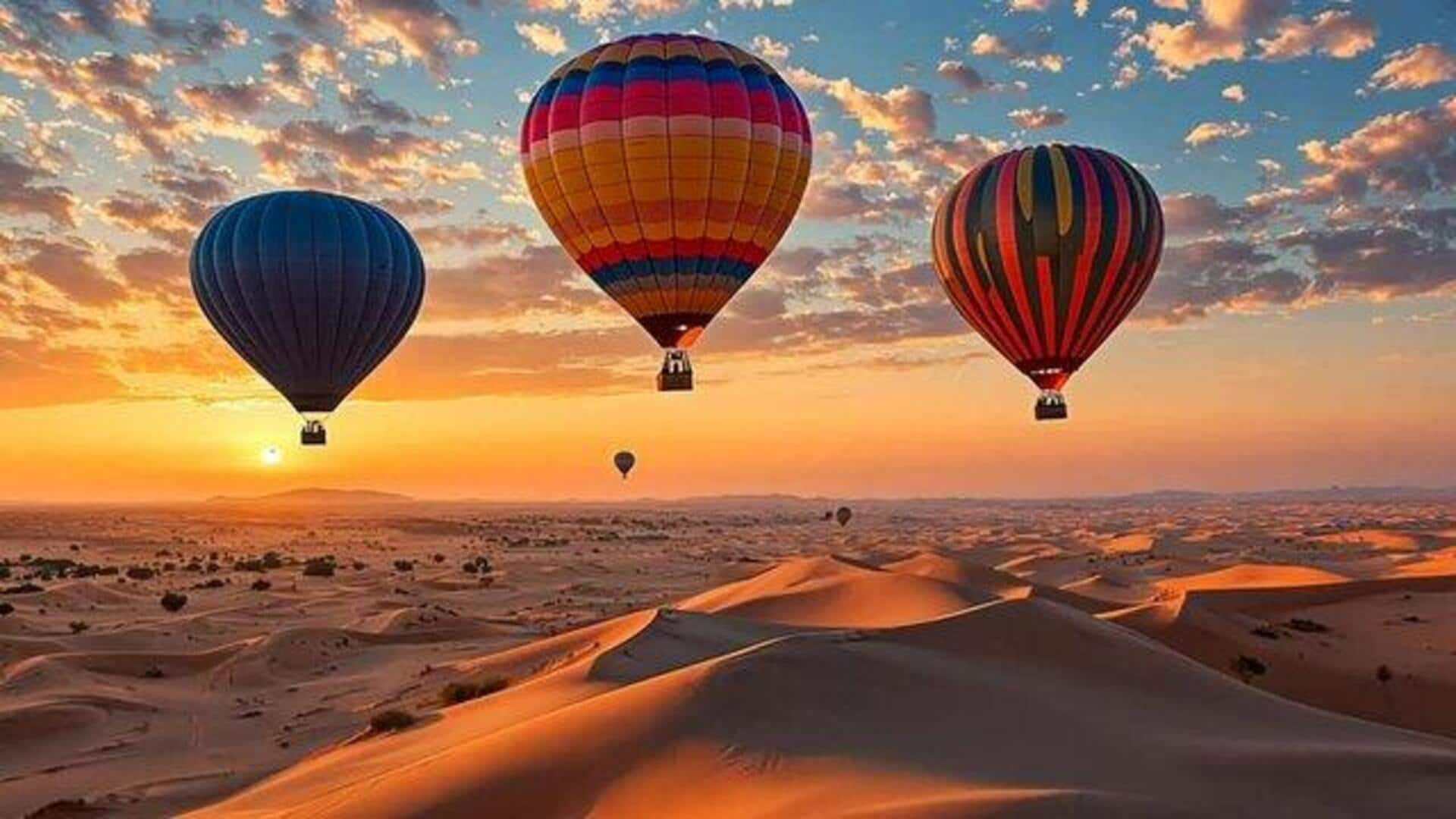
Your guide to hot air ballooning in Sahara
What's the story
Exploring the Sahara Desert by hot air balloon is an exhilarating way to experience the vastness and beauty of this iconic landscape. The experience offers a unique perspective, allowing you to witness the undulating dunes and endless horizons from above. As you glide silently through the sky, you will have the opportunity to see the desert's intricate patterns and colors, all while enjoying a sense of tranquility and adventure.
Location
Choosing the right location
Selecting an ideal location is key to a successful hot air balloon ride in the Sahara.
Popular areas include Morocco's Merzouga and Tunisia's Chott El Jerid, where expansive dunes provide stunning views.
Each location has its own charm, with varying terrain and weather conditions that can affect your experience.
Researching these factors can help you choose a spot that aligns with your preferences for scenery and adventure.
Weather
Understanding weather conditions
Weather plays a crucial role in hot air ballooning over the Sahara.
Early morning or late afternoon are usually the best times for flights, as temperatures are cooler, and winds are calmer.
It is important to check local weather forecasts before planning your trip, as sandstorms or high winds can lead to cancellations or rescheduling.
Preparation
Preparing for your flight
Preparation is key for a smooth hot air ballooning experience in the Sahara.
Dress comfortably in layers, as temperatures can vary greatly from morning to midday.
Bring sunglasses and sunscreen to protect yourself from intense sunlight at high altitudes.
Also, consider bringing a camera with good zoom capabilities to capture distant landscapes without disturbing wildlife below.
Safety
Safety measures in hot air ballooning
Safety is paramount when flying over vast deserts like the Sahara.
Always choose operators with good safety records, and certified pilots who follow international standards for ballooning operations.
Listen carefully during pre-flight briefings about safety procedures, including how to brace during landing, which may involve some bouncing on touchdown due to uneven ground surfaces typical in desert environments.