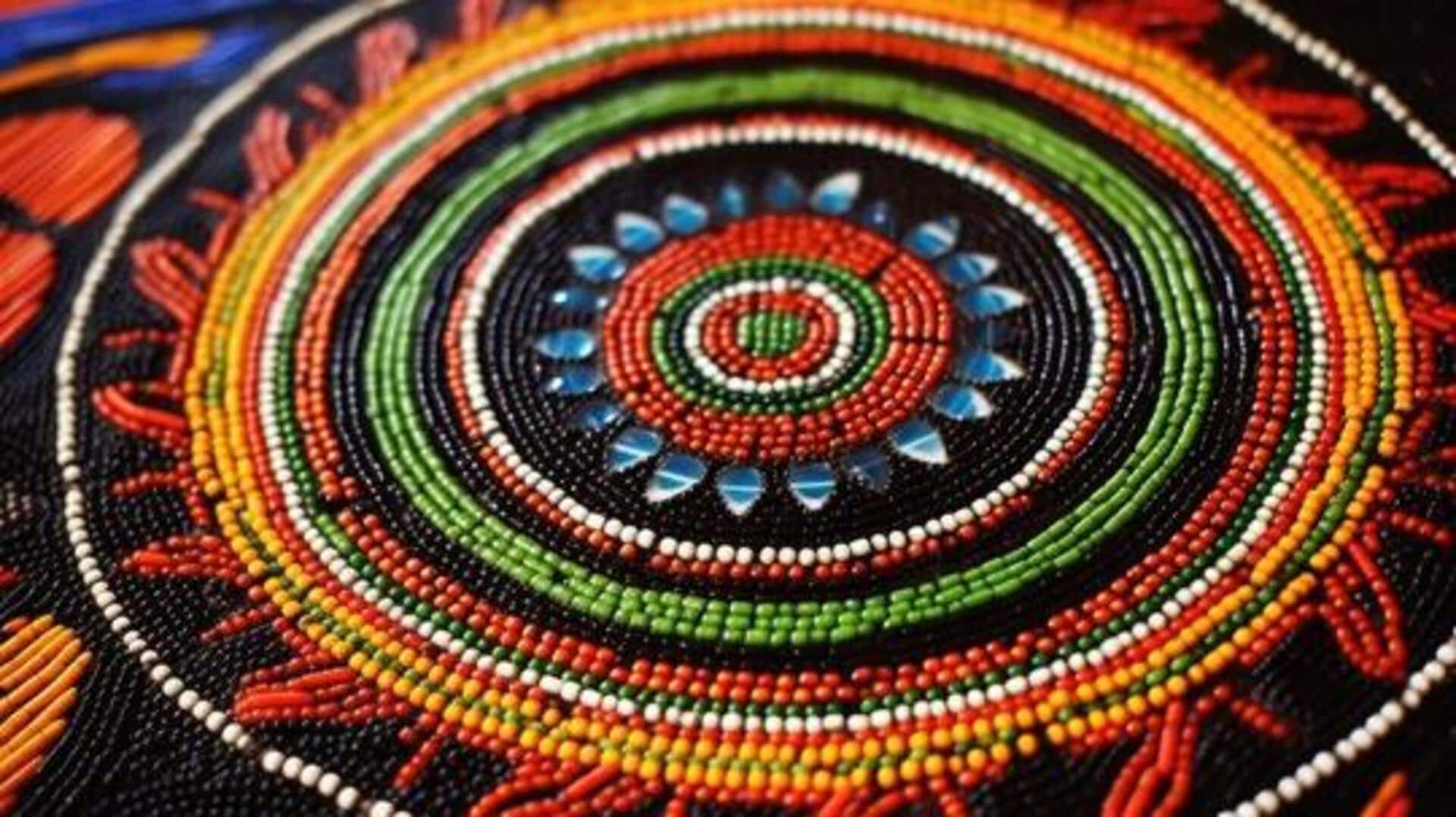
How bead art is influencing abstract designs
What's the story
African bead art has been making waves in the world of modern abstract design. The colorful and intricate beadwork, which has been a part of African culture for centuries, is now being embraced by designers across the globe. The unique patterns and vibrant colors of these traditional crafts lend a fresh perspective to contemporary art and design. Here are five ways African bead art is influencing modern abstract design.
#1
Vibrant color palettes
African bead art is known for its vibrant colors, which are now being used in modern abstract designs. The bold hues of beads make for striking visuals that catch attention and add depth to any piece. Designers are using these color palettes to create dynamic compositions that reflect energy and movement.
#2
Intricate patterns
The intricate patterns of African bead art also inspire modern abstract design. The repetitive motifs and geometric shapes lend themselves to creating visually captivating pieces that draw the viewer in. These patterns are often incorporated into textiles, wallpapers, and other decorative elements.
#3
Cultural storytelling
African bead art is also a medium for storytelling, with each piece often holding cultural significance or conveying a particular message. Modern designers are adopting this narrative aspect by weaving stories into their work through symbolic motifs or historical references from African culture.
#4
Textural elements
The texture of beaded pieces adds another dimension to modern abstract designs. The tactile quality of beads adds depth and interest when incorporated into various materials, like fabric or ceramics. This textural element enhances the sensory experience of interacting with the artwork.
#5
Sustainable practices
Many artists working with African bead art also focus on sustainability by using recycled materials or supporting local artisans in their communities. This commitment to eco-friendly practices resonates with contemporary audiences, who value sustainability in art and design projects.