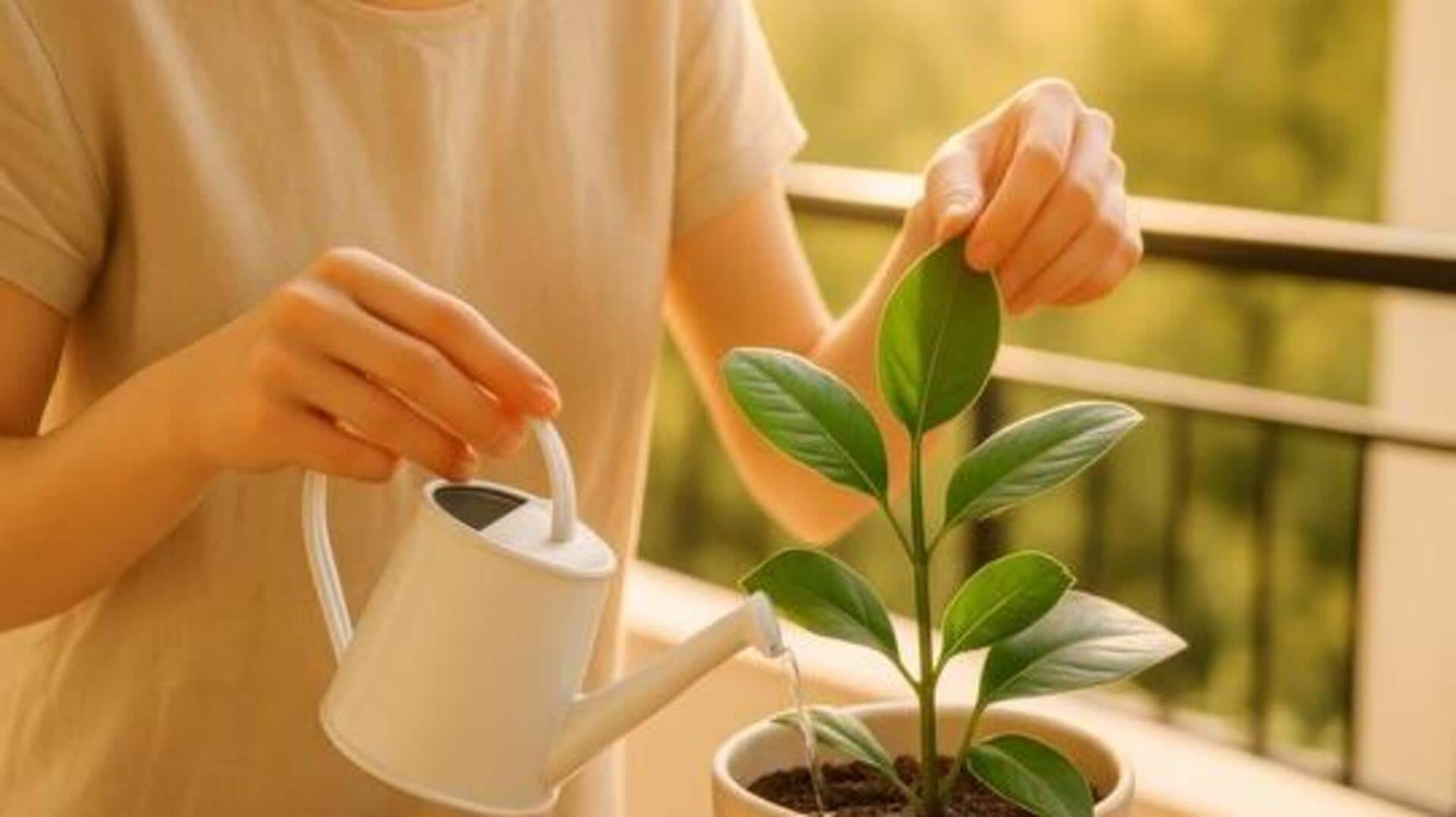
How caring for plants can be therapeutic
What's the story
Indoor plants are not just a pretty sight, they can also make a world of difference to your well-being. For beginners, the task of caring for these plants can be therapeutic, giving you a sense of accomplishment and calm. By including plant care in your daily routine, you can experience a number of mental and physical health benefits. Here's how caring for indoor plants can improve your well-being.
Stress relief
Reduces stress levels
Caring for indoor plants has been proven to reduce stress levels.
The act of watering, pruning, and observing plant growth can be meditative, giving you a break from daily stressors.
Studies have shown that interacting with plants reduces cortisol levels by up to 20%, making you feel more relaxed and less anxious.
Air purification
Improves air quality
Indoor plants can purify the air by absorbing toxins and releasing oxygen.
This natural filtration system improves indoor air quality, which is essential for good health.
Plants such as peace lilies, and spider plants are particularly effective at removing common pollutants like formaldehyde and benzene.
Mood booster
Enhances mood and creativity
The presence of greenery indoors has been associated with enhanced mood and increased creativity.
Plants stimulate the senses and create a more vibrant environment, which can lead to improved focus and productivity.
Studies suggest that having plants around can increase creativity by as much as 15%.
Physical engagement
Encourages physical activity
Plant care also encourages physical activity, however minimal it may be.
Activities such as watering, repotting, and rearranging plants involve movement that contributes to overall physical health.
For beginners, these simple tasks are an easy way to incorporate more activity into their daily routine without overwhelming them.
Daily routine
Fosters responsibility and routine
Taking care of indoor plants fosters a sense of responsibility and helps you establish a routine.
Regular watering schedules, and monitoring plant health require commitment and consistency.
This not only nurtures the plants but also instills discipline in other areas of life, contributing positively to personal development.