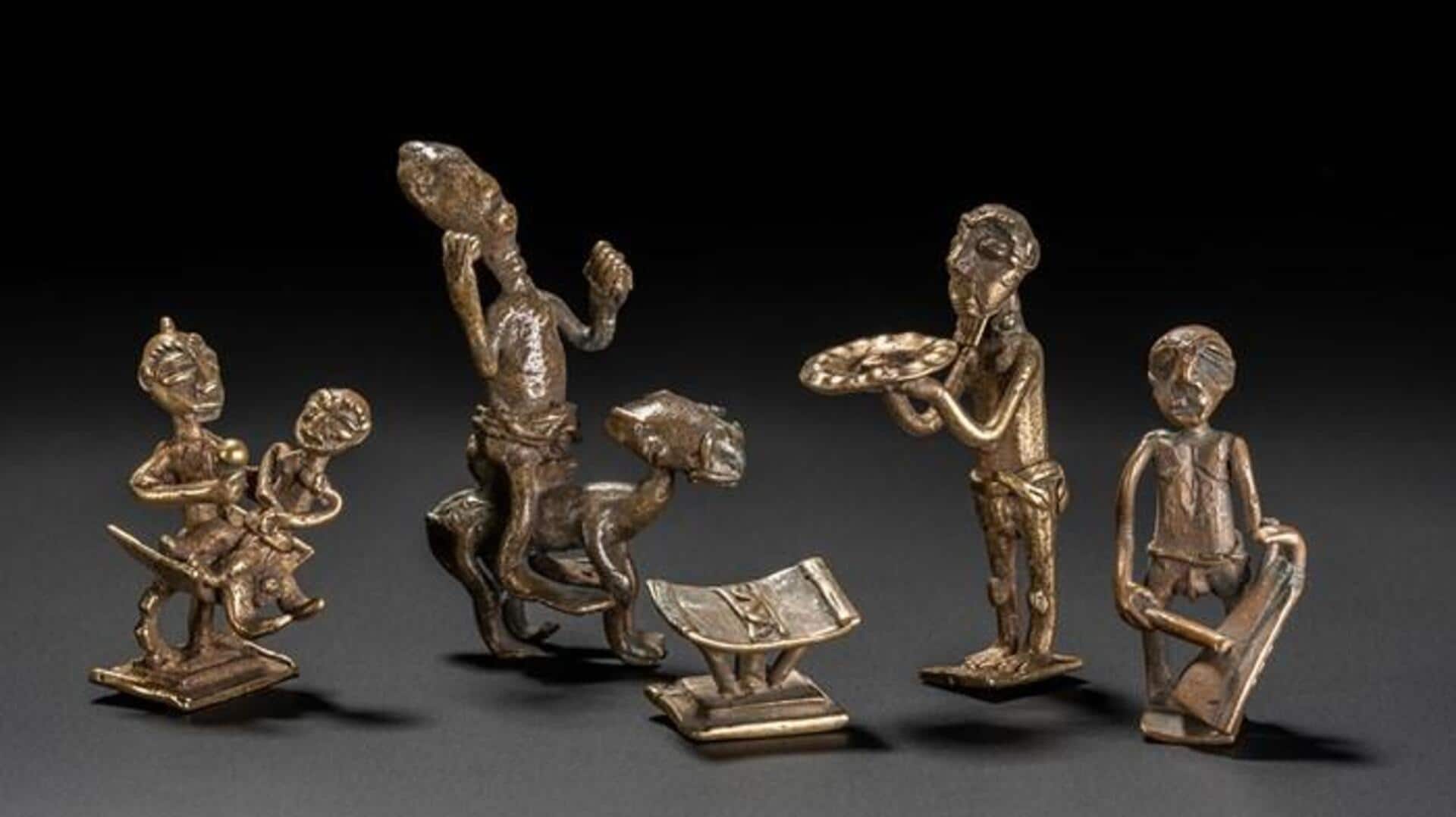
All about Akan brass casting
What's the story
Akan brass casting, a traditional art form from West Africa, has undergone significant changes in recent years. The craft, which has been passed down through generations, is now being influenced by modernity. While the essence of the art remains intact, contemporary elements are being integrated into the designs. This evolution reflects a blend of tradition and innovation, catering to changing tastes and market demands.
#1
Influence of global markets
The global market has also impacted Akan brass casting by introducing new materials and techniques. Artisans are now experimenting with different alloys and finishes to cater to international buyers. This shift has led to the creation of unique pieces that appeal to a wider audience while maintaining traditional craftsmanship.
#2
Incorporation of modern design elements
Modern design elements have also found their way into Akan brass casting. Artisans are now incorporating geometric patterns and abstract forms that resonate with contemporary aesthetics. This fusion allows them to preserve cultural significance while appealing to modern consumers, who appreciate both tradition and innovation.
#3
Impact of technology on production techniques
Technology has also revolutionized production techniques in Akan brass casting. The use of advanced tools has improved precision and efficiency in the crafting process. Artisans can now produce intricate designs with greater ease, allowing them to focus on creativity, without compromising quality.
#4
Changing consumer preferences
Consumer preferences have also shifted toward more personalized and unique items. In response, Akan brass casters are offering customizable options that allow buyers to participate in the design process. This approach not only enhances customer satisfaction but also ensures that traditional methods are adapted to meet contemporary demands.
#5
Preservation efforts amidst modernization
Despite modernization, preservation efforts remain strong within the Akan community. Workshops and training programs are being organized to ensure that traditional techniques are not lost over time. These initiatives aim to strike a balance between embracing modern influences and preserving the rich heritage of Akan brass casting for future generations.