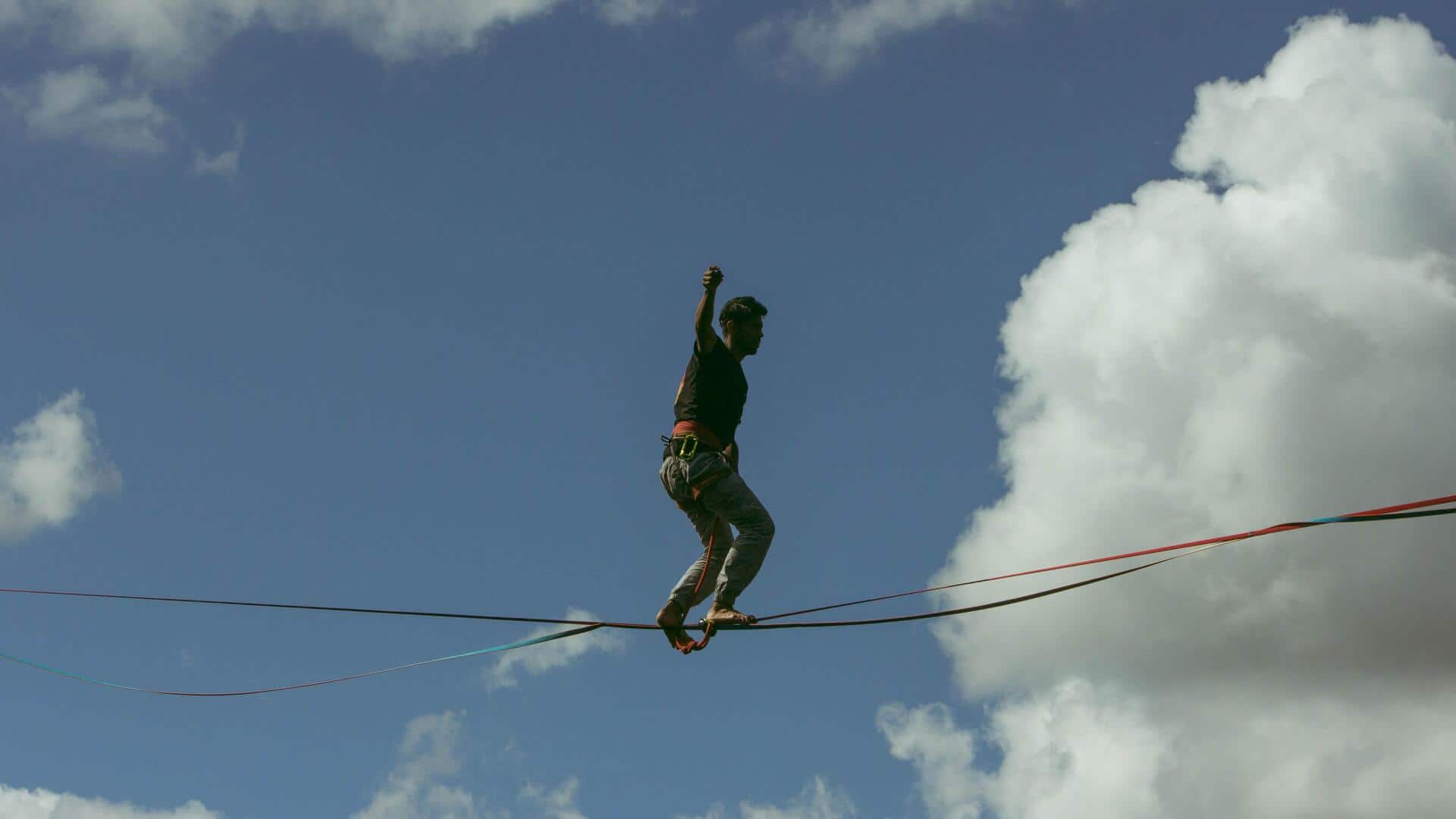
Want better balance? Give slacklining a try
What's the story
Slacklining is a fun activity that involves walking or balancing on a narrow, flexible piece of webbing anchored between two points. It has gained popularity as a tool to improve balance and coordination. Unlike tightrope walking, slacklines are dynamic and move with the person walking on them, making it a unique challenge. Here are five ways slacklining can boost your balance and coordination.
Core strength
Core engagement through slacklining
Slacklining requires you to engage your core muscles to maintain balance.
As you try to stay upright, your abdominal and back muscles work hard to stabilize your body.
This constant engagement helps strengthen these muscles over time, improving overall posture and stability.
Proprioception
Improved proprioception with practice
Proprioception is the body's ability to sense its position in space.
Slacklining enhances this by forcing you to make quick adjustments as the line shifts underfoot.
Regular practice sharpens proprioceptive skills, which are essential for daily activities requiring balance and coordination.
Mental focus
Enhanced focus and concentration
Walking on a slackline requires intense focus and concentration. Any distraction or loss of attention can result in a fall.
This mental engagement not only improves your balancing skills but also boosts your ability to concentrate in other areas of life by training your mind to stay focused on the task at hand.
Dynamic movement
Coordination boost from dynamic movement
The dynamic nature of slacklining makes it an excellent exercise for improving coordination.
As you walk across the line, your body has to constantly adjust to shifts in tension and movement.
This helps develop better hand-eye coordination and overall motor skills, which are beneficial for various physical activities.
Versatile setups
Versatility of slackline setups
One of the best things about slacklining is that it can be done anywhere, provided you have the right equipment.
You can set up a line between trees in a park, or use portable kits indoors or outdoors, depending on your space.
This versatility makes it easy to incorporate into your routine without requiring specialized facilities or equipment.