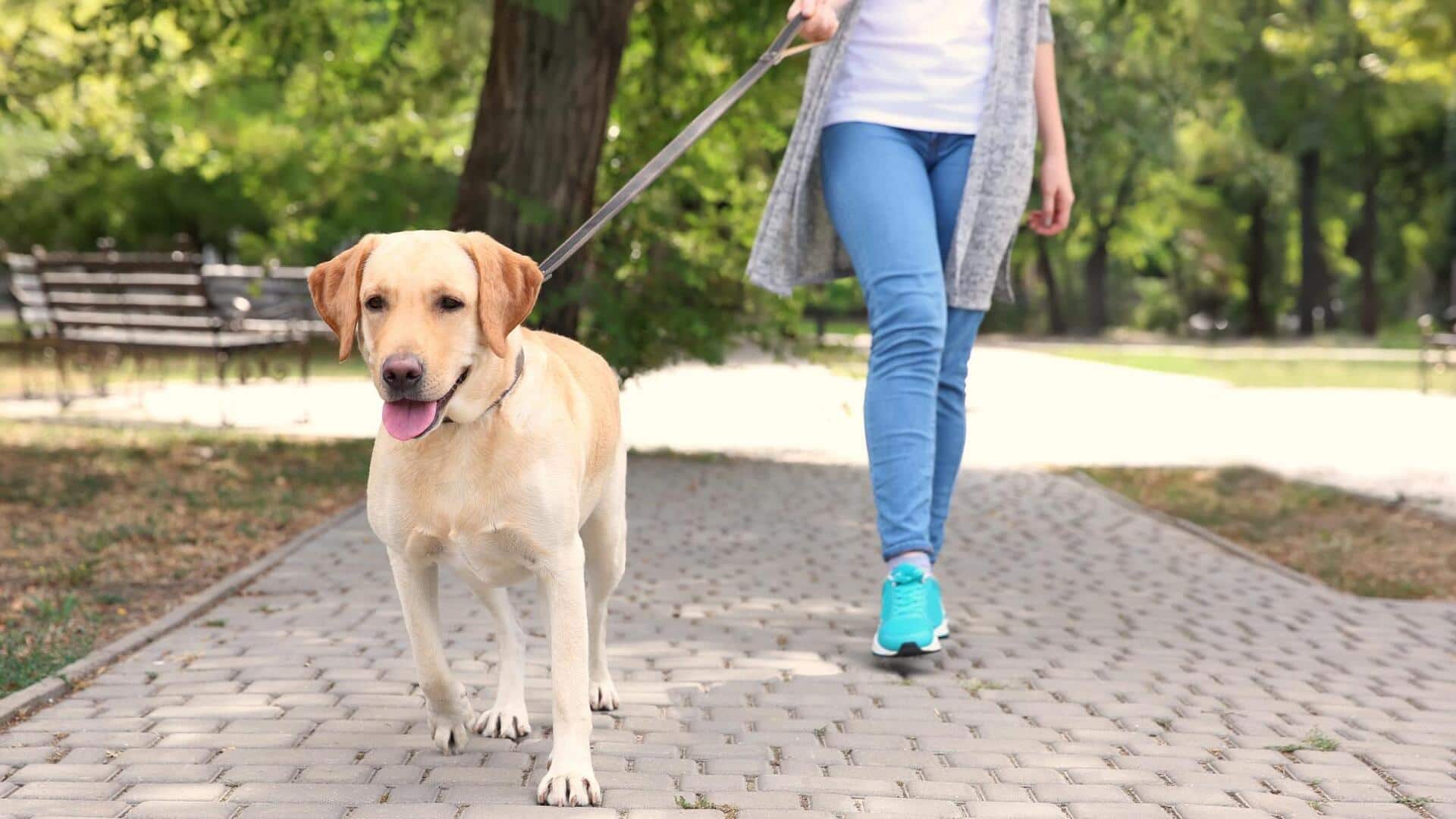
Walking your dog? Follow these etiquette tips
What's the story
Walking your dog is a great way to bond and stay active, but it also comes with responsibilities. As a dog owner, you must ensure that your walks are safe and enjoyable for both you and your pet. Here are five practical tips to help you navigate the streets with confidence. These tips will help you avoid common pitfalls and ensure a smooth walking experience.
Tip 1
Choose the right leash
Selecting the right leash is essential for safe walks.
A standard six-foot leash gives you control without restricting your dog's freedom too much.
Retractable leashes can be tempting but may lead to accidents if not used properly.
Always avoid using a leash that's too long or short, as it may cause your dog to stray too far or get tangled up.
Tip 2
Be mindful of weather conditions
Weather plays a huge role in planning your dog's walk.
On hot days, pavement can get too hot for your dog's paws, so it's best to walk early in the morning or late in the evening.
In cold weather, make sure your dog is warm enough; small breeds may need a sweater or coat.
Adjusting walk times according to weather keeps both you and your pet comfortable.
Tip 3
Keep an eye on surroundings
Being aware of your surroundings is key to keeping your dog safe during walks.
Watch out for traffic, other pedestrians, cyclists, and animals that could cause distractions or pose a danger.
If you see something that could scare or excite your dog, calmly redirect their attention with commands or treats to keep them focused.
Tip 4
Practice good leash manners
Teaching your dog proper leash manners is key to enjoyable walks.
Start with basic commands like sit and stay, before introducing them to walking beside you without pulling on the leash.
Reward good behavior with treats or praise to reinforce positive habits over time.
Tip 5
Plan routes in advance
Planning routes before heading out helps avoid potential hazards like construction sites or busy intersections where traffic might be high at certain times of day.
Choosing quieter streets or parks not only makes for a more pleasant experience but also reduces stress levels for both owner and pet alike during their daily exercise routine.