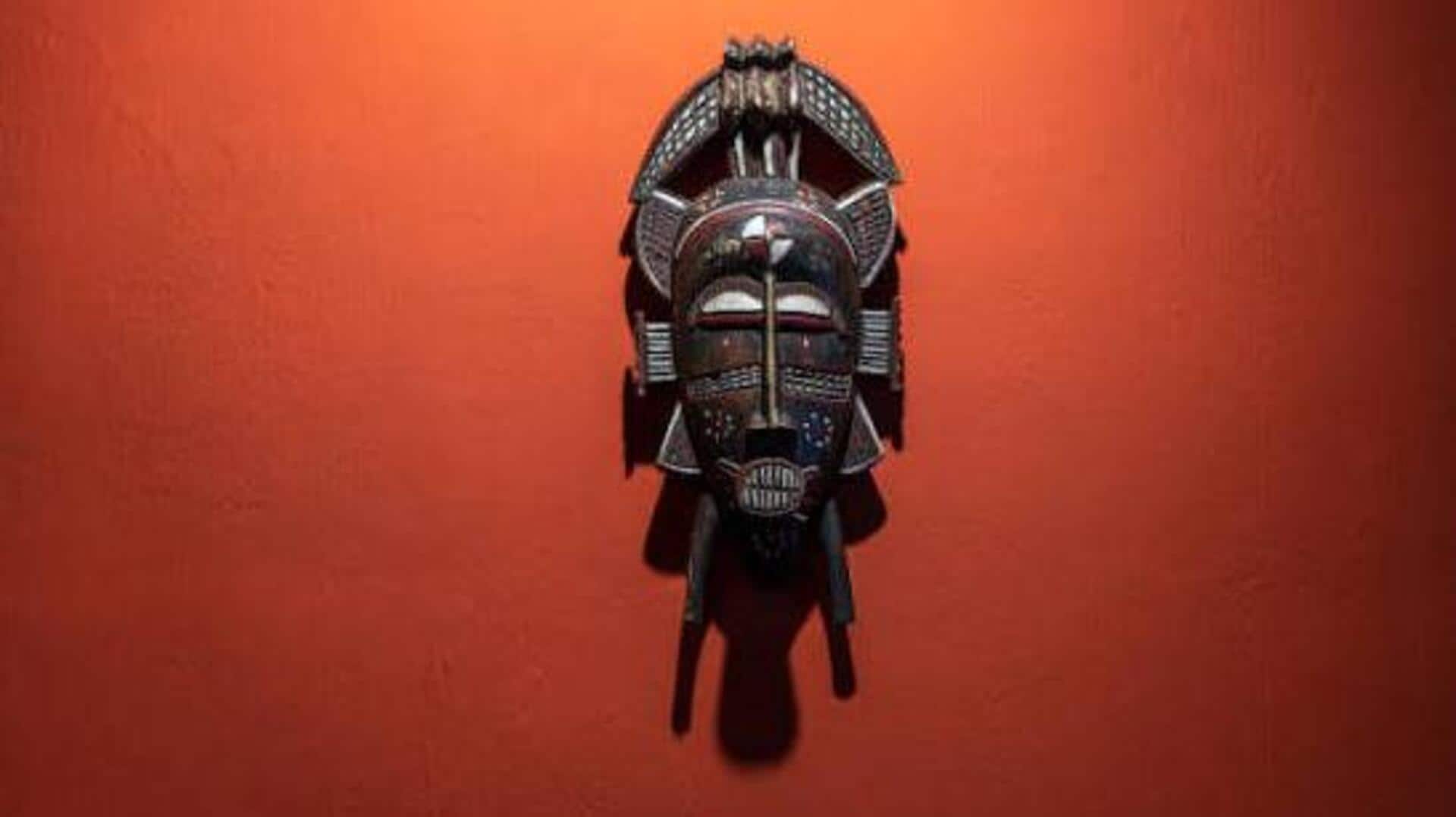
How to make a traditional wooden mask
What's the story
African wooden masks have always been an integral part of the continent's cultural heritage, used in rituals and ceremonies. Carving these masks is an art that requires skill, patience, and a deep understanding of cultural significance. The craft not only preserves traditions but also offers a glimpse into the diverse cultures across Africa. Here are some tips on how to carve authentic African wooden masks.
Tip 1
Choosing the right wood
Selecting the right type of wood is essential for carving African masks.
Hardwoods such as mahogany or ebony are preferred because of their durability and fine grain.
These woods allow for detailed carvings and withstand the test of time.
It is also important to ensure that the wood is properly dried to avoid cracking during the carving process.
Tip 2
Understanding cultural significance
Before you start carving, it's important to understand the cultural significance behind the mask you are making.
Every mask has its own symbolism, which may differ from one community to another.
Knowing its purpose will not only guide your design, but also ensure that you respect its cultural importance.
Researching or consulting with someone knowledgeable can give you valuable insights into traditional practices.
Tip 3
Tools required for carving
Having the right tools is key to achieving precision in your carvings.
Basic tools include chisels of different sizes, knives, and rasps.
A mallet can also be useful for driving chisels into tougher areas of the wood.
Keeping your tools sharp will ensure clean cuts and smooth surfaces on your mask.
Tip 4
Techniques for detailed carving
Mastering techniques like incising, undercutting, and texturing is essential for adding depth and character to your mask design.
Incising involves making shallow cuts on the surface, while undercutting creates shadows by carving underneath certain areas without breaking through completely.
Texturing adds visual interest by creating patterns or grooves on specific sections of the mask's surface.