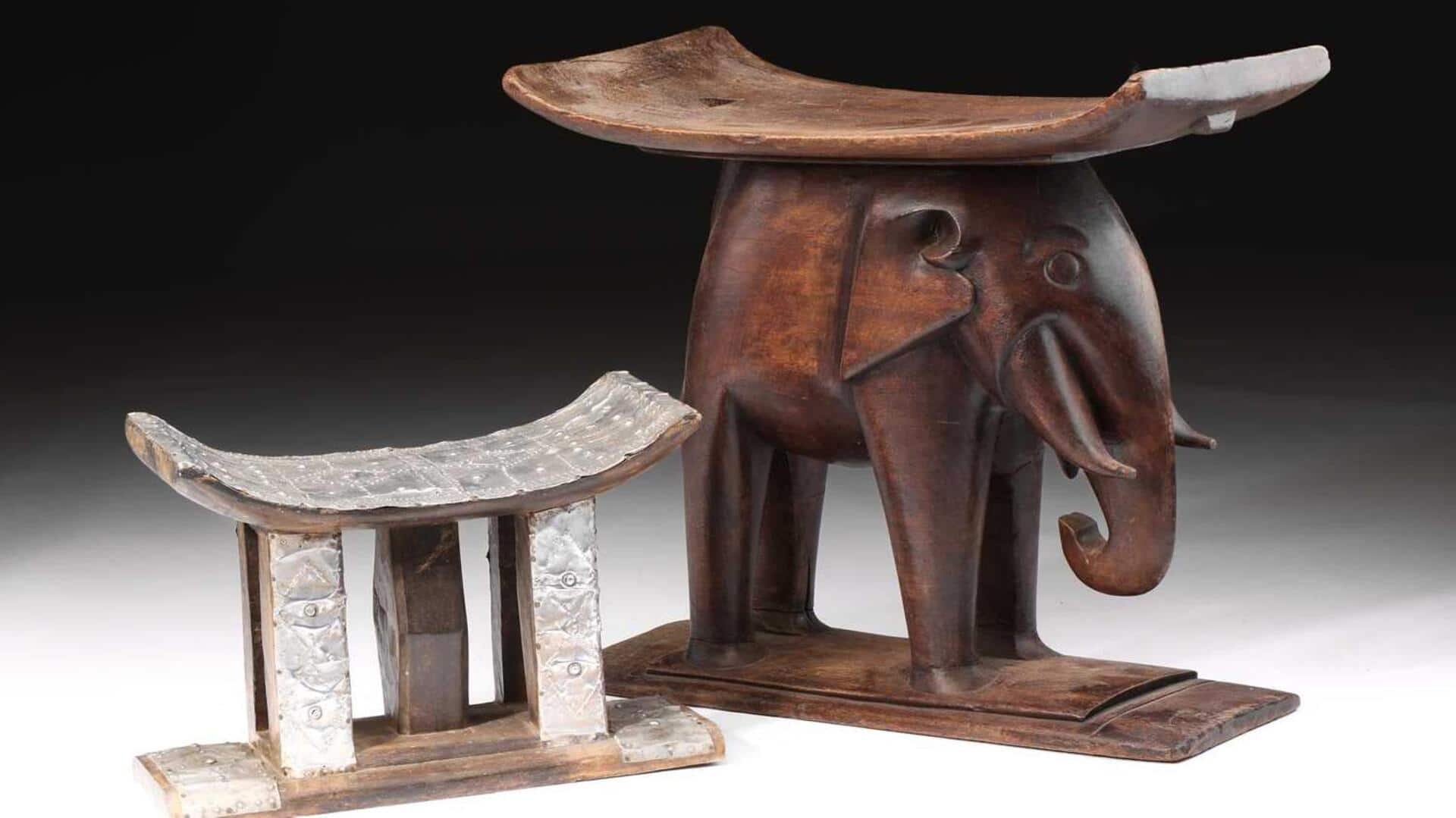
Ashanti stools: How to carve these iconic artifacts
What's the story
Carving authentic Ashanti stools is a way to connect with the rich cultural heritage of the Ashanti people of Ghana. These stools are not just functional items but also hold great symbolic importance, representing authority and community. The art of carving them requires skill, patience, and an understanding of traditional techniques. In this article, we explore the steps and tips to master this craft, giving you insights into the process.
Cultural insight
Understanding the cultural significance
Before you start carving, it is important to understand the cultural significance of Ashanti stools.
They are often used in ceremonies and as symbols of power.
Knowing their role in Ashanti culture will help you appreciate the craftsmanship involved and ensure that your work respects these traditions.
Material choice
Selecting the right materials
Choosing the right wood is essential for carving a durable stool.
Traditionally, hardwoods like mahogany or teak are used because of their strength and resistance to wear.
Make sure that the wood you choose is free from defects to maintain structural integrity.
Technique mastery
Mastering traditional techniques
Traditional carving techniques involve hand tools such as chisels and mallets.
Practice using these tools to achieve precise cuts and shapes.
Pay attention to details like symmetry and proportion, which are crucial for authentic representation.
Design elements
Incorporating symbolic designs
Ashanti stools are famous for their intricate designs that usually include symbolic elements like faces or animals.
Research these symbols well so that you can incorporate them accurately into your carvings.
Each design element has a meaning that adds to the overall significance of the stool.
Final steps
Finishing touches for authenticity
Once carved, smooth the surface with sandpaper for a polished look.
Some artisans apply natural oils or wax to protect the wood and enhance its appearance without compromising authenticity.