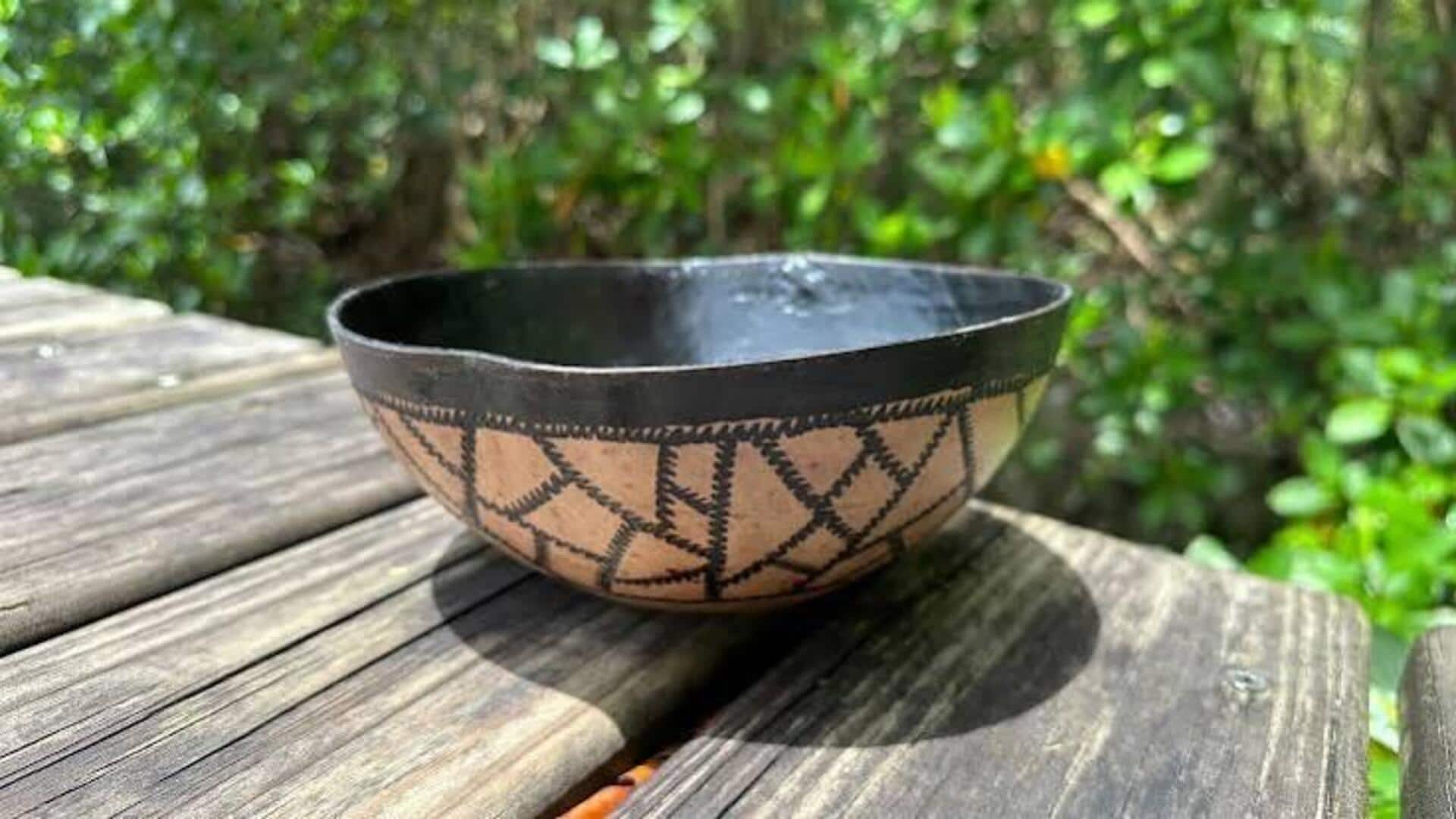
How to transform gourds into beautiful bowls
What's the story
African calabash carving is an ancient art that transforms gourds into beautiful bowls. This craft is deeply rooted in African culture and is practiced by artisans across the continent. The process requires skill, patience, and a deep understanding of the material. Carving calabashes into bowls not only preserves traditional techniques but also promotes sustainable practices by using natural resources. Here are some insights into this intricate craft.
Tip 1
Selecting the right gourd
Choosing the right gourd is the first step in calabash carving.
The ideal gourd should be firm, free from cracks, and have a uniform shape. These characteristics ensure that the final product is durable and aesthetically pleasing.
Gourds are usually harvested at maturity when they have thick skins, which provide a sturdy base for carving.
Tip 2
Tools needed for carving
Carving calabashes requires a set of specific tools to achieve precision and detail.
Basic tools include knives for cutting, chisels for engraving designs, and sandpaper for smoothing surfaces.
Artisans often use traditional hand tools that have been passed down through generations to maintain authenticity in their work.
Tip 3
Techniques for intricate designs
Creating intricate designs on calabash bowls requires skillful techniques honed over years of practice.
Carvers often employ methods like incising or burning patterns onto the surface of the gourd.
These techniques allow artisans to create unique pieces that reflect cultural motifs or personal artistry.
Tip 4
Finishing touches on your bowl
Once the carving is done, finishing touches are essential to bring out the beauty of the calabash bowl.
This includes polishing with natural oils or waxes, which enhance the grain of the wood while protecting it from moisture damage.
Proper finishing ensures longevity and preserves the craftsmanship involved in each piece.