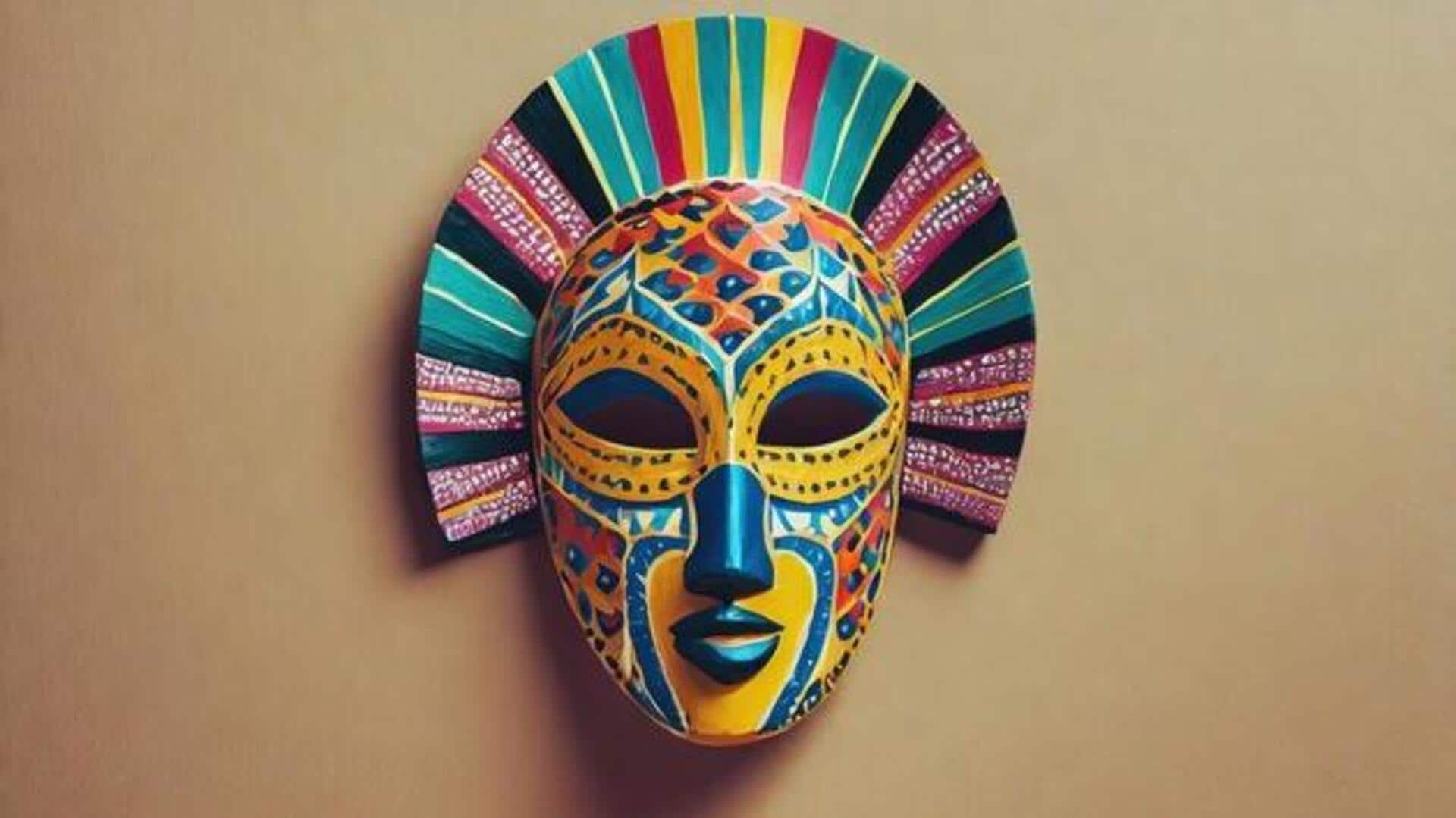
How to make colorful African masks
What's the story
African masks have always been a part of cultural traditions, symbolizing spirituality, social status, and artistic expression. Using natural materials such as tree bark and clay, you can craft these masks at home. This gives you a chance to explore African art and culture while creating something beautiful and meaningful. Here is how you can make these masks using the materials.
Tip 1
Selecting the right materials
Choosing the right materials is essential for crafting authentic African masks.
Tree bark is often used for its texture and durability. Make sure it is sourced sustainably to not harm the environment.
Clay is another common material, prized for its malleability and ability to retain details when molded.
Both should be sourced locally, if possible, to minimize environmental impact.
Tip 2
Crafting techniques for authenticity
Traditional techniques are key to making authentic African masks.
Start by soaking the tree bark to soften it, making it easier to work with. Once pliable, shape it into the desired form of the mask.
For clay, ensure it is well-kneaded before molding it into the mask's features.
Allow both materials to dry naturally, without artificial heat sources.
Tip 3
Adding decorative elements
Decorative elements are essential for giving your mask an authentic African feel.
Use natural dyes from plants or minerals for coloring your mask. Feathers, beads, or shells can also be added as embellishments, giving it a cultural touch.
These elements not only beautify the mask but also give it a deeper meaning, connecting it to the African heritage and traditions.
Tip 4
Understanding cultural significance
Understanding the cultural significance behind African masks is essential for respectful crafting.
Each mask has its own meaning, often linked to rituals or community roles.
Researching specific cultures will give you insights into what symbols or features should be included in your design.
This knowledge ensures that your creation honors, rather than appropriates, the rich traditions of African art.