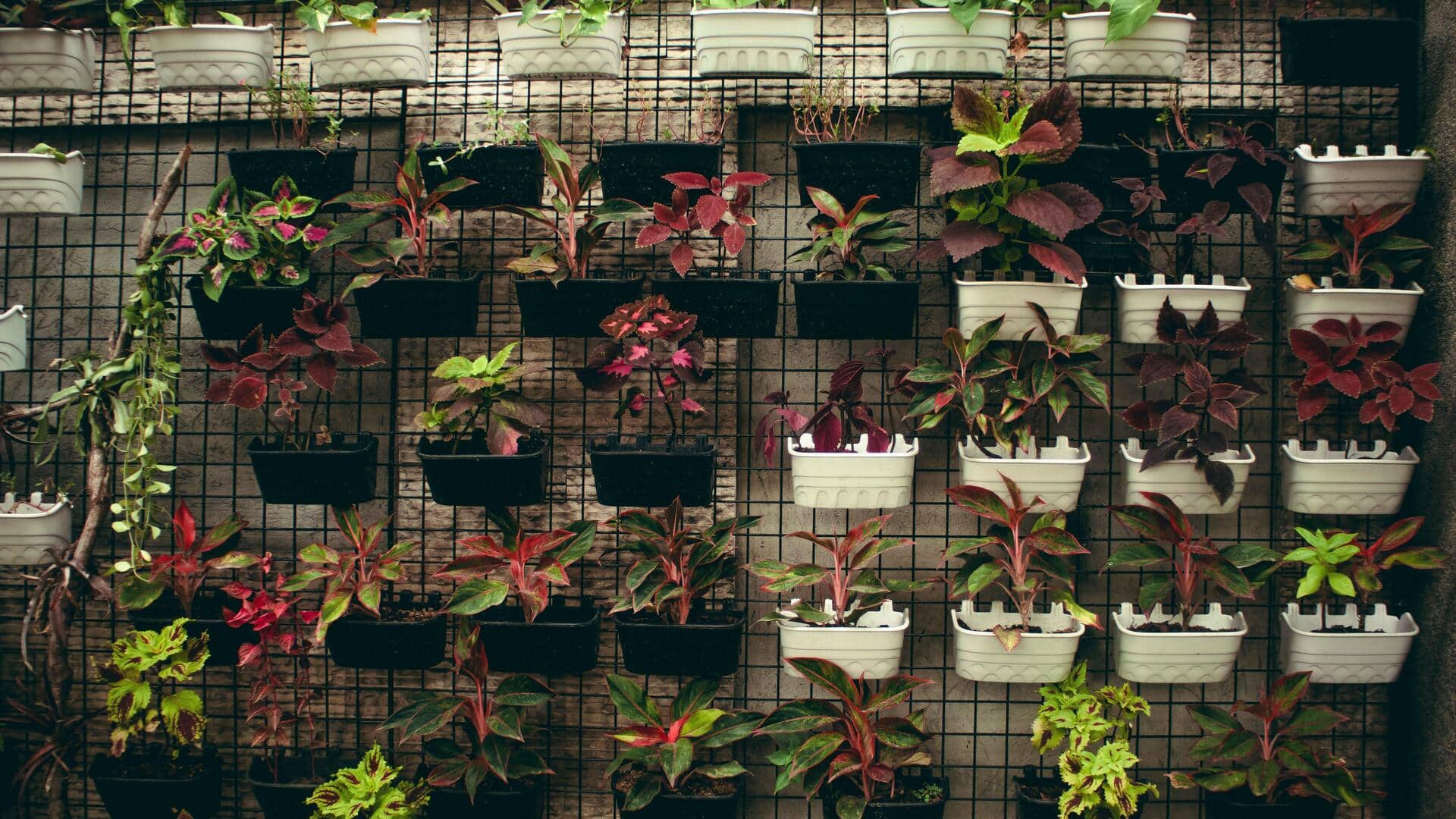
Build a beautiful vertical garden without spending much
What's the story
Vertical gardens are an innovative way to bring greenery into limited spaces, and they can be set up without burning a hole in your pocket. By using affordable materials and simple techniques, you can create a beautiful green wall that adds life to your home or office. Here are some practical tips to help you set up a budget-friendly vertical garden, making it easy for anyone to enjoy the benefits of indoor gardening.
Tip 1
Use recycled materials
Recycling old materials is an economical way to build a vertical garden.
Old pallets, plastic bottles, and wooden crates can be repurposed as planters.
These materials are usually available at little or no cost, making them ideal for budget-conscious gardeners.
By creatively repurposing these items, you can save money while also reducing waste.
Tip 2
Choose cost-effective plants
Selecting the right plants is key to keeping costs low.
Opt for hardy plants that require less maintenance and are readily available at local nurseries at lower prices.
Ferns, succulents, and herbs are some of the popular choices that thrive in vertical setups without needing much care or expensive soil mixes.
Tip 3
DIY irrigation systems
Creating your own irrigation system can save you a lot of money compared to buying commercial ones.
Simple drip systems can be made using materials like plastic tubing and bottles, which are easily available and inexpensive.
This ensures efficient water distribution while keeping the costs low.
Tip 4
Utilize wall space efficiently
Maximizing wall space is essential for an effective vertical garden design.
Use modular panels or hanging pockets that allow you to arrange plants in a compact manner, without compromising on aesthetics or functionality.
This way, you can make the most of the available space while keeping your setup organized and visually appealing.
Tip 5
Regular maintenance tips
Regular maintenance is key to keeping your vertical garden thriving without spending too much on replacements or additional resources.
Prune plants regularly to promote healthy growth, and check for pests frequently to avoid infestations from spreading across your garden.
These practices ensure that your garden remains vibrant and healthy, without incurring extra costs.