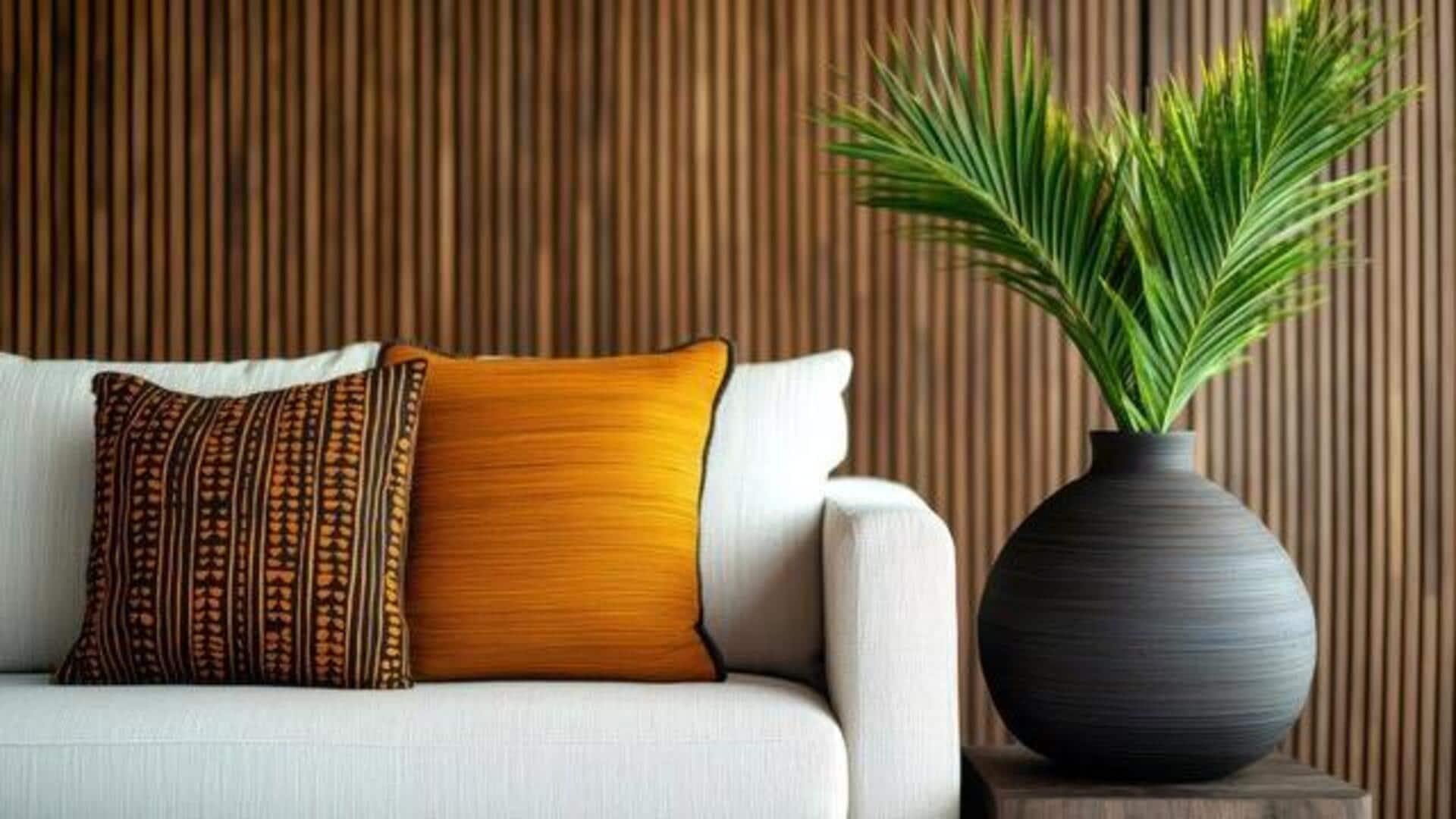
This is how you can transform your cushions
What's the story
African mud cloth, or bogolanfini, is a traditional textile from Mali, known for its unique patterns and cultural significance. This art form involves applying fermented mud to cotton fabric, creating intricate designs. Replicating these patterns on cushions can add a touch of cultural elegance to your home decor. The process requires understanding the basic techniques and materials used in creating authentic mud cloth designs.
Pattern Insight
Understanding mud cloth patterns
Mud cloth patterns are steeped in symbolism and history. Each design tells a story or represents a particular meaning in African culture.
Common motifs include geometric shapes, lines, and symbols that depict various aspects of life and beliefs.
Knowing these patterns can help you choose designs that resonate with you, or convey specific messages through your cushions.
Material list
Materials needed for replication
To replicate African mud cloth designs on cushions, you will need some basic materials.
Start with plain cotton fabric as your base.
Then, get natural dyes or fabric paint in earthy tones like brown, black, and white.
You will also need brushes or sponges for applying the dye or paint, and protective gloves to keep your hands clean during the process.
Application methods
Techniques for applying designs
Applying mud cloth designs requires patience and precision.
Start by sketching out your desired pattern lightly on the fabric with chalk or pencil.
Use brushes or sponges to apply the dye and paint carefully within these lines.
Allow each layer to dry before adding more details to ensure clarity and prevent smudging.
Authenticity tips
Tips for achieving authenticity
To achieve an authentic look when replicating African mud cloth patterns on cushions, pay attention to detail in both design execution and color application.
Use multiple layers of dye or pigment where necessary for depth in color variation typical of traditional pieces.
Experiment with different brush techniques, such as stippling or cross-hatching, to create texture variations seen in original textiles.