How to create batik art on fabric
What's the story
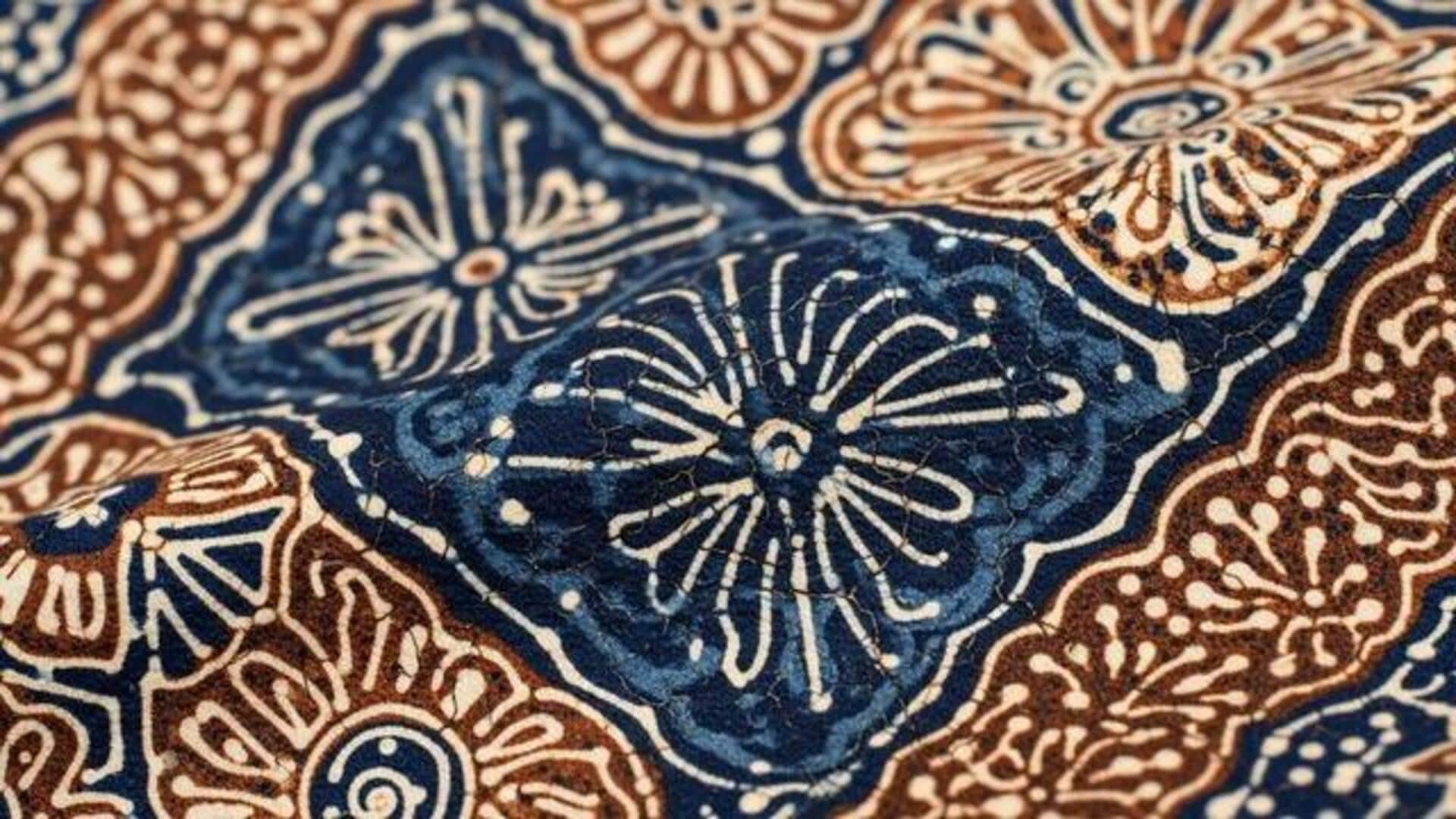
African batik art is a beautiful and intricate way of creating designs on fabric. The traditional technique involves using wax and dye to create patterns on cloth. It is a popular craft in many African countries, where artisans create stunning pieces that reflect cultural heritage. In this article, we will explore the steps involved in creating batik art on fabric, giving you insights into this timeless craft.
Fabric preparation
Preparing the fabric
Before you start creating batik art, it is important to prepare the fabric well.
Start by washing the fabric to remove any impurities or finishes that may interfere with dye absorption.
Once washed, iron the fabric to make it smooth and easy to work with.
This step ensures that the wax and dye adhere properly, resulting in clear and vibrant designs.
Wax application
Applying wax designs
The next step is to apply wax on the fabric in desired patterns.
Using a tjanting tool or brush, carefully apply hot wax onto the areas you want to protect from dye.
The wax creates a barrier that prevents dye from penetrating those areas when you dye the fabric later.
Be mindful of your design as you apply the wax, as it will determine how your final piece looks.
Dye application
Dyeing the fabric
Once the wax has cooled and hardened, it's time to dye your fabric.
Choose dyes in colors of your choice and apply them carefully on different sections of your fabric using brushes or sponges.
The dye will penetrate through unprotected areas while leaving wax-covered sections untouched.
You can repeat this process multiple times with different colors for more complex designs.
Wax removal
Removing wax residue
After dyeing is complete, it's time to remove the wax from your fabric.
This is usually done by placing paper towels over the waxed areas and ironing them gently until the paper absorbs the melted wax residue.
Once all the excess wax is removed, rinse your fabric in cold water to remove any remaining traces of dye or wax particles.
Finishing touches
Final touches
Once all steps are done, inspect your piece for any final touches. Trim any loose threads, and ensure that the edges are neat.
If required, you can also add embellishments like beads or sequins to enhance the visual appeal.
This gives you a chance to add a personal touch, making each piece unique and reflective of your creativity.