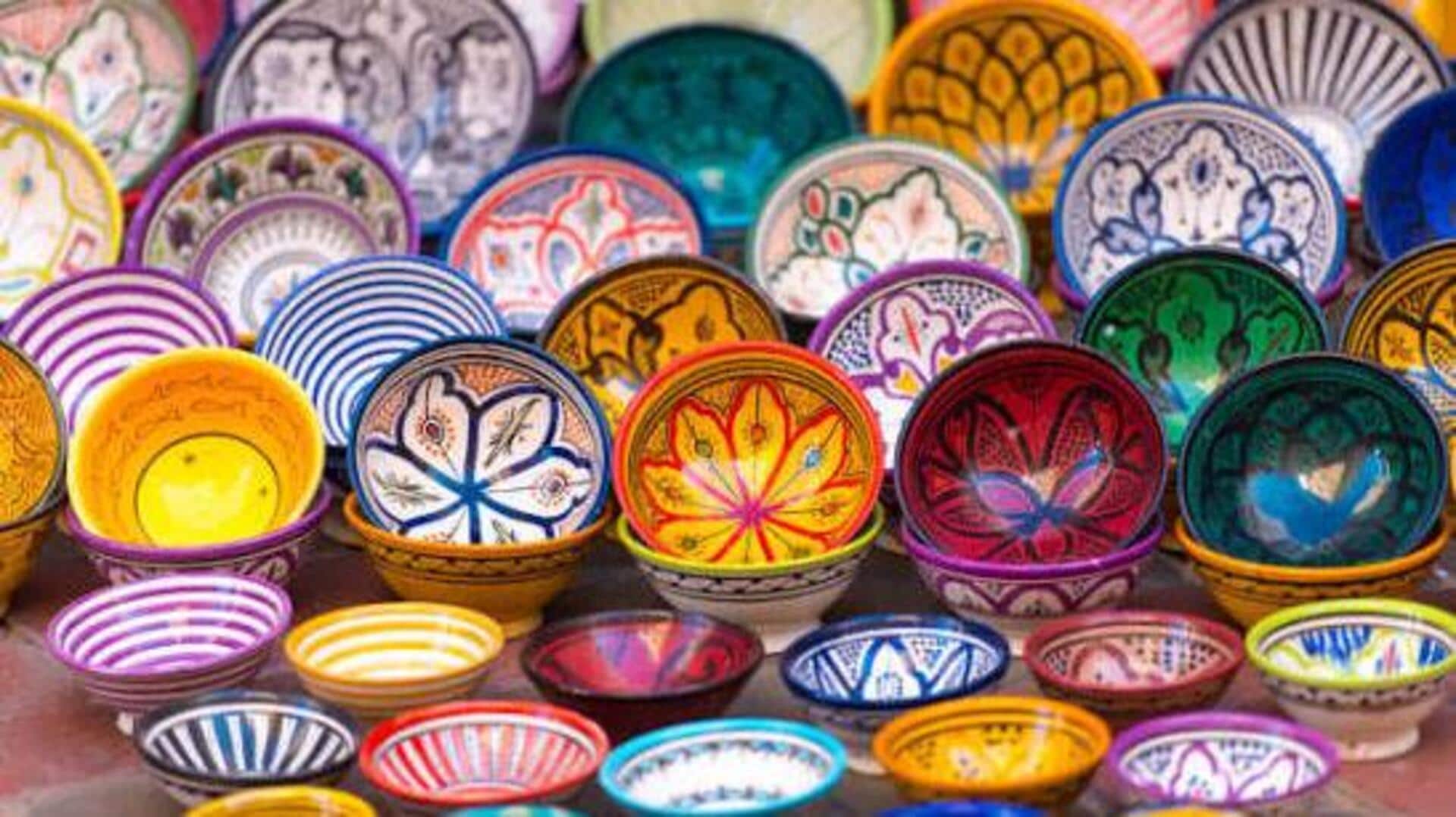
How to create pottery with animal motifs
What's the story
African pottery is famous for its vivid colors and intricate designs, particularly those inspired by local wildlife. The art of crafting pottery with African animal motifs is a traditional practice that highlights the continent's rich cultural heritage. Not only does this craft require skill, but also an understanding of the materials and techniques used by artisans for centuries. Here are some insights into this unique art form.
#1
Choosing the right clay
Selecting the right clay is essential for creating durable pottery.
In Africa, various types of clay are used depending on the region. Some areas have fine-grained clay, ideal for detailed work, while others have coarse clay, which is more robust.
The choice of clay impacts the texture and appearance of the finished piece.
Artisans often test different clays to find one that suits their design needs.
#2
Traditional crafting techniques
Traditional African pottery involves hand-building techniques like coiling and pinching.
These methods allow artisans to shape their creations without the use of molds or wheels.
Coiling involves rolling out long strips of clay and stacking them to form a vessel, while pinching involves shaping the clay between fingers to create small pots or figurines.
Each technique requires patience and precision to achieve desired results.
#3
Incorporating animal motifs
Animal motifs are an integral part of African pottery, representing cultural symbols or stories.
Artisans often carve or paint these designs onto their pieces using natural pigments from plants or minerals.
Common motifs include elephants, lions, and birds, which hold significance in various African cultures.
The process requires an understanding of both artistic expression and cultural meaning behind each design.
#4
Understanding firing techniques
Firing is a crucial step in making sure that pottery is strong and waterproof.
Traditionally, open fires or kilns are used in Africa to fire the pottery. The temperature has to be controlled well to avoid cracks or breakage during the process.
Knowing how different firing techniques affect color and texture can help artisans get the desired look for their creations.