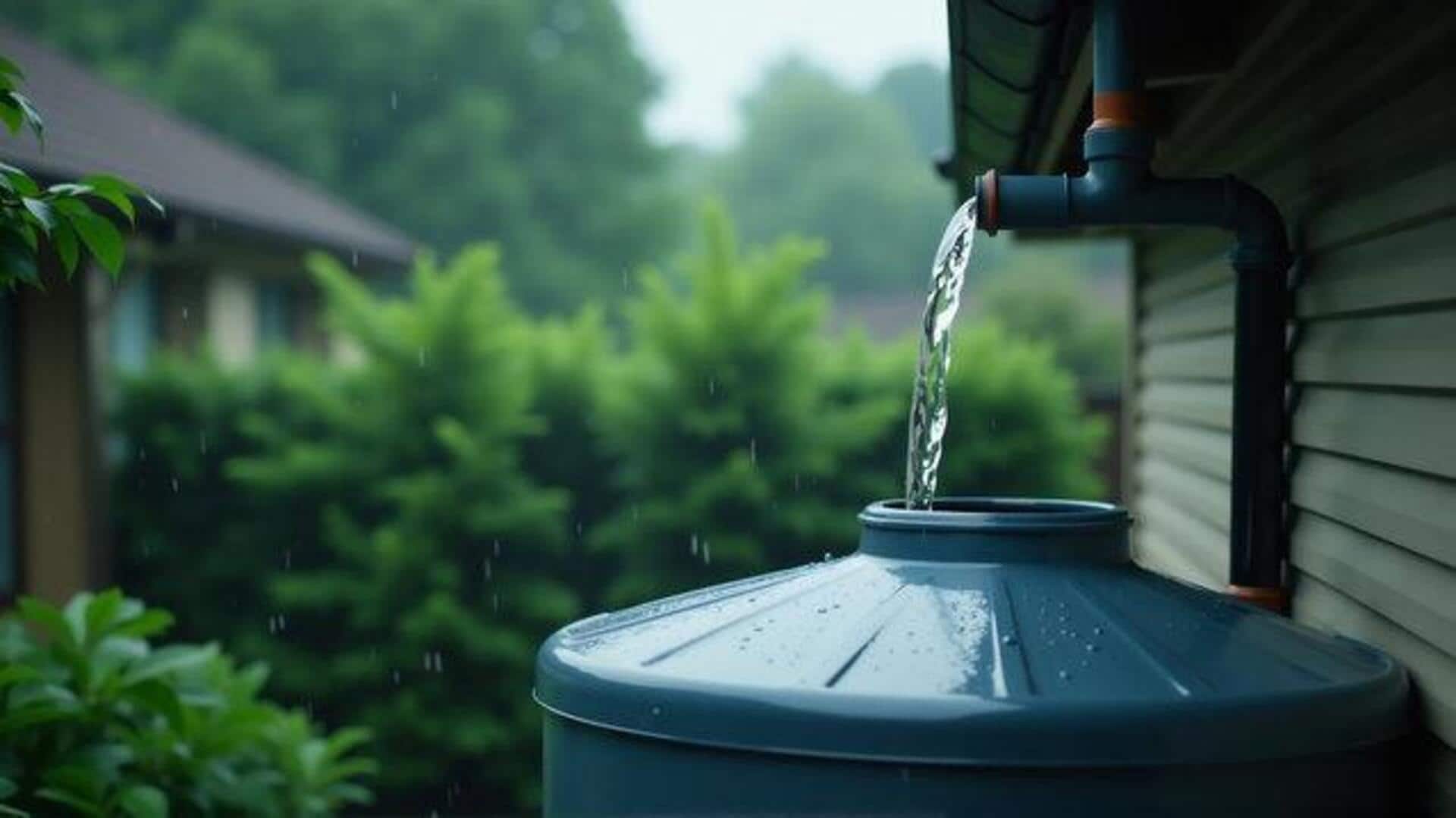
Rainwater harvesting: 5 ways to save water at home
What's the story
Creating sustainable rainwater harvesting systems can be an effective way to conserve water and reduce reliance on external sources. By designing systems that integrate seamlessly with existing structures, individuals and communities can maximize water collection efficiency. This approach not only helps in managing water scarcity but also promotes environmental sustainability. Here are some insights into designing such systems, focusing on practical solutions that can be implemented easily and cost-effectively.
#1
Assessing water needs
Before setting up a rainwater harvesting system, it's important to assess your water requirements.
Calculate how much water you need for purposes like irrigation, household use, or cleaning.
Knowing your needs will help you size the system properly and decide how much storage capacity you require.
This step ensures that the system is efficient and meets your specific demands without wasting resources.
#2
Choosing the right materials
Selecting durable and weather-resistant materials is key to building a long-lasting rainwater harvesting system.
Opt for high-quality roofing materials that facilitate effective runoff into gutters and downspouts.
Use corrosion-resistant pipes to direct collected rainwater into storage tanks or cisterns.
These choices ensure the system's longevity and minimize maintenance costs over time.
#3
Integrating filtration systems
To ensure harvested rainwater is safe for use, integrate effective filtration systems into your design.
Start with basic filters that remove debris from the collected water before it enters storage tanks.
Further, consider installing advanced filtration options, like sand filters or activated carbon filters, for improved purity, especially if the water is intended for drinking purposes.
#4
Implementing efficient storage solutions
Proper storage solutions are key to keeping harvested rainwater usable when required.
Invest in high-quality tanks with appropriate capacity based on your calculated needs from the first step.
Ensure that these tanks are placed in shaded areas to avoid algal growth due to excessive sunlight exposure.
Regular maintenance checks should also be conducted to ensure optimal performance over time.
#5
Monitoring system performance
Regular monitoring of your rainwater harvesting system is essential to ensure it works efficiently.
Check components like gutters, downspouts, filters, and tanks for any signs of wear or blockage.
By addressing issues promptly, you can prevent costly repairs and ensure a steady supply of harvested rainwater, tailored to your specific needs.
This proactive approach helps maintain the system's efficiency and longevity.