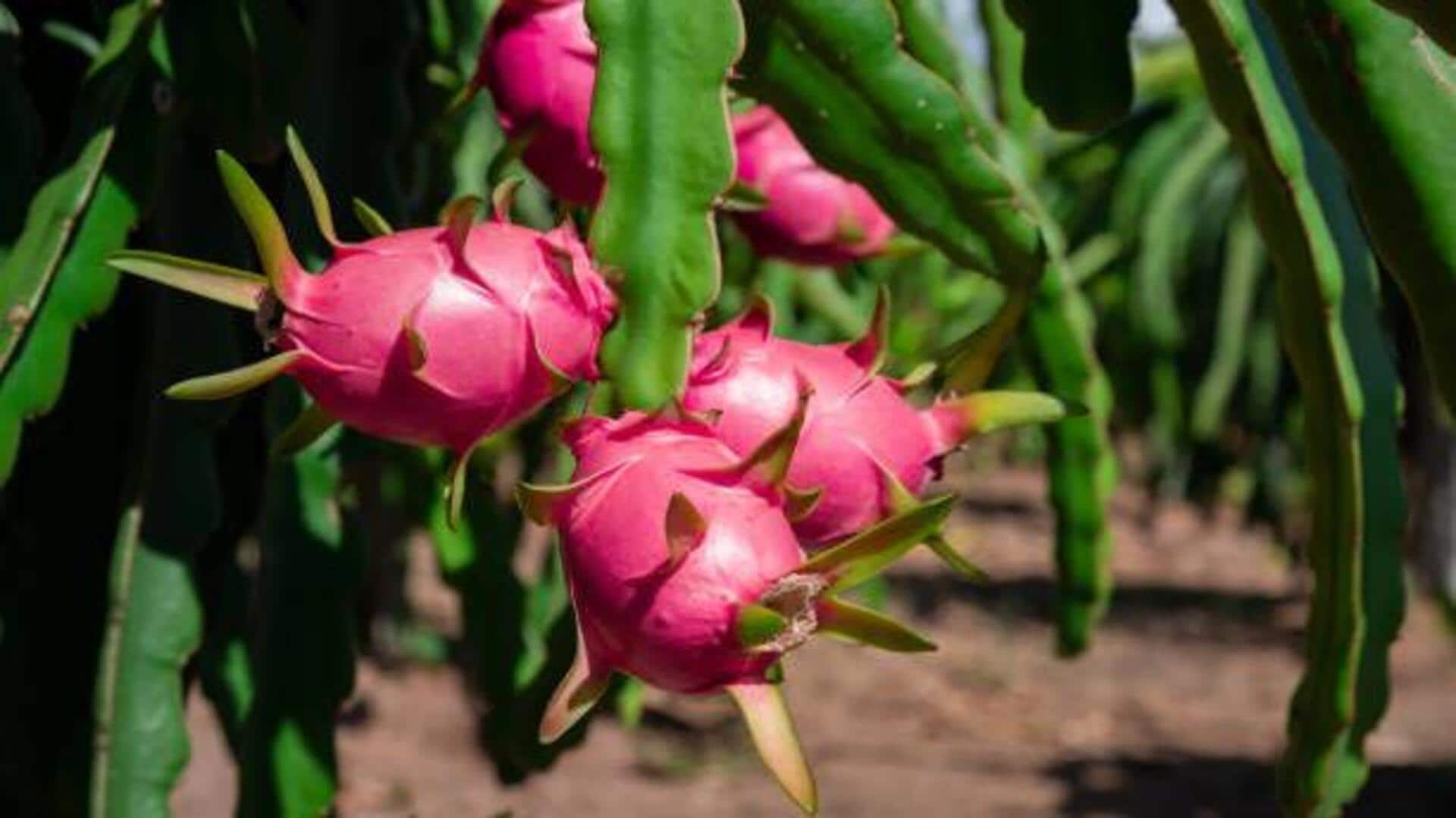
How to grow dragon fruit at home
What's the story
Dragon fruit, or pitaya, is an exotic fruit that has gained popularity for its unique look and health benefits. Growing dragon fruit at home can be an exciting venture for gardening enthusiasts. With the right conditions and care, you can cultivate this tropical plant successfully. Here are some practical tips on how to grow dragon fruit at home, ensuring optimal growth and fruit production.
#1
Choosing the right variety
Selecting the appropriate variety of dragon fruit is essential for successful cultivation. There are three main types: Hylocereus undatus (white flesh), Hylocereus costaricensis (red flesh), and Hylocereus megalanthus (yellow skin with white flesh). Each variety has its own taste and appearance. Consider your climate, and personal preference when choosing a variety. Some may thrive better in specific conditions than others.
#2
Preparing the soil
Dragon fruit plants prefer well-draining soil with a pH level between six and seven. Sandy or loamy soil works best, as it prevents waterlogging, which can damage the roots. Before planting, enrich the soil with organic matter like compost to improve its nutrient content. This will help in providing essential nutrients required by the plant as it grows.
#3
Planting techniques
Plant dragon fruit seeds or cuttings in pots or directly in the ground if your climate allows it. Ensure they are planted at least three feet apart to allow ample room for growth. Water them lightly after planting to settle the soil around them, but avoid overwatering, as this can lead to root rot.
#4
Providing adequate sunlight
Dragon fruits need plenty of sunlight to grow well, so make sure they get at least six hours of direct sunlight every day. If you're growing them indoors, place them near a south-facing window where they can soak up enough light throughout the day. This will ensure healthy growth and increase chances of flowering.
#5
Watering and fertilizing properly
Water dragon fruits sparingly; let the top inch of soil dry out between waterings, especially during cooler months when the plant's growth slows down naturally due to lower temperatures outside. Fertilize every month using balanced fertilizer containing nitrogen, phosphorus, potassium, and magnesium, following package instructions carefully to avoid over-fertilizing, which may harm the plant instead of helping it thrive.