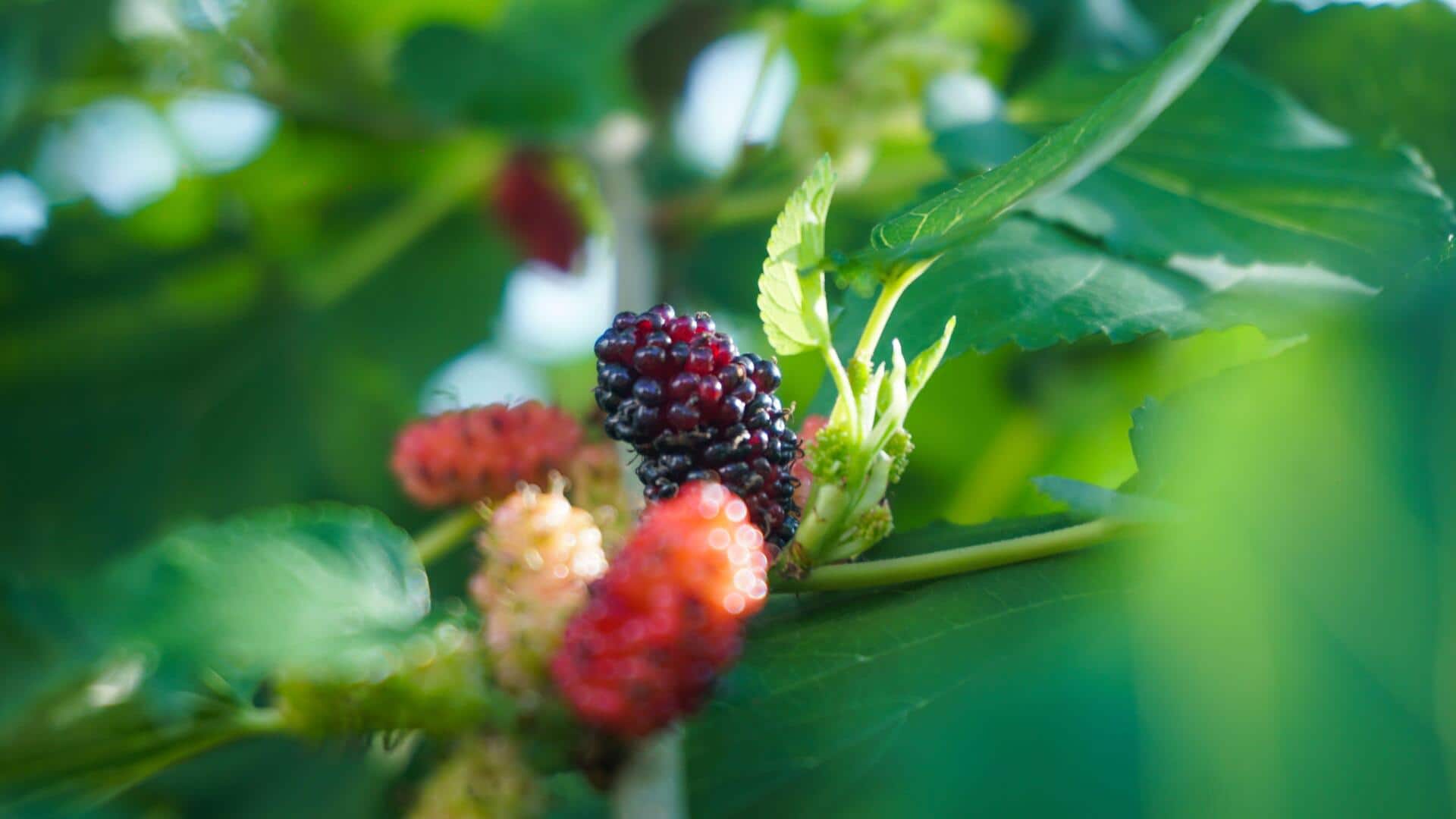
How to grow juicy mulberries (simple hacks)
What's the story
Growing mulberry at home can be a rewarding experience, especially if you live in a warm climate. These hardy trees are known for their sweet berries and can thrive with minimal care. By following some simple guidelines, you can enjoy a bountiful harvest of mulberries each season. Here are practical tips to help you grow mulberry successfully in warm climates.
Tip 1
Choosing the right variety
Selecting the right variety is critical for successful mulberry cultivation.
In warm climates, consider varieties like Morus alba or Morus nigra, which are known to withstand heat well.
These varieties not only produce delicious berries but also adapt well to different soil types.
Research local conditions and choose a variety that matches your environment for optimal growth.
Tip 2
Soil preparation and planting
Proper soil preparation is key to healthy mulberry trees.
They prefer well-drained soil with a pH level between six and seven.
Before planting, amend the soil with organic matter such as compost to improve its structure and fertility.
Space your trees adequately to allow for their expansive canopy as they mature.
Tip 3
Watering and irrigation techniques
Mulberry trees are drought-tolerant but require regular watering during their initial growth phase. Once established, they need less frequent watering.
Drip irrigation systems can be effective in delivering water directly to the roots without wasting it through evaporation or runoff.
Monitor soil moisture levels regularly to ensure your trees receive adequate hydration without overwatering.
Tip 4
Pruning for optimal growth
Regular pruning helps maintain the shape of mulberry trees and encourages new growth, which leads to more fruit production.
Ideally, prune during the dormant season when the tree is not actively growing.
Remove dead or overcrowded branches to improve air circulation within the canopy, reducing the risk of disease.
Tip 5
Pest management strategies
While mulberries are relatively pest-resistant, keep an eye out for common pests such as aphids or spider mites.
Use natural predators like ladybugs or introduce neem oil sprays if infestations occur.
Regularly inspect your trees for signs of pests and take action promptly to protect your crop without harming beneficial insects in your garden ecosystem.