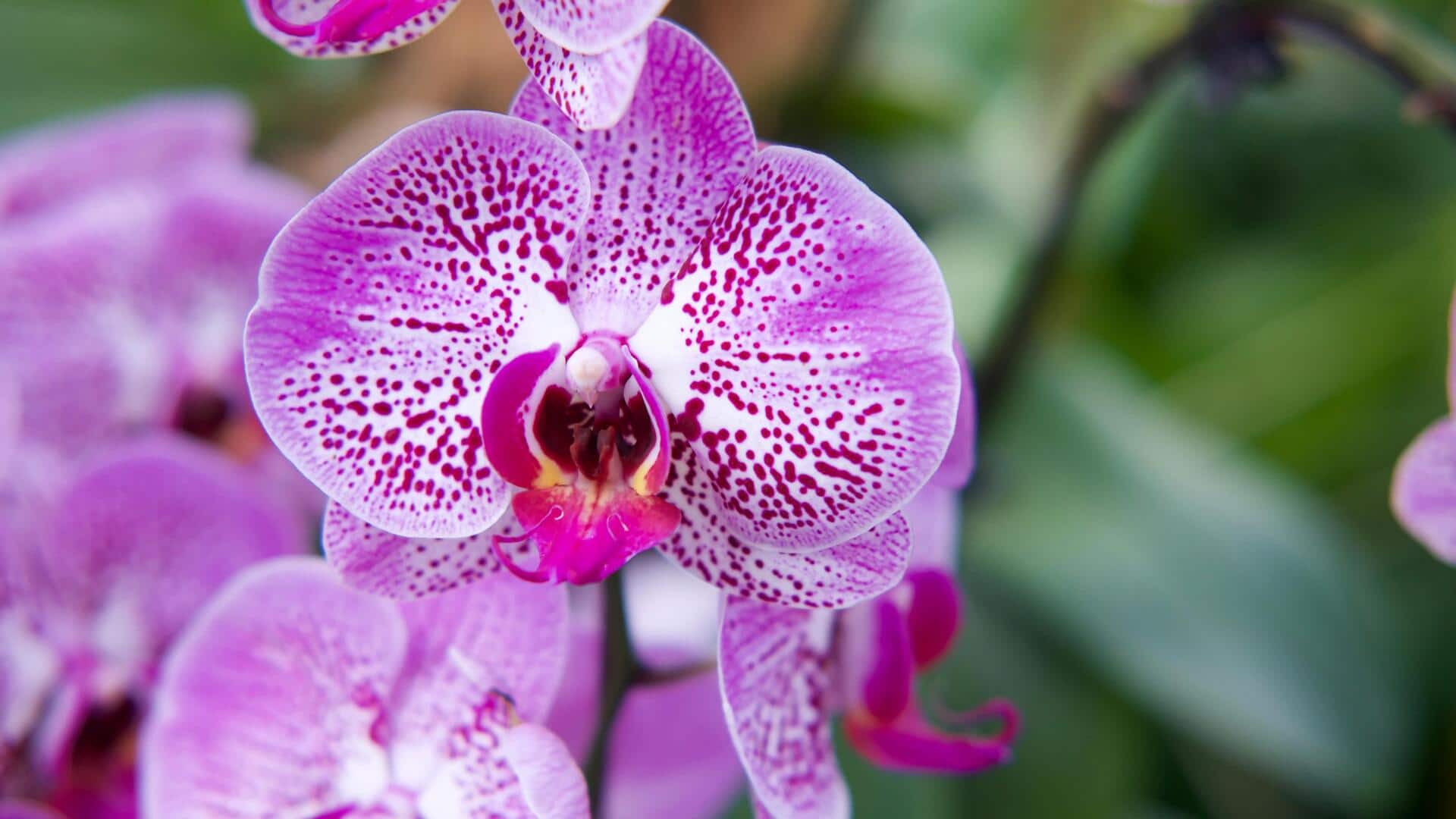
How to grow orchids in low light
What's the story
Orchids are beautiful and delicate plants that usually require bright light to flourish. However, some varieties can thrive in low light conditions, making them perfect for homes with limited natural sunlight. By knowing the needs of these orchids, you can keep them healthy and blooming even in dimly lit spaces. Here are five tips to grow orchids in low light, and keep them happy.
Tip 1
Choose the right orchid variety
Selecting the right orchid variety is key to success in low-light conditions.
Phalaenopsis orchids, commonly known as moth orchids, are ideal for low-light environments. They have broad leaves that help them absorb more light efficiently.
Another option is the Paphiopedilum orchid, also known as lady slipper orchid, which does well in lower light levels and produces unique blooms.
Tip 2
Optimize watering techniques
Proper watering is essential for orchids to flourish, especially in low-light conditions.
Overwatering can cause root rot, so it's important to let the potting medium dry out a bit between waterings.
A good rule of thumb is to water once a week or when the top inch of the medium feels dry to touch.
Using room-temperature water will help avoid shocking the plant.
Tip 3
Use appropriate potting mix
Choosing the right potting mix is essential for orchids to flourish in low-light conditions.
A well-draining mix, such as bark chips or sphagnum moss, is ideal as it prevents waterlogging and allows proper air circulation around the roots.
Avoid regular potting soil, as it retains too much moisture and can suffocate orchid roots.
Replacing the mix every couple of years keeps nutrients balanced.
Tip 4
Provide adequate humidity levels
Orchids flourish in humid environments, something that can be difficult to replicate indoors with low light.
To keep humidity levels between 40% and 60%, consider using a humidifier or placing a tray filled with water near your plant.
Misting your orchid lightly once every few days can also help maintain adequate humidity without over-soaking its leaves.
Tip 5
Ensure proper air circulation
Good air circulation is essential for orchids to flourish, even in low-light conditions.
Still air can lead to problems like mold growth or pests like spider mites.
To avoid these problems, place your orchid near a fan on a low setting if possible.
This will ensure that air moves around the plant without directly blowing on it, which can cause stress to the leaves and flowers over time.