5 budget-friendly hacks for growing plants indoors
What's the story
Growing plants indoors can be an inexpensive way to bring some greenery into your home. With a few simple hacks, you can create an ideal environment for your plants to thrive without spending a fortune. These hacks will help you maximize the potential of your indoor garden, ensuring that your plants get the best conditions to grow. Here are some practical tips to grow plants indoors on a budget.
Tip 1
Use natural light effectively
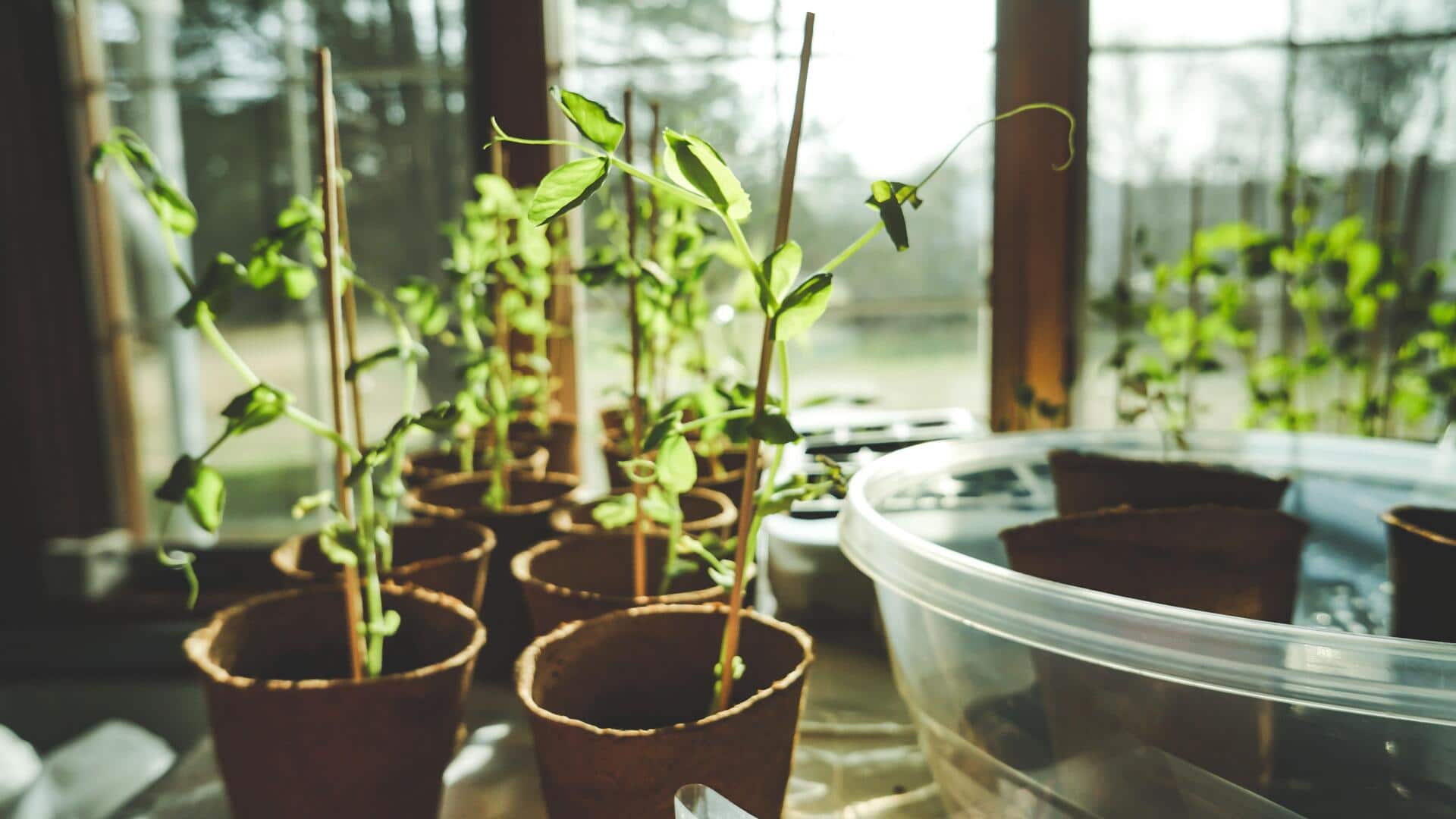
Maximizing natural light is key to indoor gardening. Place your plants near windows where they can get the most sunlight.
If direct sunlight is not enough, consider using reflective surfaces, like mirrors or aluminum foil, to bounce light onto your plants.
This way, you can reduce reliance on artificial lighting and save money on electricity.
Tip 2
DIY plant containers
Instead of buying expensive pots, get creative with DIY plant containers.
Recycle old jars, cans, or bottles by cleaning and decorating them.
Not only does this save money, but it also adds a personal touch to your indoor garden.
Just make sure these containers have proper drainage holes to prevent waterlogging.
Tip 3
Homemade organic fertilizers
Creating your own organic fertilizers at home is an economical and eco-friendly option.
Use kitchen scraps like banana peels or coffee grounds as nutrient sources for your plants.
These natural fertilizers provide essential nutrients without the cost of commercial products, and they are easy to prepare.
Tip 4
Optimize watering techniques
Efficient watering techniques are essential for keeping your plants healthy while saving resources.
Use recycled water from cooking or rainwater when possible.
Employ self-watering systems using simple materials, like plastic bottles with holes in the cap, which release water slowly into the soil as needed.
Tip 5
Utilize vertical space
Maximizing vertical space is a great way to grow more plants indoors without taking up much floor space.
Install shelves or hanging planters on walls to create additional growing areas.
This way, you can accommodate more plants in smaller spaces, making the most of available resources.