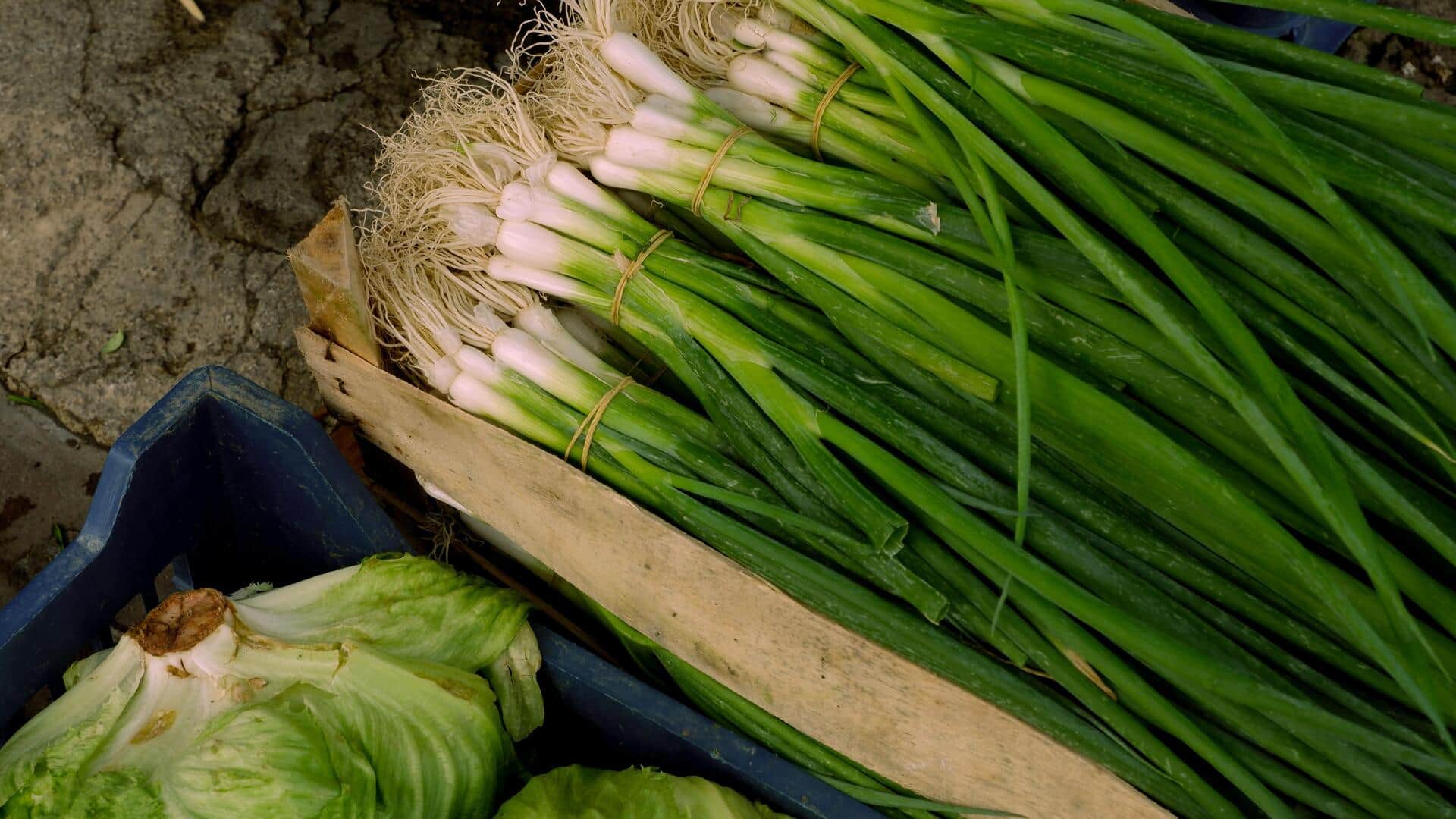
How to grow spring onions in water
What's the story
Growing spring onions in water is one of the easiest ways to get fresh greens at home. It requires little space and effort, making it perfect for beginners or those with limited gardening space. By following a few simple steps, you can have a continuous supply of spring onions without soil. Here's how you can grow spring onions in water, ensuring they thrive and remain healthy.
Tip 1
Choosing the right container
Selecting an appropriate container is key to growing spring onions in water.
A shallow bowl or jar would do, as long as it has enough depth to hold water up to the roots of the onions.
Make sure the container is clean and free from any residues that could affect plant growth.
Transparent containers also allow you to monitor root development easily.
Tip 2
Preparing spring onion bulbs
To prepare spring onion bulbs for water growth, trim off any damaged parts and leave the roots intact.
Place them upright in your chosen container with roots submerged in water but leaves above the surface.
This way, they can absorb nutrients from the air while staying hydrated through the water below.
Tip 3
Maintaining water levels
Maintaining consistent water levels is crucial for healthy growth.
Change the water every week to keep it fresh and prevent bacteria from developing.
Fill with more water as required so that the roots remain submerged at all times but do not drown the bulbs completely.
Regularly check for evaporation, especially during warmer months, and adjust accordingly.
Tip 4
Providing adequate light
Spring onions need plenty of light to grow well indoors.
Place your container near a sunny window where it can get direct sunlight for most of the day.
If natural light is insufficient, consider using LED grow lights to provide the necessary illumination without overheating or damaging plants.
Tip 5
Harvesting tips for optimal growth
Start harvesting spring onion greens when they reach about six inches tall by cutting them just above ground level with sharp scissors or shears.
This encourages new shoots' growth from remaining bulbs below the waterline.
Repeat this process every few weeks as needed, ensuring a continuous supply throughout the seasons without harming overall plant health.