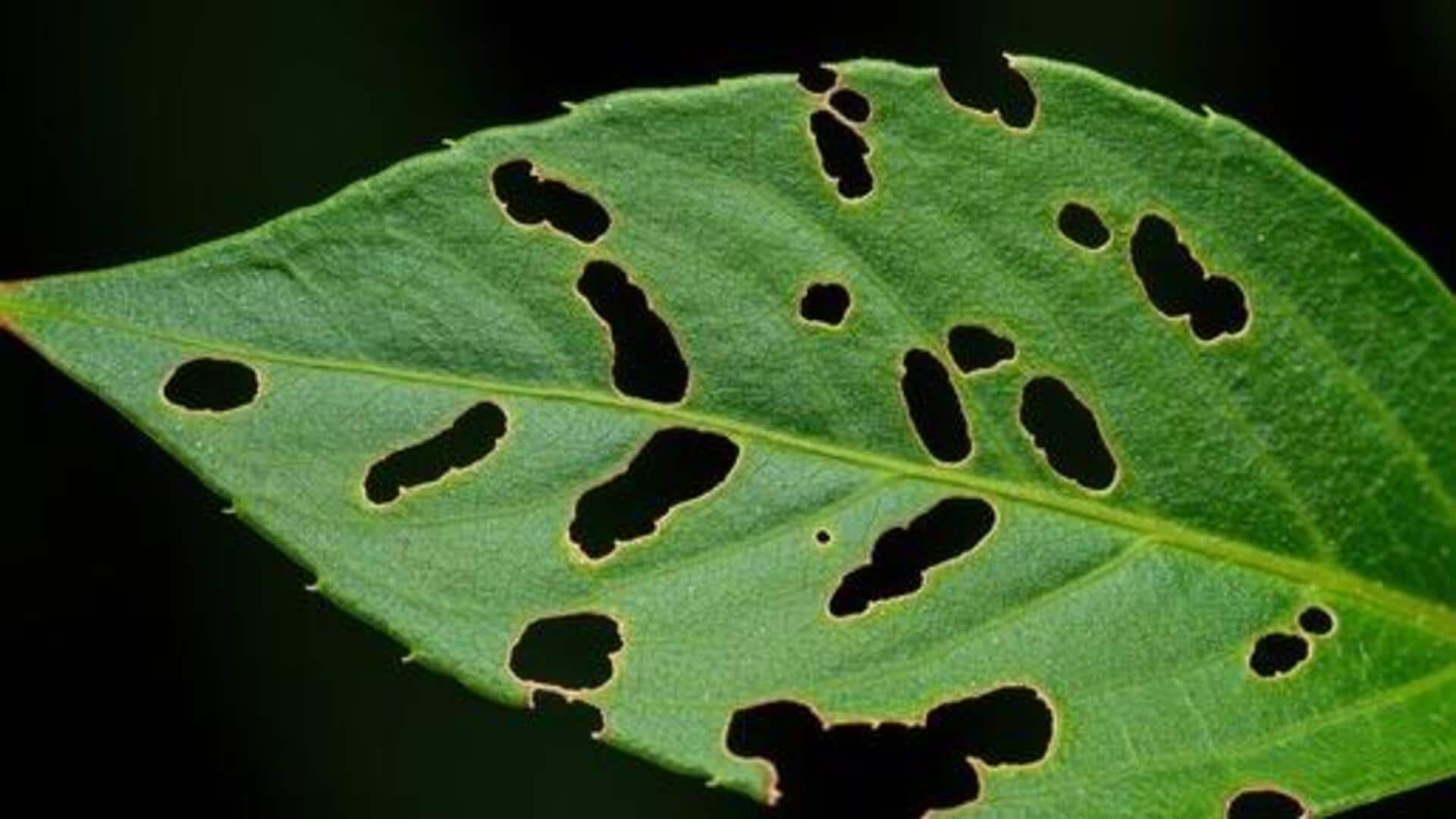
How to spot pest damage on houseplants
What's the story
Spider mites are tiny pests that can wreak havoc on your indoor plants. These minuscule creatures suck the sap from leaves, resulting in discoloration and wilting. Identifying them early is the key to keeping your plants healthy. By keeping an eye on certain signs, you can catch spider mites before they cause serious damage. Here are five signs that indicate spider mites are invading your indoor plants.
Leaf discoloration
Yellowing leaves
One of the most common signs of spider mite infestation is yellowing leaves.
The pests suck out the chlorophyll, resulting in yellow patches or speckles on leaves.
If you see yellowing happening in a uniform pattern across several leaves, it could be a sign of spider mites at work.
Webbing presence
Fine webbing on plants
Spider mites create fine webs on plants, similar to those of spiders.
These webs are usually found on the undersides of leaves, but can also cover stems and branches.
If you see delicate threads connecting leaves or covering parts of your plant, it's time to check for spider mites.
Visible mites
Tiny white or red dots
Spider mites are so tiny that they are difficult to see with the naked eye.
But if you look closely, you can see tiny white or red dots moving on the undersides of leaves. These are the adult mites.
If you see these dots, you know your plant is infested.
Leaf damage
Leaf stippling or mottling
Another sign of spider mite damage is stippling or mottling on leaves.
This happens when the mites feed on leaf cells, leaving behind tiny white or yellow spots.
Over time, these spots can merge, causing larger areas of discoloration and affecting the plant's overall health.
Leaf loss
Premature leaf drop
Premature leaf drop can also be a sign of a serious spider mite problem.
As the infestation worsens, plants become stressed and may start shedding leaves early as a survival mechanism.
If you notice an unusual amount of leaf drop, along with other symptoms mentioned above, spider mites could be the cause.