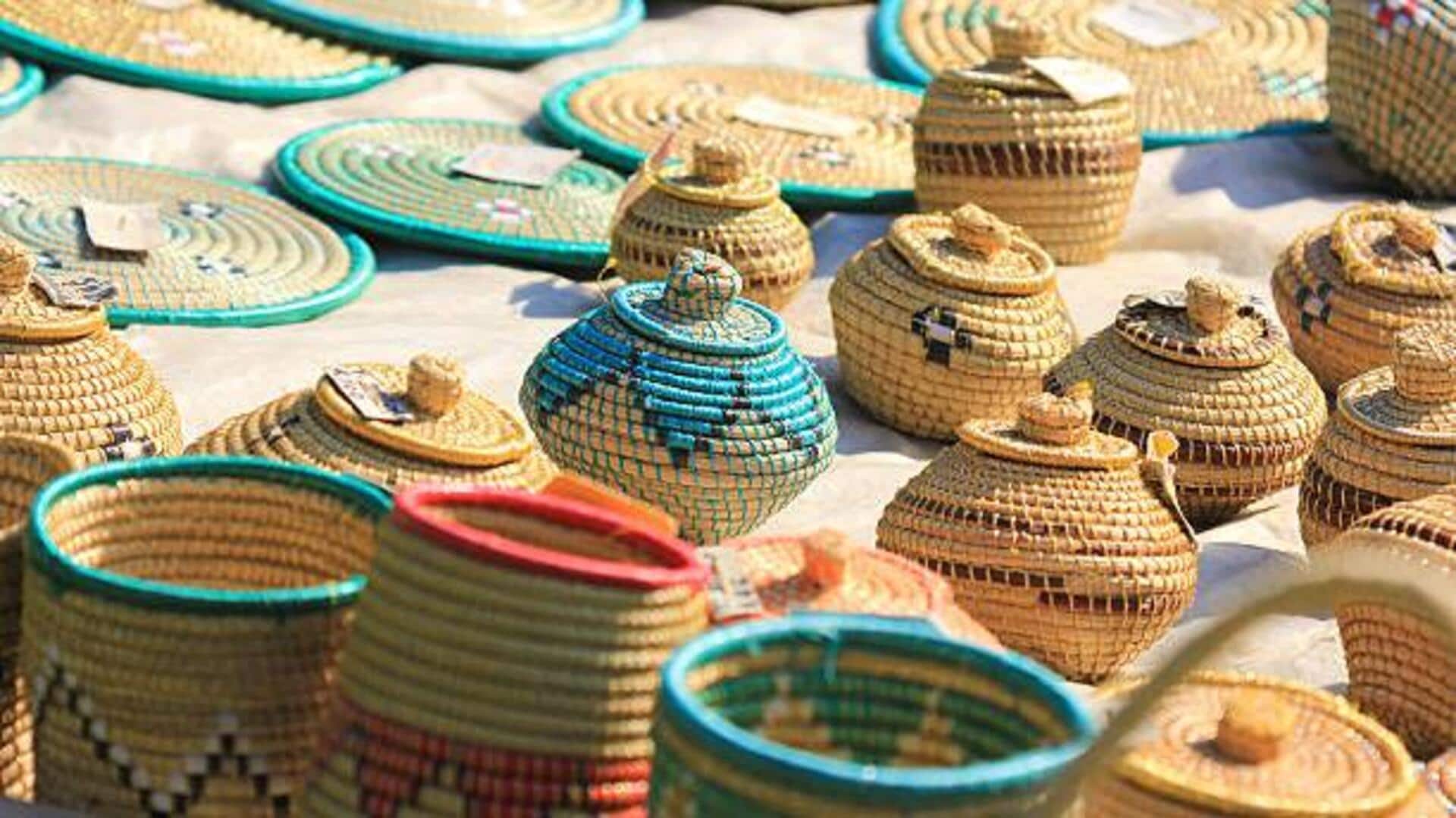
How to make colorful jute baskets
What's the story
African jute baskets are famous for their vibrant colors and intricate patterns. These baskets are not just functional, but also a work of art, representing the rich cultural heritage of Africa. The process of dyeing jute with natural colors is an age-old practice that gives these baskets their unique look. By using natural dyes, artisans ensure that the colors are eco-friendly and sustainable. Here are some insights into how these beautiful baskets are dyed.
Tip 1
Sourcing natural dyes
Natural dyes are derived from plants, minerals, and other organic sources.
To get the right color, artisans source materials like indigo for blue, hibiscus for red, and turmeric for yellow.
These materials are locally available and cost-effective. The sourcing process also supports local farmers and promotes sustainable agriculture practices.
Tip 2
Preparing jute fibers
Before dyeing, jute fibers are prepared by cleaning and soaking them in water.
This process ensures that the fibers absorb the dye evenly.
Soaking also helps in softening the fibers, making them easier to work with during weaving.
Proper preparation is key to achieving vibrant colors on the final product.
Tip 3
Dyeing techniques employed
There are various techniques to dye jute fibers.
One common method is immersion dyeing, where the jute is submerged in a dye bath until the desired shade is achieved.
Another technique is tie-dyeing, where parts of the fiber are tied off before immersion to create patterns.
Each technique gives a different look to the basket.
Tip 4
Weaving patterns into baskets
Once dyed, the jute fibers are woven into intricate patterns that make each basket unique.
Artisans use traditional weaving techniques passed down through generations to create designs that reflect cultural significance or personal style preferences.
The weaving process requires skillful hands that can manipulate the dyed fibers into beautiful shapes and structures.