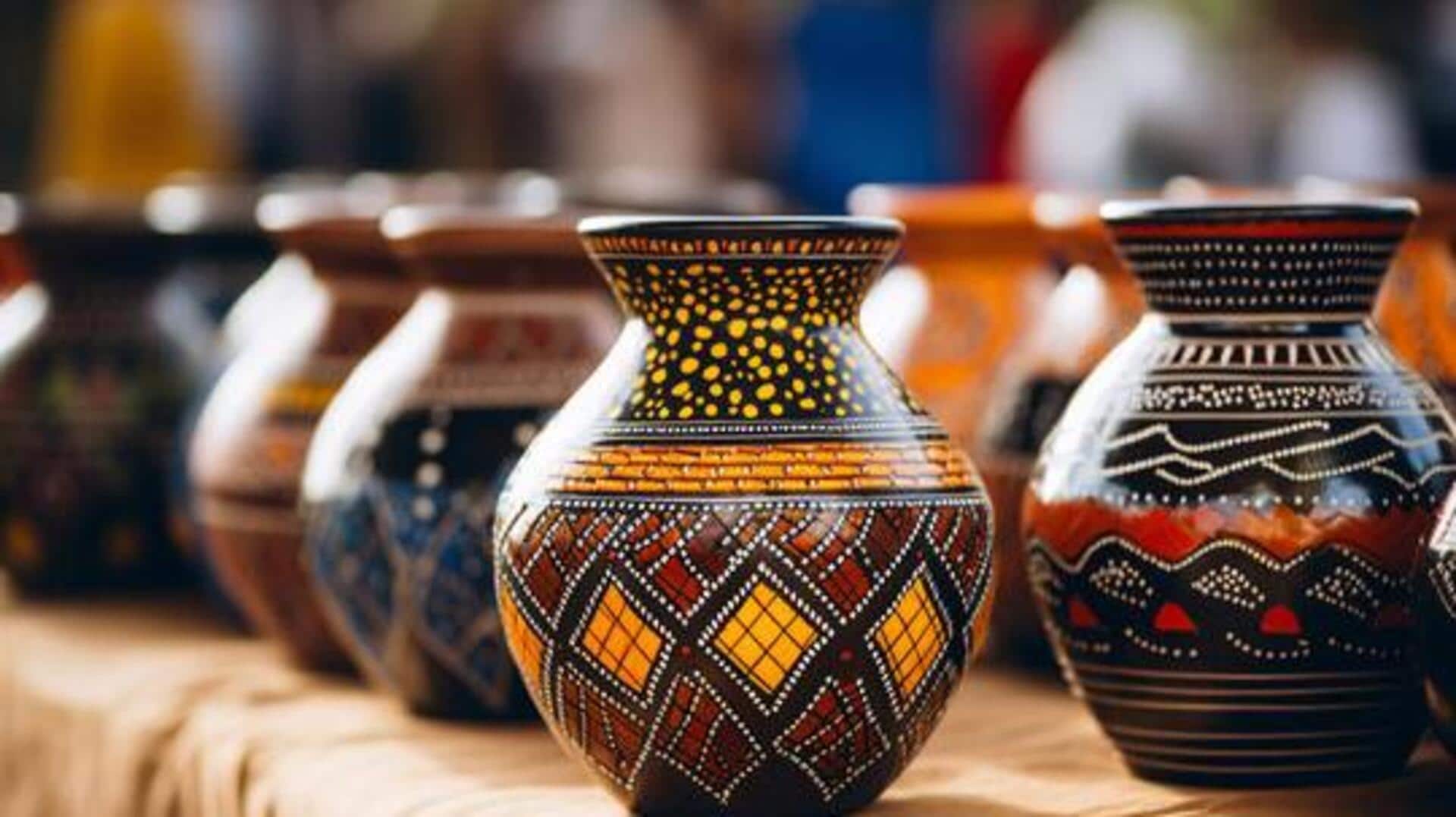
A beginner's guide to African pottery
What's the story
African pottery is famous for its rich cultural heritage and unique designs. The art of making pottery with African motifs is an age-old tradition that reflects the diverse cultures across the continent. This craft involves using local materials and traditional techniques to create functional and decorative pieces. By understanding the methods and materials used in this art form, one can appreciate the intricacies involved in crafting these beautiful items.
#1
Selecting local clay
Selecting the right clay is the first step in African pottery. Local clay is preferred as it has the right texture and plasticity for shaping. Potters usually dig clay from riverbanks or other natural deposits. The clay has to be cleaned of impurities before use, which is done by sieving it through fine mesh or cloth. This step ensures that the final product is strong and durable.
#2
Traditional shaping techniques
Shaping techniques vary across regions but often include hand-rolling, coiling, and pinching methods. These techniques allow artisans to create intricate designs without modern tools. Coiling involves rolling out long strips of clay and stacking them to form the desired shape, while pinching involves using fingers to mold the clay into form. Mastery over these techniques is key to achieving traditional African pottery aesthetics.
#3
Natural glazing methods
Glazing in African pottery is often done using natural materials like ash or plant extracts. These materials provide a unique finish that complements the handcrafted look of each piece. Ash from burnt plants can be mixed with water to create a paste that is applied before firing, giving a rustic appearance once baked in an open fire kiln.
#4
Firing techniques in open kilns
Firing is a crucial step in making African pottery, as it makes the clay and glaze permanent. Traditionally, open fire kilns are used, where wood or other organic materials are used to heat the pottery at high temperatures. This process takes hours, ensuring even heat distribution and preventing cracks or breaks during cooling.