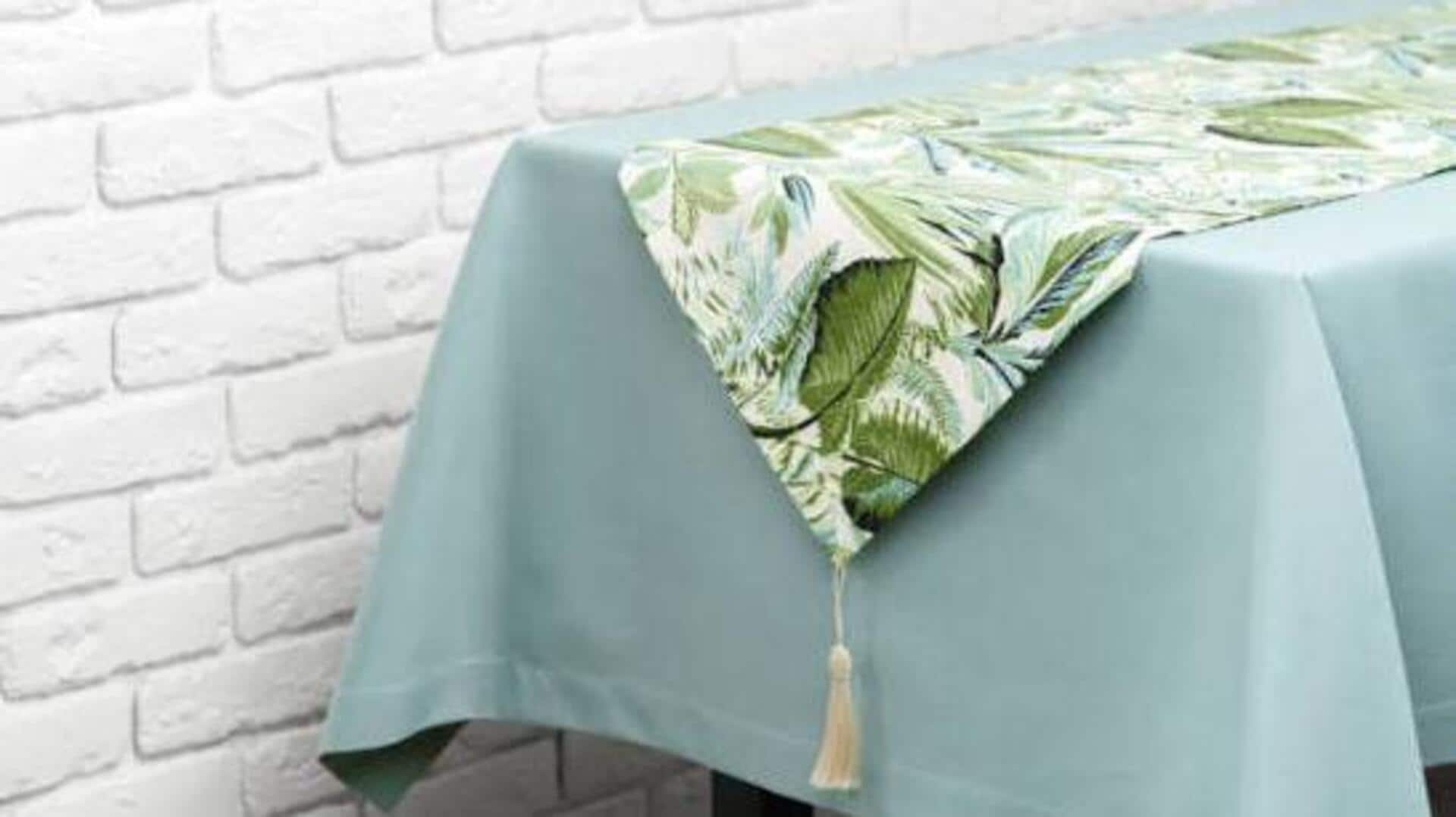
How to make table runners with African prints
What's the story
African print table runners can add a vibrant touch to any dining space. These colorful fabrics, with their intricate patterns, can easily be made into stylish table runners. Not only do they beautify your table, but they also give you a chance to show off cultural heritage. With a few simple steps, you can create unique table runners that reflect your personal style and taste.
Fabric selection
Choosing the right fabric
Choosing the right fabric is key to making a table runner.
African prints are available in a variety of colors and patterns, so pick one that complements your home decor.
Cotton is a popular choice, as it is durable and easy to maintain.
Make sure the fabric is wide enough to cover the length of your table, while leaving some overhang on either side.
Measurement process
Measuring and cutting fabric
Accurate measurements are key to making a perfect table runner. Measure the length and width of your table first.
A standard table runner is usually 14 to 18 inches wide and long enough to leave an overhang of six inches on both sides.
Cut the fabric accordingly with sharp scissors or a rotary cutter for clean edges.
Sewing tips
Sewing techniques for durability
Sewing techniques ensure that your table runner lasts long.
Use a sewing machine with a straight stitch setting for best results.
Hemming the edges prevents fraying; fold each edge by half an inch, and sew along it with a straight stitch.
For extra durability, you can also add interfacing behind the fabric before hemming.
Decorative ideas
Adding decorative elements
To make your table runner more appealing, you can add decorative elements like tassels or fringes at its ends.
These elements add texture and interest, without overpowering the vibrant patterns of African prints.
You can also consider adding contrasting borders or appliques if you want to add more detail.
Care instructions
Maintaining your table runner
Proper maintenance keeps your table runner looking its best over time.
Wash it gently by hand or in cold water on a delicate cycle if using a washing machine, and avoid bleach as it may fade colors over time.
Iron it on low heat if needed after washing, and hang it up instead of folding it when storing away between uses.