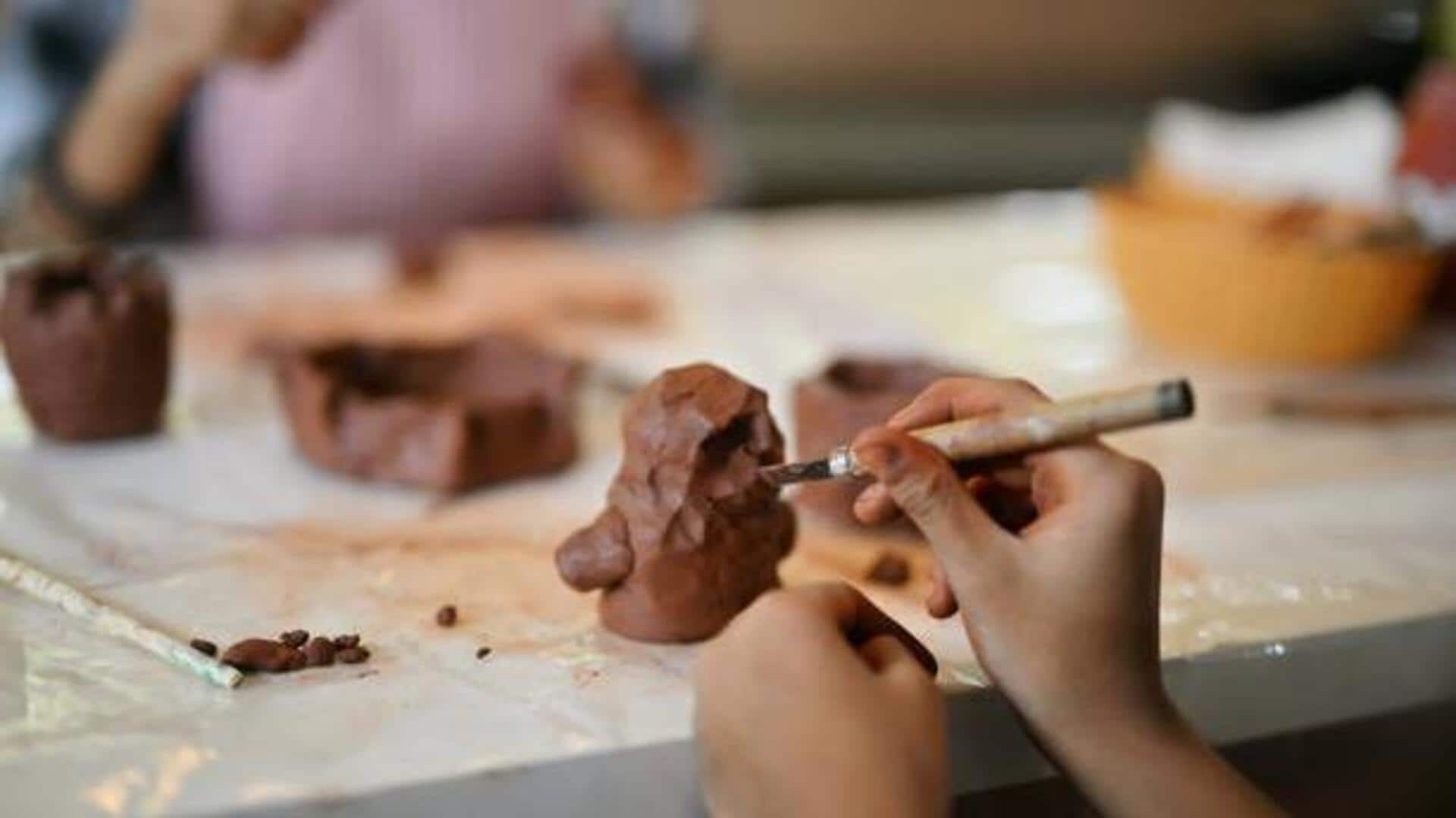
How to master clay sculpting
What's the story
African clay sculpting is an ancient art form that has been practiced for centuries. It involves shaping clay into intricate designs and forms, reflecting cultural traditions and stories. The process requires skill, patience, and a deep understanding of materials. Whether you are a beginner or looking to refine your techniques, mastering the art of African clay sculpting can be a rewarding experience. Here are some key insights to help you on your journey.
#1
Understanding clay types
Choosing the right type of clay is essential for successful sculpting.
African sculptors usually work with earthenware or stoneware clays, which are easily molded and fired at low temperatures.
Earthenware is porous and easy to work with, making it ideal for beginners. Stoneware, on the other hand, is denser and more durable, but needs higher firing temperatures.
Knowing the properties of each type will help you choose the best material for your project.
#2
Tools for sculpting
Having the right tools is essential to make precise and detailed sculptures.
Basic tools include wooden modeling sticks, wire cutters, and sponge brushes. These tools help in shaping, cutting, smoothing, and detailing your sculpture.
Investing in quality tools can make a huge difference in how your final piece looks.
#3
Techniques in sculpting
Mastering various techniques is key to creating intricate designs in African clay sculpting.
Techniques such as coiling, pinching, and slab-building are commonly used by artists to create different textures and forms.
Coiling involves rolling out ropes of clay that are stacked to form shapes; pinching uses fingers to mold small pieces; slab-building involves flattening clay into sheets that are joined together.
#4
Firing process explained
The firing process is what transforms raw clay into a hard, permanent sculpture.
It involves heating the sculpture in a kiln at high temperatures (usually between 1,000 degrees Celsius and 1,200 degrees Celsius).
This process removes moisture from the clay particles, making them bond tightly together, giving strength and durability to the final piece.