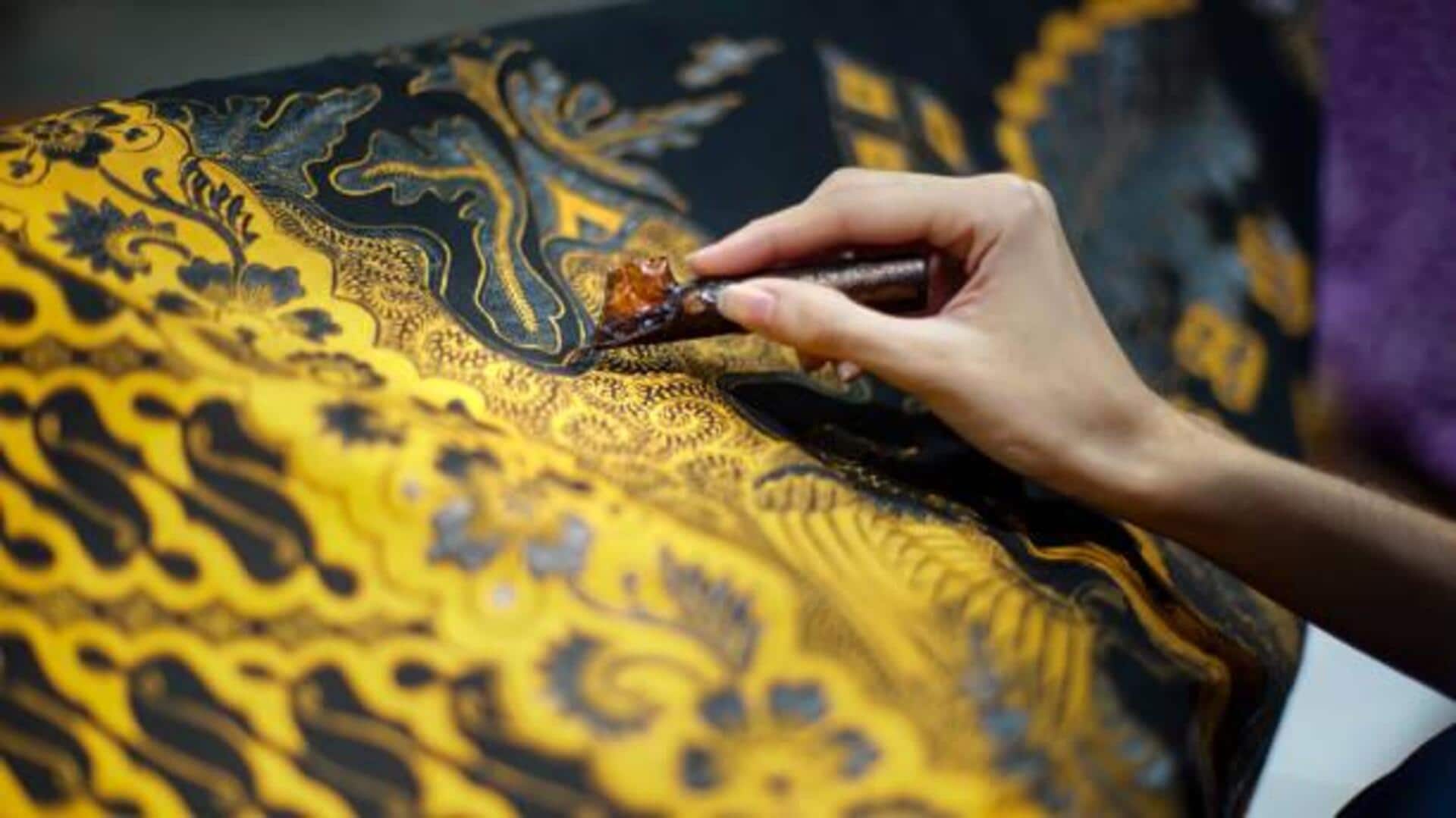
How to master batik art at home
What's the story
African batik art is a beautiful, traditional fabric dyeing technique that uses wax to create intricate patterns. This art form, which has been practiced for centuries, allows artists to express cultural stories and personal creativity. With just a few materials and techniques, anyone can try their hand at creating stunning batik designs at home. Here is a guide to mastering this art form.
#1
Understanding the batik process
The batik process involves applying wax on fabric in desired patterns before dyeing.
The wax resists dye, leaving the pattern intact.
Once the dyeing is done, the wax is removed by heating or scraping.
This process can be repeated with different colors for more complex designs.
Understanding this basic technique is key to creating authentic batik art.
#2
Choosing the right materials
To start your batik journey, you'll need some basic materials: cotton or silk fabric, beeswax or paraffin wax, dyes in various colors, a brush or pen for applying wax, and tools for heating the wax.
Choosing high-quality materials can make a difference in the final outcome of your artwork.
Experimenting with different fabrics and dyes can also help you discover unique combinations that suit your style.
#3
Techniques for applying wax
Applying wax is an important step in batik art.
There are different techniques to apply it, like using a brush for broad strokes or a pen for detailed lines.
Some artists even use tjanting tools with fine tips for precision work.
Practicing these techniques will help you gain control over how much wax is applied and where it goes on the fabric.
#4
Experimenting with dyeing methods
Dyeing methods are what make batik art so versatile.
Artists can try tie-dyeing by folding and tying fabric before dipping it into dye baths, or using sponge techniques for creating texture effects on their pieces.
Each method gives different results, so experimenting with them will expand your creative possibilities while honing your skills as an artist.
Tip 5
Preserving your batik creations
Once completed, preserving your batik creations is important to keep them looking good.
Wash them gently by hand in cold water with mild soap, and avoid direct sunlight when drying them flat on towels.
Store them folded neatly in drawers, or hang them up away from direct heat sources, to prevent any damage over time.