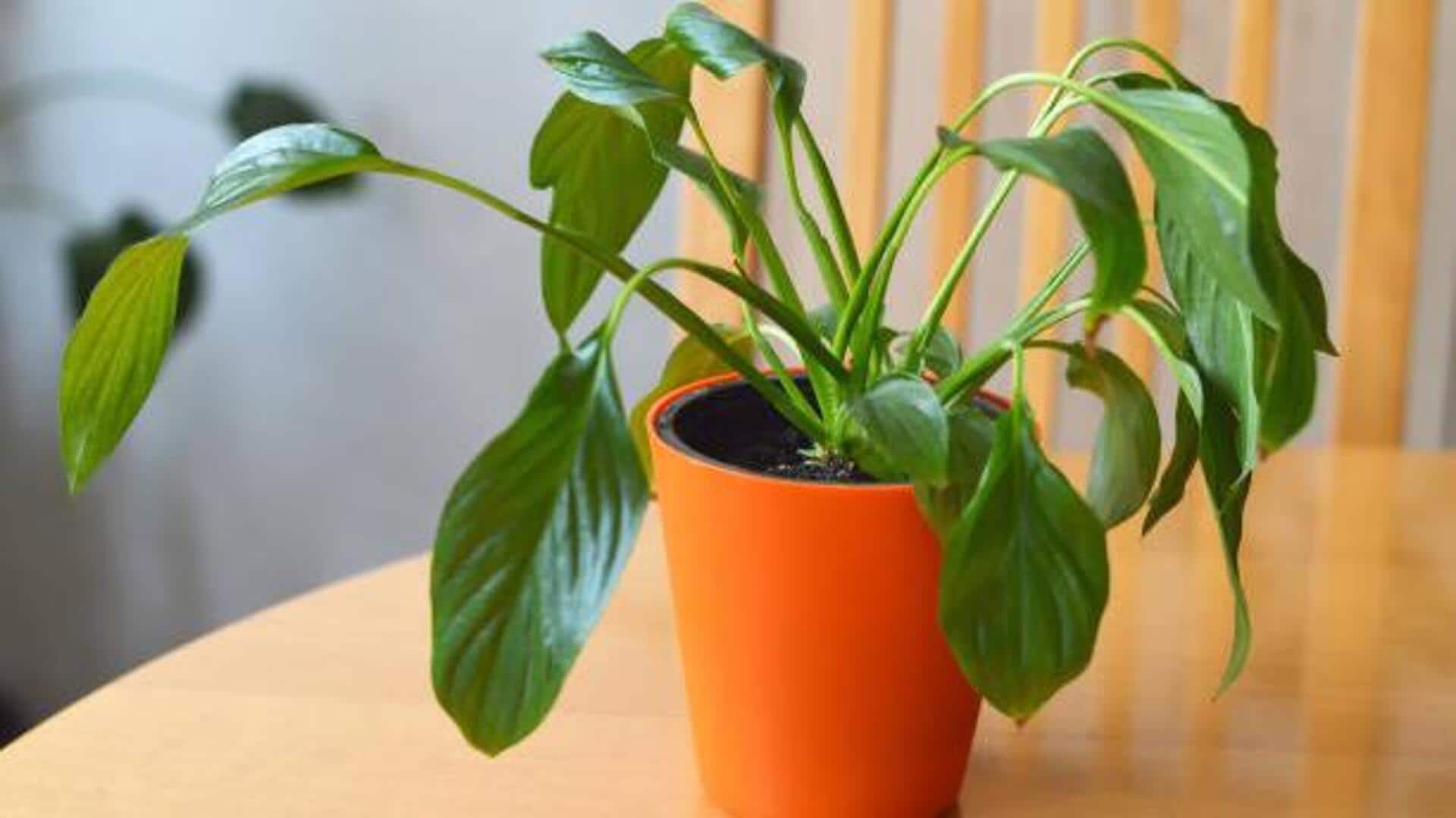
How to revive droopy indoor plants
What's the story
Indoor plants can become droopy for a number of reasons, including improper watering, lack of light, or temperature changes. Reviving these plants requires understanding their needs and making necessary adjustments. Here are five practical ways to help droopy indoor plants regain their vitality. By following these steps, you can create a healthier environment for your plants and ensure they thrive.
Tip 1
Adjust watering schedule
Overwatering or underwatering is a common reason why indoor plants droop.
To avoid this, check the soil moisture before watering. Stick your finger into the soil up to two inches; if it feels dry, it's time to water.
Make sure the pot has good drainage to avoid waterlogging, which can damage roots and cause drooping.
Tip 2
Optimize light exposure
Light is essential for plant health.
If your plant is drooping due to insufficient light, try moving it closer to a window or using artificial grow lights.
However, be careful not to expose it to direct sunlight if it prefers indirect light, as this can cause leaf burn.
Tip 3
Maintain consistent temperature
Temperature fluctuations can stress indoor plants and cause drooping leaves.
Keep your plant in an area with stable temperatures, ideally between 65 degrees Fahrenheit and 75 degrees Fahrenheit (18 degrees Celsius and 24 degrees Celsius).
Avoid placing them near drafts, heaters, or air conditioning vents that could create sudden temperature changes.
Tip 4
Increase humidity levels
Some indoor plants thrive in high humidity environments.
If your plant is drooping due to low humidity levels, consider using a humidifier or placing a tray of water near the plant to increase moisture in the air.
Misting the leaves occasionally can also help maintain humidity around the plant.
Tip 5
Prune damaged leaves
Pruning damaged or yellowing leaves can help redirect energy toward healthier parts of the plant, promoting overall recovery.
Use clean scissors or pruning shears to remove affected leaves at their base without harming surrounding foliage.
This practice not only improves appearance but also encourages new growth by reducing stress on the plant.